Justice for Her: Bridging the Gap Between Law and Reality for African Women
By The New Africa Magazine


In a powerful and timely live conversation convened by The New Africa Magazine, in collaboration with the International Center for Diplomacy, Africa My Home, the International Observatory for Peace, Democracy and Human Rights (Geneva), the African Conference for Peace (Geneva), the African Young Women Leaders Platform, and Luxury Travel, leading voices from law, diplomacy, media, and human rights came together to examine a critical question:
How can justice systems truly serve African women, especially those most often left behind?
Held under the theme “Justice for Her: Shaping an Equal and Inclusive Future for African Women,” the discussion underscored a defining reality: Africa does not lack legal frameworks protecting women; what remains lacking is effective implementation, accessibility, and trust.
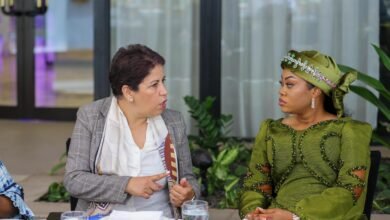
Opening the conversation, Karima Rhanem, President of the International Center for Diplomacy and Senior Managing Editor of The New Africa Magazine, highlighted that while progress has been made, women across Africa continue to face persistent barriers that extend beyond legislation. These barriers are deeply rooted in social, economic, political, and institutional structures. She framed the discussion not simply as a dialogue, but as a platform for advocacy, visibility, and connection between grassroots realities and global decision-making spaces.

Delivering the opening address, Dr. Gift Chidima Nnamoko Orairu, Publisher of The New Africa Magazine, emphasized that access to justice must be understood as a constitutional necessity and an economic imperative. She noted that when women are unable to enforce their rights, the consequences extend far beyond the individual, affecting economic growth, institutional trust, and national development. In her view, justice is the foundation that transforms empowerment from an abstract idea into a lived reality, and without it, inclusive development cannot be achieved.
From Geneva, Ndaté Ndiaye, international lawyer and Vice President of the African Conference for Peace, offered a critical legal perspective. She pointed out that while Africa has developed strong regional and international legal frameworks, the real challenge lies in their implementation. The gap between what is written in law and what is experienced in reality remains significant. She emphasized that institutional practices evolve too slowly, that justice sector actors often lack adequate training, and that monitoring and accountability mechanisms are insufficient. Her conclusion was clear: the issue is not the absence of rights, but the lack of their effectiveness.
Providing a diplomatic perspective, Hon. Karishma Pelham-Raad, former Assistant Minister of International Organizations at Liberia’s Ministry of Foreign Affairs, reflected on her experience within the United Nations system. She stressed that while advocacy and policy frameworks are essential, they often fail to produce tangible results without strong political will and concrete action at national levels. She emphasized that the international community generates numerous resolutions, yet their impact remains limited when they are not translated into implementation. For her, the priority must be to move from policy commitments to measurable change.
From a human rights standpoint, Aicha Duihi, President of the International Observatory for Peace, Democracy and Human Rights in Geneva, brought attention to the deeper structural dimensions of justice. She highlighted that access to justice is not only a legal matter but also a question of power, representation, and systemic transformation. Women remain underrepresented in the spaces where norms and policies are defined, which results in systems that do not fully reflect their lived realities. She also pointed to economic inequalities, geographic barriers, social stigma, and a lack of trust in institutions as major obstacles. Her intervention called for a shift toward justice systems that are more inclusive, participatory, and human-centered.
Focusing on local realities, Khadjouana Lakhlifi, specialist in communication and territorial intelligence in Morocco, emphasized that the core issue is not the existence of justice systems but their accessibility. For many women, especially in underserved areas, justice remains distant and difficult to reach. She explained that barriers such as geographic distance, lack of information, financial constraints, and restrictive social norms prevent women from accessing their rights. She offered a powerful reflection: if women cannot reach justice, then justice must reach women. This requires institutions to become more present, more responsive, and more adapted to the realities of those they are meant to serve.
Returning to the role of media, Dr. Gift Orairu emphasized the importance of storytelling in shaping perceptions and driving change. Media is not only a tool for reporting events but also a powerful force that defines narratives, amplifies voices, and influences public discourse. Platforms such as The New Africa Magazine play a critical role in ensuring that African women are not only represented as victims but also as leaders and agents of change. In the digital era, storytelling becomes an essential instrument for advocacy, capable of reaching wide audiences and fostering greater awareness and engagement.
The conversation also explored the role of innovation and grassroots engagement in addressing the justice gap. Participants highlighted the importance of leveraging digital platforms, artificial intelligence, and community-based initiatives to improve access to justice. At the same time, they emphasized the need to ensure that these tools remain accessible, inclusive, and responsive to the needs of women at the grassroots level. A key message that emerged throughout the discussion was the necessity of bringing justice closer to women, particularly those in rural and marginalized communities.
As the discussion concluded, a strong consensus emerged among all speakers. Access to justice for African women is not a sectoral issue; it is a fundamental condition for dignity, equality, and sustainable development. Ensuring justice requires more than laws on paper. It demands political will, effective implementation, inclusive governance, and the active participation of women at all levels of decision-making. It also requires a collective effort from institutions, civil society, media, and communities to create systems that are truly responsive and equitable.
Ultimately, the conversation reaffirmed a powerful truth: a society that fails to guarantee justice for women cannot achieve justice for all.
Through this dialogue, The New Africa Magazine and its partners reaffirm their commitment to amplifying voices, fostering meaningful conversations, and contributing to a future where justice, equality, and inclusion are not aspirations, but lived realities for every African woman.
TNAM
Karima Rhanem Editor
Posted By Egwu Patience Nnennaya.