Rising Conflicts in the Horn of Africa Spark Fears of Wider Regional Crisis
Tigray’s elite has become deeply split, with every policy issue from IDP returns to demobilization framed through the lens of factional allegiance.


The Horn of Africa is once again on edge.
Across the region, conflicts are not only continuing they are overlapping, deepening, and in some cases spreading. What were once seen as separate national crises are increasingly connected, creating a fragile and uncertain regional environment.
In Sudan, the war has entered a prolonged and devastating phase. Entire communities have been uprooted as fighting destroys homes, hospitals, markets, and critical infrastructure.
Millions have fled either to safer parts of the country or across borders into neighbouring states. The humanitarian situation continues to worsen, with shortages of food, medicine, and basic services becoming a daily reality for many families. The longer the war drags on, the more difficult recovery becomes not just for Sudan, but for surrounding countries absorbing refugees.
Ethiopia, still recovering from the Tigray conflict, is facing renewed instability in other regions. Tensions in Amhara and Oromia have led to clashes between armed groups and federal forces.
While not on the same scale as the previous war, these confrontations are creating fresh insecurity and deepening political divisions. Many communities remain wary, uncertain about whether peace will hold or if violence could escalate again.
Somalia continues to battle long-standing insecurity. Military operations against extremist groups are ongoing, yet attacks persist, especially in rural and contested areas. Civilians often find themselves caught in the middle, forced to flee or live under constant threat.
The country’s efforts to stabilize governance and rebuild institutions are challenged by these recurring security setbacks.
Beyond armed conflict, the region is also grappling with severe climate pressures. Drought, erratic rainfall, and food insecurity are compounding the impact of violence. Farmers who cannot plant or harvest due to insecurity face hunger. Trade routes disrupted by fighting further strain local economies.
The result is a cycle where conflict fuels hardship and hardship, in turn, fuels instability.
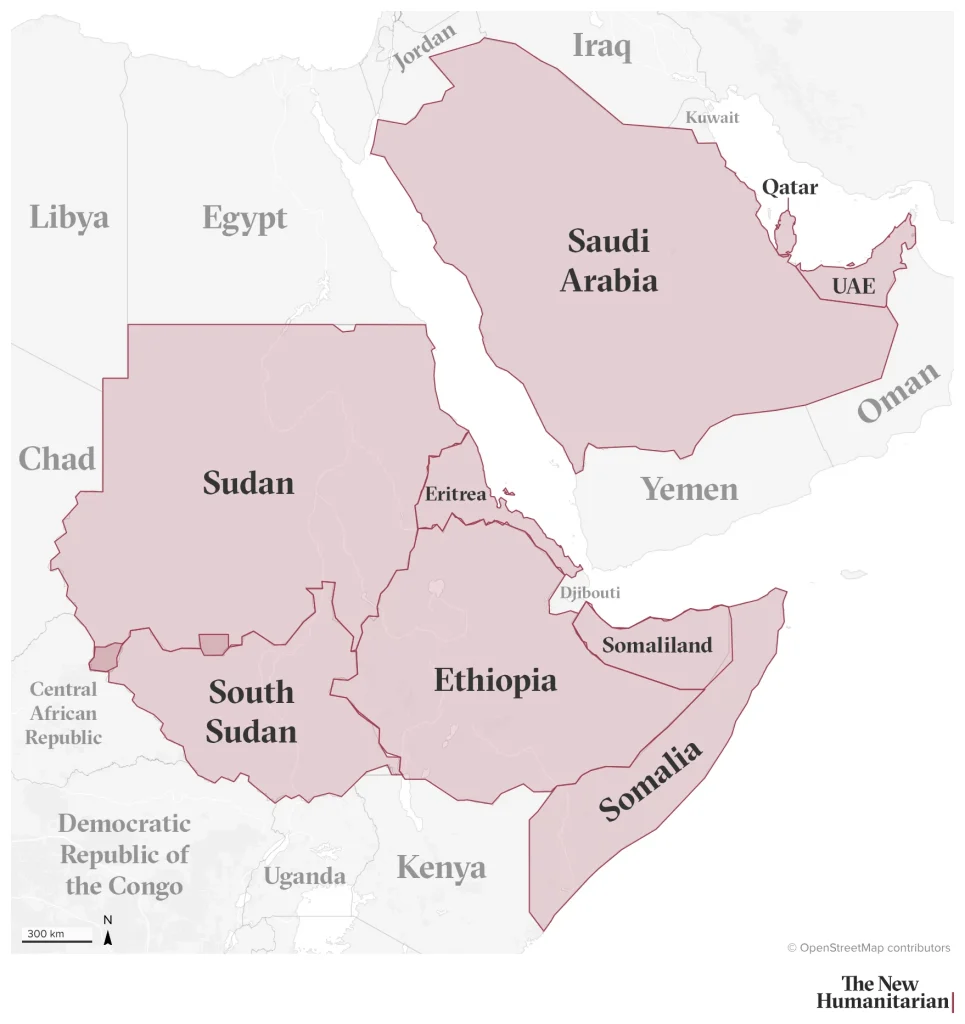
Another worrying factor is how interconnected these crises have become. Borders in the Horn of Africa are porous, and political tensions often spill across them. Refugee flows, armed group movements, and historical rivalries mean that instability in one country rarely stays contained.
The growing concern among observers is that without coordinated diplomatic efforts, stronger regional cooperation, and sustained peacebuilding initiatives, the Horn of Africa could slide into a prolonged period of instability. The stakes are high not just for governments, but for millions of ordinary people whose lives are shaped daily by conflict and uncertainty.
For now, the region stands at a delicate crossroads. Whether it moves toward deeper crisis or gradual stabilization will depend largely on political will, inclusive dialogue, and the ability of leaders to address both security challenges and the underlying grievances driving unrest.