
Iran Accuses UN, EU of Silence Over Escalating Middle East Crisis
Iran’s criticism of the United Nations and the European Union centers on what it sees as an inconsistent application of international law. Iranian officials argue that while some conflicts trigger swift global condemnation and sanctions, others receive muted responses depending on geopolitical alliances.

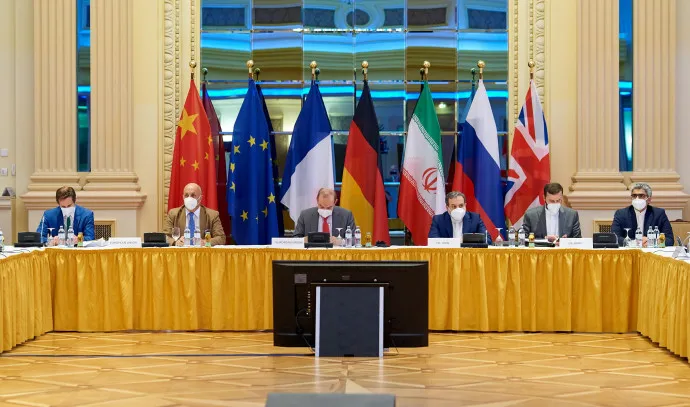
As tensions in the Middle East intensify, Iran has sharply criticized the international community, particularly the United Nations and the European Union, for what it calls a troubling silence in the face of escalating military confrontations. Tehran argues that the failure of global institutions to respond decisively risks deepening instability in an already volatile region.
The dispute highlights a growing divide in the international response to the crisis, raising difficult questions about global diplomacy, accountability, and the ability of multilateral institutions to manage modern conflicts.
The latest wave of tensions follows a series of military exchanges involving Iran, Israel, and U.S. forces, raising fears of a wider regional war. According to Iranian officials, recent strikes carried out by Israel and the United States represent a direct violation of international law and sovereignty. Tehran has warned that it will continue to exercise what it describes as its “inherent right to self-defense” if such actions persist.
Iran’s ambassador to the United Nations accused Western powers of committing acts of aggression and urged the UN Security Council to intervene immediately. The envoy also argued that continued silence from international institutions effectively legitimizes the use of force against Iran.
Meanwhile, retaliatory missile and drone attacks have expanded the scope of the confrontation, striking military assets and heightening fears of broader escalation across the Middle East.
Iran’s criticism of the United Nations and the European Union centers on what it sees as an inconsistent application of international law. Iranian officials argue that while some conflicts trigger swift global condemnation and sanctions, others receive muted responses depending on geopolitical alliances.
In speeches and diplomatic statements, Tehran has accused international institutions of failing to condemn attacks on Iranian territory with the same urgency applied to other global crises. Iranian representatives have framed this silence as complicity, warning that inaction risks normalizing violations of sovereignty and further destabilizing the region.
The criticism also reflects broader frustration with Western-backed sanctions and diplomatic pressure that Iran believes have marginalized its position in international negotiations.
European leaders have rejected accusations of indifference, emphasizing that their focus remains on preventing a wider war. The European Union has repeatedly called for “maximum restraint” from all parties and urged adherence to international law and humanitarian norms.
EU officials have also warned that escalating hostilities could threaten global energy supplies and international trade routes, particularly the Strait of Hormuz, one of the world’s most strategic shipping corridors.
However, some European officials have taken a more critical stance toward Tehran. EU foreign policy chief Kaja Kallas recently accused Iran of attempting to broaden the conflict and “sow chaos” across the region by targeting multiple countries.
These competing narratives illustrate the deep geopolitical divide shaping the current crisis.

The crisis also underscores the structural limitations of the United Nations in responding to major geopolitical conflicts. Although the UN Security Council remains the world’s primary body for maintaining international peace and security, its ability to act is frequently constrained by political divisions among its permanent members.
Emergency meetings and diplomatic debates have taken place, but meaningful resolutions or coordinated enforcement measures remain elusive. For many observers, this reflects a broader erosion of the international rules-based order, one increasingly shaped by power politics rather than multilateral consensus.
Analysts warn that the absence of decisive diplomatic intervention could allow the conflict to spiral into a wider regional war. The involvement of additional states, either directly or through allied militias, could transform the crisis into one of the most significant geopolitical confrontations in decades.
Already, tensions are spreading beyond the immediate conflict zone, with neighboring countries and strategic infrastructure becoming potential flashpoints.
In such an environment, diplomatic silence, whether perceived or real, carries significant consequences.

The accusations exchanged between Iran and Western institutions reveal a deeper crisis within the global diplomatic system. As geopolitical rivalries intensify, multilateral institutions increasingly struggle to maintain credibility as neutral arbiters of international law.
For Iran, the current moment represents evidence of a global system that, in its view, selectively enforces justice. For Europe and its allies, the priority remains containing escalation while preventing further destabilization of the Middle East.
Between these competing perspectives lies a fragile reality: the international community faces mounting pressure to prove that diplomacy still has the power to restrain conflict.
Without meaningful engagement, the silence Tehran condemns may become the very condition that allows the crisis to grow.
Esenuifo Olotu
