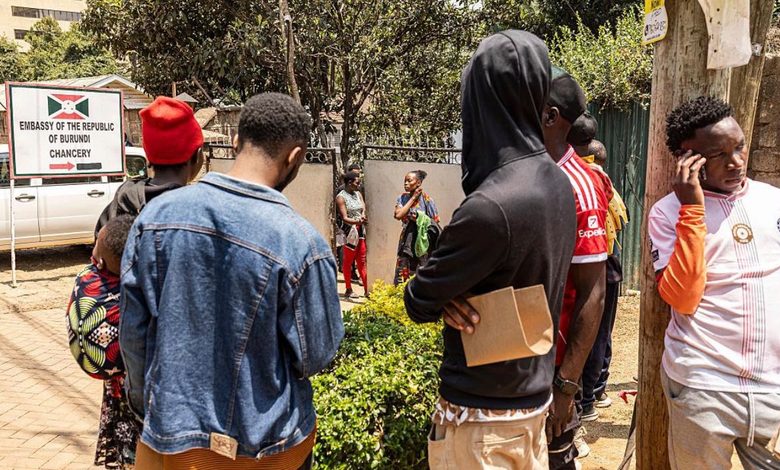
Hundreds of Burundians have flocked to their embassy in Nairobi seeking travel documents amid growing uncertainty over their businesses and livelihoods after Kenya began enforcing new restrictions on foreign nationals operating small-scale businesses.
Long queues formed outside the Embassy of Burundi in Nairobi on Monday, September 7, as Burundian nationals sought travel documents and assistance following a directive by Kenyan President William Ruto targeting foreign participation in small-scale trade.
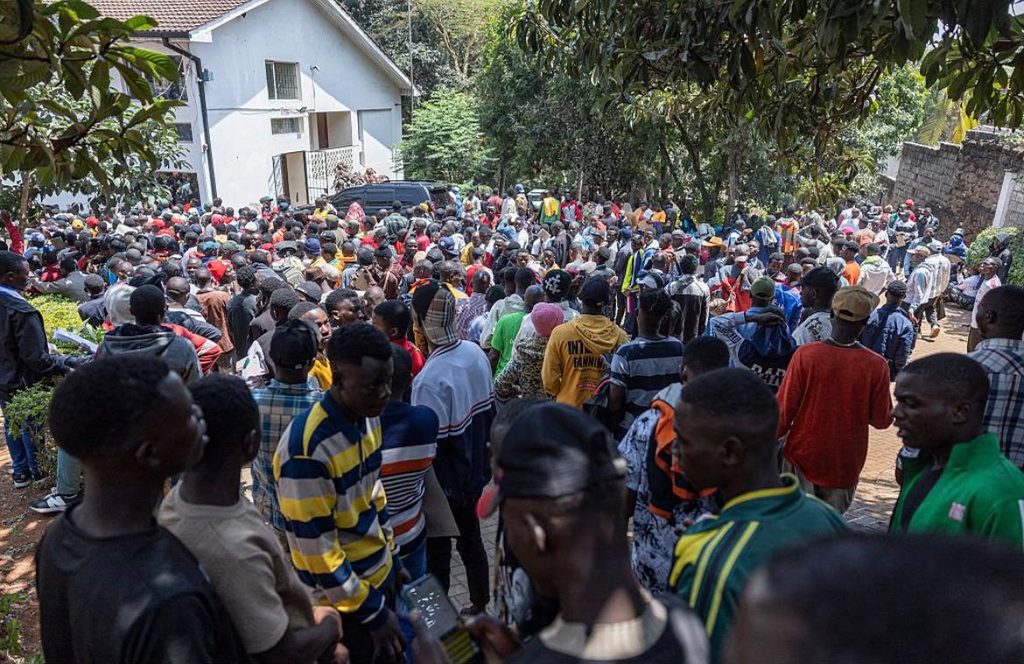
Some of those arriving at the embassy were carrying luggage and personal belongings, with reports indicating that some were preparing to return to Burundi amid fears that they could lose their businesses or face enforcement action. (The Citizen)
The situation has attracted widespread attention across East Africa, particularly because Kenya and Burundi are members of the East African Community (EAC), which promotes the movement of people, labour and trade among member states.
What did President Ruto order?
President Ruto announced the directive on September 2 while addressing Kenyan micro, small and medium-sized traders at State House in Nairobi.
He instructed authorities to move against foreign nationals operating businesses such as hawking and small-scale retail, arguing that these activities should provide opportunities for Kenyan citizens.
Ruto said foreign investment remains welcome in Kenya but should focus on larger ventures that bring capital, create jobs and contribute to production rather than competing with Kenyans in small-scale businesses.
The enforcement of the directive began on September 7.
However, the Kenyan government has since clarified that the policy is not a blanket order for foreigners to leave Kenya.
Foreign nationals who possess the appropriate immigration status, work permits and business licences are legally allowed to operate, provided they comply with Kenyan regulations.
Why are Burundians leaving?
The directive has nevertheless generated significant uncertainty among Burundian traders.
Hundreds reportedly turned up at the Burundian Embassy seeking laissez-passer travel documents, while others sought clarification and assistance with their documentation.
Some Burundians have said they fear losing their livelihoods if their businesses fall within the categories targeted by the government.
Videos and photographs showing people with luggage at Nairobi’s embassy and transport stations have also fuelled concerns about a wider exodus of foreign nationals.
However, officials have cautioned against interpreting the embassy queues as proof that all Burundians are leaving Kenya. The embassy provides travel documentation as part of its normal consular services, and some people were reportedly seeking to regularise their documentation rather than immediately leave the country.
Burundi raises concerns
The developments have also created diplomatic tension between Nairobi and Bujumbura.
The Burundi government has expressed concern over the treatment of its citizens in Kenya, saying some Burundian traders had reportedly faced dispossession and violence.
Burundian authorities have called on Kenya to protect its citizens and ensure that enforcement of the new policy does not result in harassment or attacks.
Burundi has also begun making arrangements to assist citizens who choose to return home. The government said buses would be prepared and that its embassy in Nairobi would issue free laissez-passer documents to facilitate the return of those who wish to leave. (Kenyans)
Kenya offers temporary amnesty
In response to the growing uncertainty, the Kenyan government announced a temporary amnesty for undocumented East African nationals, particularly those affected by the situation involving foreign traders.
The government said the measure is intended to encourage undocumented nationals to register with their embassies and regularise their status rather than face immediate removal.
Kenyan authorities have also sought to reassure foreign nationals that enforcement is not intended to promote xenophobia or harassment.
The government maintains that its focus is on ensuring compliance with immigration, employment and business regulations.
The bigger question: Who gets to trade in Kenya?
The dispute has opened a wider debate over the role of foreign traders in Kenya’s economy.
Supporters of the crackdown argue that Kenyan citizens should have greater access to small businesses and informal-sector opportunities, particularly at a time when unemployment and the cost of living remain major concerns.
Critics, however, warn that targeting foreign traders could damage regional economic integration and create tension between citizens of neighbouring EAC countries.
The situation also highlights a complicated distinction between freedom of movement and the right to work or operate a business.
Kenya allows citizens of many African countries to enter without traditional visa requirements, but government officials have stressed that visa-free entry does not automatically give a foreign national the right to work, trade or operate a business. Those activities require the appropriate permits and licences.
What happens next?
The immediate concern is whether Kenya can enforce its new policy while preventing harassment and maintaining its commitments to regional integration.
For the Burundians now seeking documents in Nairobi, the issue is much more personal.
Many have spent years building businesses and livelihoods in Kenya. For some, returning home may be a temporary decision; for others, it could mean abandoning businesses they have spent years building.
As Kenya moves to protect opportunities for its own small-scale traders, the situation is raising a difficult question across East Africa:
How can countries protect local economic opportunities without undermining the movement, trade and regional integration that the African continent is working to build?
The answer could have implications far beyond Kenya and Burundi.
TNAM