South African University Students Develop AI System to Identify Learners at Risk of Falling Behind

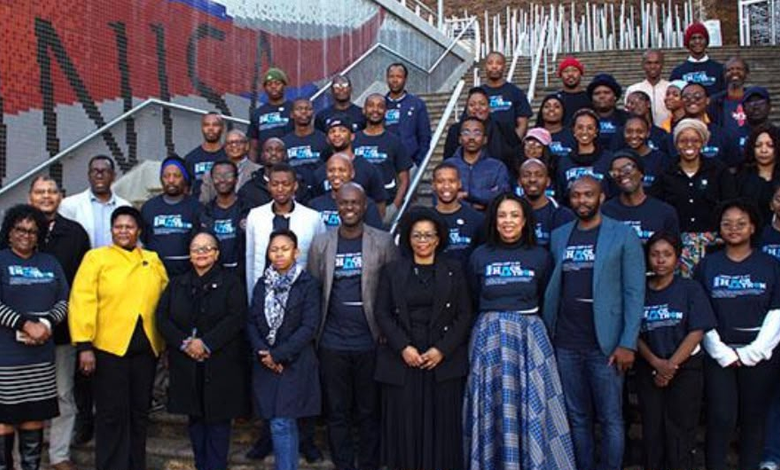
The winning team at the University of South Africa’s 2026 Hackathon has developed an artificial intelligence system designed to detect early signs of academic disengagement and connect students with support before they fall further behind.
A team of students at the University of South Africa (Unisa) has developed an artificial intelligence (AI) system designed to identify students who may be struggling academically and alert lecturers before their difficulties affect their academic progress.
The innovation, developed by Team Solulu Elevate, won Unisa’s 2026 Hackathon, a competition that challenged students to apply emerging technologies to practical problems facing the university.
The proposed system is designed to monitor indicators of academic disengagement, including declining participation on online learning platforms and missed assignment submissions. When these warning signs appear, the system could initiate contact with the affected student and notify lecturers so that appropriate support can be provided.
The approach aims to help universities identify students who need assistance earlier, rather than waiting until they perform poorly in examinations or withdraw from their studies.
Unisa’s executive management recognised the winning team on 20 October 2026, when its members met with the university’s Principal and Vice-Chancellor, Professor Puleng LenkaBula, and other members of the management committee.
How the AI system is designed to work
The system focuses on identifying changes in students’ engagement with their academic work.
In a distance-learning environment, students may go days or weeks without direct contact with lecturers. A learner who stops participating in online classes, fails to submit assignments or becomes less active on a learning platform may be experiencing academic difficulties that require attention.
The proposed AI system would analyse such indicators to flag students who may need additional assistance. It is designed to contact those students proactively while notifying lecturers of cases that may require intervention.
This could help academic staff identify emerging problems earlier and determine whether a student needs academic guidance, additional learning resources or other forms of support.
The system is intended to assist lecturers and existing student-support services rather than replace human judgement. Its effectiveness will depend on whether the warning signs it identifies accurately reflect students’ circumstances and whether the alerts lead to meaningful intervention.
Why the innovation matters for distance learning
Unisa is one of Africa’s major open distance e-learning institutions, serving students who often combine their studies with employment, family responsibilities and other commitments.
Although distance learning provides flexibility, it can also make it more difficult for lecturers to recognise when students are struggling. Unlike conventional classroom settings, where declining participation may be immediately noticeable, online learning environments can leave students disconnected for extended periods before their difficulties become apparent.
An early-warning system could give universities an additional way to identify these students and reach out before their academic challenges become more serious.
If successfully developed and evaluated, the technology could support more timely interventions, strengthen communication between students and lecturers, and help the institution make better use of its academic support services.
However, reduced online activity does not always mean that a student is struggling. Some learners may study offline, experience temporary internet problems or balance their studies around work and family commitments. The system would therefore need to distinguish between genuine warning signs and normal variations in student behaviour.
Protecting students’ personal information and ensuring that automated alerts do not unfairly label learners will also be important considerations.
Six students behind the winning innovation
Team Solulu Elevate comprised Thabo Horings, Hlulani Ndlovu, Anele Mabaso, Imitha Kopolo, Matelile Augeal and Magdeline Maluleke.
The team emerged as the winner after competing against other finalists in a three-day hackathon held from 21 to 23 September 2026 at Unisa’s Science Campus in Florida, South Africa.
Organised by the university’s Information and Communication Technology portfolio in collaboration with its College of Science, Engineering and Technology, the competition was held under the theme “The Agentic University: Reimagining Unisa with AI.”
Participants were challenged to explore how artificial intelligence could be applied to real institutional problems. They worked on developing their concepts, building prototypes and presenting their proposed solutions to judges.
The three finalist teams were BioSecure, AskThuso and Solulu Elevate. The judging process considered the relevance of the solutions to university challenges, their technical development and the teams’ presentations.
According to Unisa, the winning team’s student-centred approach and presentation were among the factors recognised by the judges.
University commits R100,000 towards further development
Following the competition, Unisa committed R100,000 towards further innovation and potential commercialisation of the winning solution.
The support creates an opportunity for the team to continue developing its concept and explore how it could be implemented within the university’s learning environment.
Further development would need to establish how reliably the system identifies students who require assistance, how it integrates with existing learning platforms and how lecturers would respond to the alerts it generates.
The university has not established that the system is already operating across its student population. Its broader impact will depend on further development, testing and implementation.
Students applying AI to real-world challenges
The project reflects a growing emphasis on practical technology development within African universities, where students are increasingly being encouraged to apply their technical knowledge to challenges affecting education, healthcare, business and public services.
For Team Solulu Elevate, the focus is on a problem that directly affects the learning experience: identifying students who may be falling behind and connecting them with assistance at the right time.
If the system proves effective, it could offer a useful model for other distance-learning institutions seeking to improve student engagement and retention.
The innovation also demonstrates how students can contribute to the development of institutional solutions, rather than simply using technologies created by others.
As Unisa considers the next stage of development, the key test will be whether the system can translate early warning signals into timely, practical support that helps students progress in their studies.
TNAM