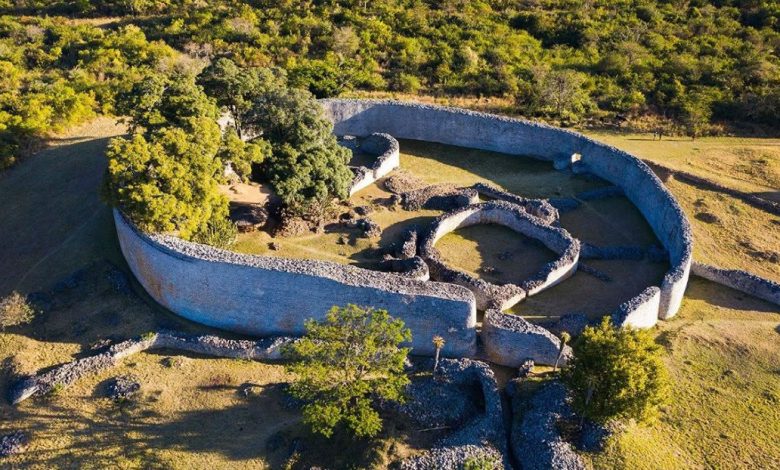
Long before modern skyscrapers transformed city skylines, an African civilisation was building an extraordinary city from granite, developing powerful trading networks and establishing a centre of political and economic influence in southern Africa. Centuries later, its stone walls still stand as a testament to the ingenuity, ambition and achievements of the people who built it.
In the southeastern part of Zimbabwe, near the modern-day city of Masvingo, stand the remains of one of Africa’s most remarkable historical settlements: Great Zimbabwe. Its enormous stone walls, carefully arranged granite blocks and distinctive architectural structures preserve the story of a society that flourished centuries before European colonial rule in the region.
Built and expanded primarily between the 11th and 15th centuries, Great Zimbabwe became the centre of a powerful Shona civilisation whose influence extended across the Zimbabwean plateau. At its height, it was an important centre of governance, agriculture, livestock production, craftsmanship and long-distance trade. Archaeological discoveries have also established its connections with commercial networks reaching the East African coast and the wider Indian Ocean world.
Great Zimbabwe is more than an ancient settlement. It represents a period in African history when local knowledge, skilled craftsmanship, natural resources and international commerce came together to build a thriving society. Its legacy is so significant that the modern nation of Zimbabwe took its name from the historic site.
The Origins of Great Zimbabwe: A City Built by African Hands
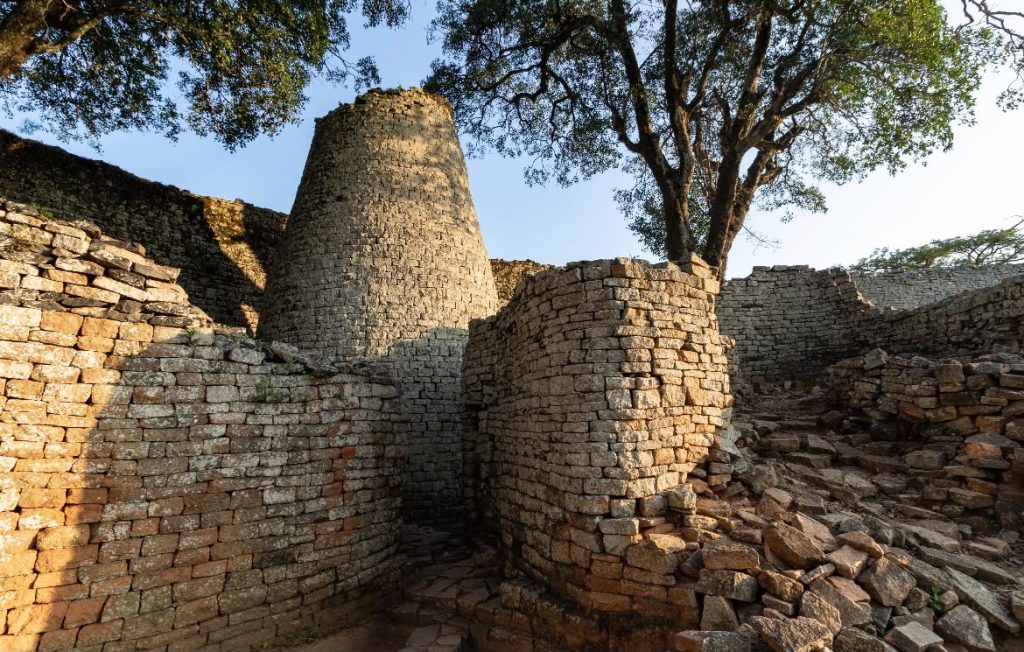
Great Zimbabwe developed in the region inhabited by the ancestors of the Shona people, who established communities across the fertile and mineral-rich landscapes of what is now Zimbabwe. Although the wider area had earlier traces of human occupation, the settlement that became Great Zimbabwe began to emerge as a major centre around the 11th century.
The city grew over several centuries, with its buildings, enclosures and surrounding settlements reflecting an increasingly organised society. Rather than appearing all at once, Great Zimbabwe developed through successive generations of construction, economic activity and political consolidation.
The name Zimbabwe is commonly associated with the Shona term dzimba dzemabwe, meaning “houses of stone.” The name reflects the distinctive stone architecture that came to define the settlement and the wider building tradition of the region.
Great Zimbabwe was part of a broader tradition of stone-walled settlements across southern Africa. Archaeologists have documented hundreds of related sites in present-day Zimbabwe and neighbouring countries, demonstrating that the construction techniques and social systems associated with this architectural tradition were not isolated achievements.
What distinguished Great Zimbabwe was its scale, the sophistication of its construction and its importance as a political and economic centre. It became the largest and most influential settlement of its kind in the region, leaving behind an architectural legacy that continues to attract researchers and visitors from around the world.
The Extraordinary Architecture: How the Stone Walls Were Built
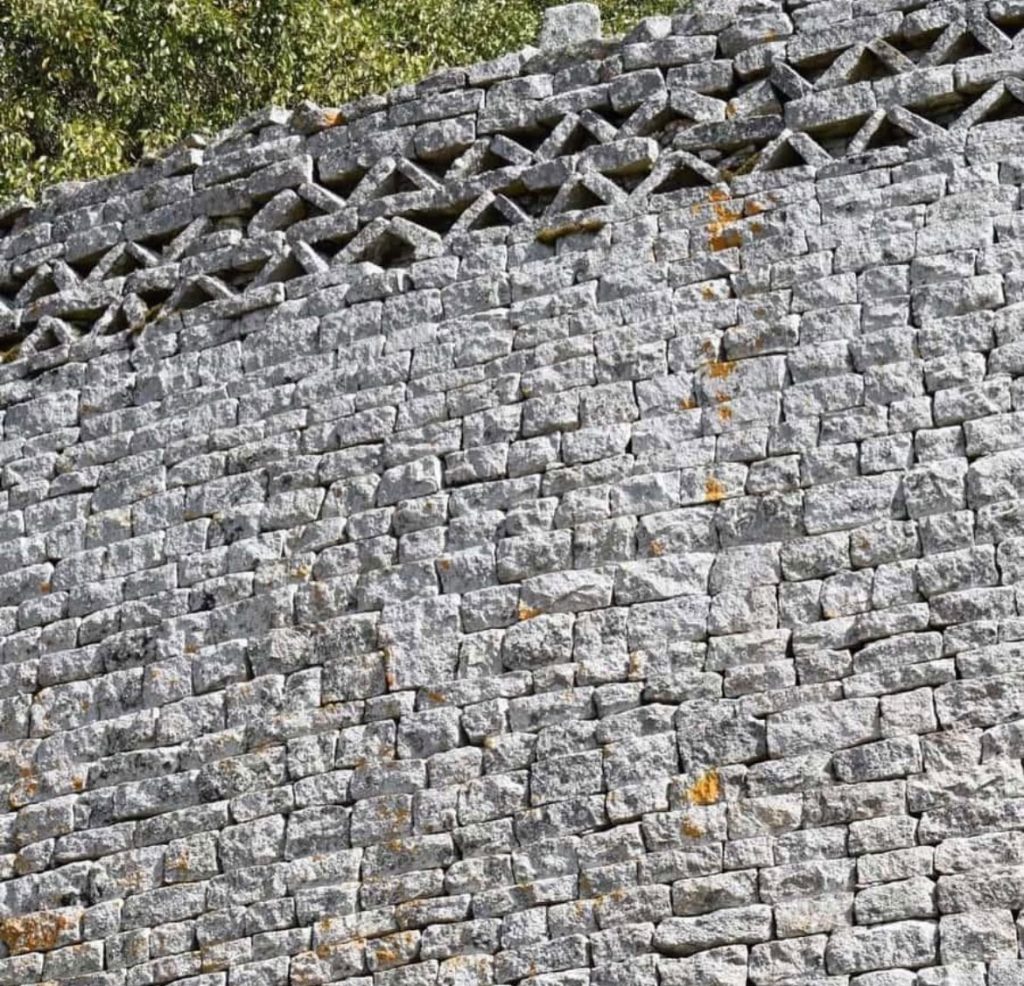
One of the most remarkable features of Great Zimbabwe is its dry-stone architecture. Its builders constructed extensive walls using carefully selected and shaped granite stones, fitted together without mortar or cement.
The technique required an understanding of stone selection, weight distribution, structural stability and the natural properties of the materials available in the surrounding environment. The walls were not simply heaps of rocks piled on top of one another. Their carefully arranged courses, flowing curves and decorative patterns demonstrate considerable technical skill.
Some walls rise more than nine metres above the ground, while the Great Enclosure extends for approximately 250 metres around its perimeter. Its scale and workmanship make it one of the most impressive surviving examples of precolonial stone construction in sub-Saharan Africa.
The use of granite was particularly practical because the surrounding landscape contains extensive granite formations. The builders worked with locally available stone to create structures that have survived for centuries, despite exposure to weather and environmental change.
The architecture also reveals an aesthetic sensibility. Certain walls feature chevron and chequered patterns, showing that appearance mattered alongside structural function. The builders created a distinctive architectural style that communicated skill, status and the identity of the society that produced it.
The site’s surviving structures offer a valuable opportunity to understand how African communities developed their own construction methods and monumental architecture using local materials and accumulated knowledge.
Three Remarkable Sections That Define Great Zimbabwe
The archaeological site is organised around three principal groups of ruins: the Hill Complex, the Great Enclosure and the Valley Ruins. Each contributes to our understanding of the settlement’s development and social organisation.
- The Hill Complex
Built on a prominent granite outcrop, the Hill Complex contains some of the oldest surviving structures at the site. Its elevated position distinguishes it from the lower enclosures, and its remains point to an important role in the city’s political, social and spiritual life.
The complex demonstrates how the natural landscape was incorporated into the design of the settlement rather than treated merely as a backdrop.
- The Great Enclosure
This is one of the site’s most recognisable structures. Its immense curved walls surround an extensive enclosed area, with a distinctive conical tower standing within it.
The precise purpose of the enclosure remains debated. It may have had important elite, residential, ceremonial or symbolic functions. Its size and elaborate construction nevertheless demonstrate the resources and organisation available to the society that built it.
- The Valley Ruins
Scattered across the lower landscape are the remains of additional stone enclosures and residential areas. Together with evidence of homes and everyday activities, these ruins help researchers reconstruct how people lived beyond the most monumental structures.
They also show that Great Zimbabwe was not simply a collection of impressive walls. It was a wider settlement with a population, working communities and an economy that sustained urban life.
The relationship between these three areas is part of what makes Great Zimbabwe so important to archaeology. The ruins preserve evidence of different spaces within a complex society, even though many details about the functions of individual buildings remain uncertain.
A Powerful Kingdom Supported by Agriculture, Cattle and Trade
Great Zimbabwe’s monumental architecture was only one part of its success. Behind the stone walls was an economy that combined farming, livestock keeping, specialised production and commercial exchange.
Agriculture helped sustain the population, while cattle were an important source of wealth, food and social status. Communities also worked with iron, copper, gold and other materials, producing tools, ornaments and goods that supported everyday life and wider economic activity.
The surrounding region’s natural resources contributed to the growth of the settlement. Gold was particularly important because it connected the interior of southern Africa to wider commercial networks. Great Zimbabwe occupied a strategic position between gold-producing areas on the plateau and trading routes leading towards the Indian Ocean coast.
Its prosperity depended not only on the availability of resources but also on the organisation of production, the movement of goods and the political authority exercised across the surrounding territory. The settlement became a major centre within a regional system of exchange that extended beyond its immediate surroundings.
This combination of agricultural production, livestock wealth, skilled craftsmanship and trade helped sustain the society for generations. It also illustrates an important point about Great Zimbabwe: the city was not built by architecture alone. Its monumental structures were supported by the work of farmers, herders, craftspeople, traders and the wider communities that supplied its needs.
Great Zimbabwe’s International Connections: From Southern Africa to Asia
Perhaps one of the most fascinating aspects of Great Zimbabwe’s history is the evidence that its people participated in long-distance trade centuries before today’s globalised economy.
Archaeologists have recovered imported objects, including glass beads and porcelain associated with China and Persia, as well as coins linked to the Swahili trading city of Kilwa on the East African coast. These discoveries provide physical evidence of commercial connections between the African interior and the wider Indian Ocean trading world.
One important link in this network was the coastal trading settlement of Sofala, in present-day Mozambique. The coast connected inland producers and traders with maritime routes used by merchants operating across East Africa and the Indian Ocean.
Gold from the interior was among the commodities that moved through these networks. Ivory and other goods also formed part of regional commerce. In return, imported objects travelled inland, carrying materials and products from distant markets into the communities of southern Africa.
The presence of foreign goods at Great Zimbabwe does not mean that the city was built by outsiders. Rather, the archaeological evidence shows that an African society with its own political institutions, productive economy and architectural traditions participated in an extensive commercial world.
Great Zimbabwe was therefore not an isolated settlement separated from the rest of the world. It was part of a network through which African producers and traders contributed to the movement of valuable goods across continents.
Its history adds an important dimension to the story of international trade: African societies were active participants in these exchanges, with their own resources, commercial interests and centres of power.
The People Behind the City
The achievements of Great Zimbabwe are often presented through photographs of its towering walls, but the people who built and sustained the settlement are central to its story.
The Shona-speaking ancestors associated with Great Zimbabwe lived in communities whose livelihoods included farming, herding, metalworking and other skilled activities. Their society developed institutions capable of coordinating labour, managing resources and sustaining a major centre of political authority.
The city’s growth would have required the combined efforts of people with different skills and responsibilities. Stoneworkers had to select and position granite. Farmers produced food. Herders maintained livestock. Metalworkers transformed raw materials into useful objects, while traders moved goods between communities.
The settlement’s political leadership also appears to have been closely connected to the management of wealth, particularly livestock, and the organisation of exchange. Although many details of its political structure remain subjects of archaeological study, the scale of the city provides evidence of a society capable of coordinating economic and social life on a considerable scale.
At its height, Great Zimbabwe supported a population numbering in the thousands, with estimates varying among researchers. Some scholarly accounts place its population above 10,000, while others propose higher figures. The exact number remains uncertain, but the evidence clearly points to a substantial settlement.
The story of Great Zimbabwe is therefore also a story of collective achievement: generations of people developing knowledge, building institutions and creating a society whose influence extended far beyond its monumental centre.
Why Did Great Zimbabwe Decline?
For a city that achieved such prominence, Great Zimbabwe’s eventual decline raises an important historical question: what happened to the kingdom that built it?
By around the mid-15th century, the city had lost much of its former prominence, and its central settlement was largely abandoned or significantly reduced in occupation. Historians and archaeologists have proposed several explanations, but no single cause has been conclusively established.
One explanation concerns pressure on local resources. A substantial population required reliable supplies of food, water, fuel and grazing land. Deforestation and pressure on the surrounding environment may have made it increasingly difficult to sustain the settlement at its existing scale.
Changes in political authority and trade routes may also have contributed. As regional power shifted, other centres gained influence. Khami, located in present-day southwestern Zimbabwe, became an important successor centre in the region.
Environmental pressures, changing economic conditions and political developments may have interacted rather than operating independently. The evidence does not support reducing the decline of Great Zimbabwe to one simple event or a single definitive explanation.
Importantly, the decline of the central city did not mean the disappearance of the people or culture associated with it. Communities continued to live throughout the region, and political and economic traditions developed in new centres. The history of Great Zimbabwe is part of a broader story of changing African societies, rather than the sudden end of a civilisation.
The Struggle to Recognise Its African Origins
One of the most significant chapters in Great Zimbabwe’s modern history concerns the way its origins were interpreted during the colonial period.
When European explorers and colonial authorities encountered the ruins in the 19th century, some refused to accept that the monumental structures had been built by the ancestors of the local African population. Instead, various theories attributed the site to foreign peoples or distant civilisations.
These claims reflected the racial prejudices of the period rather than the evidence of African craftsmanship and settlement history.
Archaeological research subsequently established the site’s development by the ancestors of the Shona people. Its architecture, artefacts and surrounding settlement patterns provide evidence of a complex African society that developed its own monumental building traditions, economic institutions and political authority.
Recognising these African origins is essential to understanding Great Zimbabwe accurately. The site demonstrates that monumental architecture, organised political systems, sophisticated craftsmanship and participation in international commerce were all part of Africa’s historical experience.
Its story also illustrates why archaeology matters: physical evidence can challenge long-standing assumptions and restore historical achievements to the communities responsible for them.
From an Ancient Kingdom to the Identity of a Modern Nation
Great Zimbabwe’s influence extends beyond archaeology because its name and symbols became part of the identity of the modern Zimbabwean nation.
When Zimbabwe gained independence in 1980, the country adopted a name drawn from this historic civilisation. The decision connected the new nation to a past that long predated colonial rule and recognised the significance of the societies that developed in the region.
Another enduring symbol is the Zimbabwe Bird, a carved soapstone figure associated with Great Zimbabwe. Stone bird sculptures were recovered from the site, and the bird has since become one of the country’s most recognisable national symbols. It appears on Zimbabwe’s flag and other official emblems, linking the country’s contemporary identity to its historical heritage.
The connection is significant because Great Zimbabwe is not simply a monument belonging to the distant past. Its name, architecture and artistic heritage continue to shape how Zimbabwe presents its history and cultural identity to the world.
For Zimbabweans, the ruins are a reminder of the society that existed before colonial rule and of the generations whose achievements form part of the country’s historical foundations.
Great Zimbabwe and Its Recognition as a UNESCO World Heritage Site
In 1986, UNESCO inscribed Great Zimbabwe on the World Heritage List, recognising its outstanding cultural significance and its importance as evidence of the civilisation that built it.
The protected monument covers an extensive landscape near Masvingo in southeastern Zimbabwe. UNESCO identifies the site as a unique testimony to the Shona civilisation that flourished between the 11th and 15th centuries.
Its importance rests on several connected qualities: its exceptional stone architecture, the historical evidence preserved in its ruins, and its symbolic significance to Zimbabwe and the wider understanding of African history.
World Heritage recognition also brings attention to the responsibility of preserving the site for future generations. Its walls and other structures are vulnerable to environmental conditions, vegetation, erosion and the effects of inappropriate human activity. Conservation requires continued research, careful management and respect for the cultural significance of the landscape.
Protecting Great Zimbabwe is not only about preserving old buildings. It is about safeguarding archaeological evidence, cultural memory and a heritage that belongs within the wider history of humanity.
What Great Zimbabwe Contributes to Africa and the World Today
The significance of Great Zimbabwe reaches beyond the borders of Zimbabwe. Its legacy offers several important lessons for the continent and the international community.
First, it preserves evidence of African innovation. Its dry-stone architecture demonstrates how generations of builders developed sophisticated construction methods using local materials. The surviving walls provide an enduring example of technical skill and artistic expression.
Second, it offers a deeper understanding of African economic history. The site’s agricultural foundations, mineral wealth and commercial connections help researchers explain how inland African societies participated in regional and international trade. Archaeological discoveries connect the settlement to a wider network of exchange extending towards the Indian Ocean.
Third, it strengthens cultural identity and historical understanding. Great Zimbabwe provides Zimbabweans and other Africans with a tangible connection to the continent’s precolonial past. It also challenges incomplete accounts of world history that overlook the achievements of African societies.
Fourth, it contributes to education, research and tourism. As a protected heritage site, Great Zimbabwe attracts interest from visitors, students, archaeologists and historians. Its preservation creates opportunities for cultural tourism and heritage education, although the extent of the economic benefits depends on investment, management and the involvement of surrounding communities.
Finally, the site provides a reminder that the achievements of a civilisation should not be measured solely by the survival of its political power. Knowledge, artistic traditions, architecture and cultural symbols can endure long after a city loses its former prominence.
These contributions make Great Zimbabwe relevant not only to the study of Zimbabwean history but also to wider conversations about African heritage, sustainable preservation and the place of African societies in world history.
A Legacy Written in Stone
Centuries after the city’s greatest period of influence, Great Zimbabwe continues to command attention through the structures its builders left behind.
Its walls preserve evidence of a society that organised labour, developed specialised skills, sustained a substantial population and participated in commercial networks extending far beyond its immediate surroundings. Its artefacts reveal connections with distant markets, while its architecture demonstrates a distinctive tradition of African craftsmanship.
The city eventually lost its position as a major political centre, but the achievements of the people who built it were not erased. Their legacy survived in the ruins, in the wider architectural traditions of southern Africa, and in the name and symbols adopted by the modern nation of Zimbabwe.
Today, Great Zimbabwe stands as one of the continent’s most important cultural landmarks. It reminds the world that Africa’s history contains stories of ingenuity, enterprise, artistic achievement and international connection that deserve to be understood on their own terms.
Great Zimbabwe is not merely a city that once existed. It is a lasting record of what an African civilisation built, how it connected with the world, and how its legacy continues to shape a nation’s identity centuries later.
TNAM