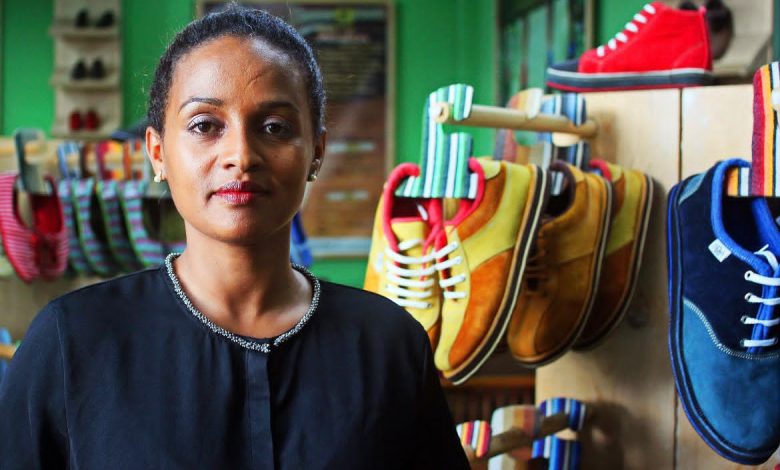
From a community in Addis Ababa to the international footwear market, Bethlehem Tilahun Alemu has built her business around a powerful idea: African craftsmanship, local resources and homegrown talent can create products that compete on the global stage.
Africa’s business story is often told through its natural resources, international investments and emerging technology companies. But another important part of the continent’s economic growth is the rise of African entrepreneurs building brands from local skills, materials and cultural heritage.
One of these entrepreneurs is Bethlehem Tilahun Alemu, an Ethiopian businesswoman best known as the founder of soleRebels, a footwear company that brought traditional Ethiopian craftsmanship to international markets.
Her journey began with a problem she observed in her own community: people possessed valuable skills but had limited opportunities to turn those skills into sustainable employment. Rather than looking outside the community for a solution, she set out to build a business that could connect local craftsmanship with global demand.
Today, Alemu is recognised internationally for her approach to entrepreneurship, which combines product design, cultural identity, local production and job creation.
From Addis Ababa to the World
Bethlehem Tilahun Alemu was born and raised in Zenebework, also known as the Total area, in Addis Ababa, Ethiopia. She grew up in a community where access to employment opportunities was limited, even though many residents possessed practical skills and artistic abilities.
Her parents influenced her outlook on work, education and community responsibility. Her mother worked as a cook, while her father was an electrician. Their example helped shape her appreciation for hard work and the value of developing useful skills.
Alemu studied accounting at Unity University in Addis Ababa, graduating in 2004. Before establishing her own business, she gained exposure to different aspects of the leather and apparel industries, including marketing, sales, design and production.
These experiences gave her an understanding of how products are developed, manufactured and sold. They also helped her identify an opportunity to build a business around Ethiopia’s existing artisan traditions.
She recognised that local craftsmanship could become more than a source of income for individual artisans. With the right product design, production standards and access to international markets, it could support a larger enterprise.
That idea became the foundation of soleRebels.
The Birth of soleRebels
Alemu founded soleRebels in 2005 to create employment opportunities in her community by using local artisan skills and Ethiopian materials to manufacture footwear.
The concept drew inspiration from traditional Ethiopian shoes, including selate and barabasso, which are associated with soles made from recycled vehicle tyres. She saw an opportunity to reinterpret this heritage through contemporary designs that could appeal to customers beyond Ethiopia.
Instead of simply reproducing traditional footwear, the company developed a range of shoes and sandals that combined Ethiopian craft techniques with modern styling.
The approach also emphasised the use of locally sourced and recycled materials, including hand-spun and handwoven fabrics and natural plant fibres.
This gave the company a distinctive identity. Its products were connected to a specific cultural heritage while being designed for a wider international market.
The business was also established with a clear employment objective. By working with local artisans and drawing on their skills, soleRebels sought to create jobs and generate economic value within the community where it originated.
Alemu’s vision was to demonstrate that a company could grow internationally without abandoning the local knowledge and resources that made its products distinctive.
Taking Ethiopian Craftsmanship to International Markets
Building a product is only one part of establishing a successful business. Reaching customers, creating brand recognition and competing with established international companies require a different set of capabilities.
Alemu pursued partnerships with online retailers and developed the company’s e-commerce presence to reach customers outside Ethiopia.
The brand secured international distribution and expanded its reach through retail partnerships. By 2016, soleRebels was reported to be exporting to 45 countries, with its products available through a growing international retail network.
The company also developed branded retail stores, extending its presence beyond online sales.
This expansion demonstrated the commercial possibilities of combining traditional craftsmanship with contemporary design, international distribution and a clearly defined brand identity.
For Alemu, international growth was not simply about selling more shoes. It was also about establishing an Ethiopian-founded company that could compete in a market dominated by well-known global footwear brands.
Her work helped draw attention to the potential of African manufacturing and the role that locally developed brands can play in international trade.
Building Businesses Around African Identity
soleRebels was not the only business Alemu pursued. Her entrepreneurial activities expanded into other sectors, including leather goods, coffee and food.
In 2014, she launched Republic of Leather, a luxury leather goods venture built around product design, craftsmanship and support for makers.
She also established Garden of Coffee, a business designed to present Ethiopian coffee and its cultural heritage to wider markets. Ethiopia is internationally recognised for its coffee-growing traditions, and the venture reflected Alemu’s interest in developing consumer brands around products and skills associated with her country.
Her other ventures have included Made by Ethiopia, an initiative focused on strengthening Ethiopia’s footwear and leather manufacturing sector and connecting local production with international opportunities.
Across these businesses, a recurring theme has been the use of Ethiopian skills, resources and cultural identity as foundations for commercial development.
Rather than treating African heritage as something to preserve only through cultural exhibitions, Alemu has explored how it can be incorporated into products that people buy and use in everyday life.
This approach places cultural identity within a broader economic conversation: local traditions can create commercial value when they are supported by thoughtful design, quality production and access to customers.
Her Approach to Employment and Local Production
One of the central ideas behind Alemu’s work is that business growth should create opportunities for the people involved in producing the goods being sold.
soleRebels was established partly in response to limited employment opportunities in her community. By engaging local artisans, the company sought to create a route through which practical skills could generate income and support livelihoods.
The model also highlighted the potential of local supply chains. When businesses obtain materials and production services locally, a greater share of their economic activity can remain within the domestic economy.
This does not mean every input can always be sourced locally or that every business can operate in the same way. However, Alemu’s experience illustrates how entrepreneurs can assess the resources already available in their communities and build commercial opportunities around them.
Her approach has attracted attention because it challenges the assumption that African businesses must rely primarily on importing finished products or exporting raw materials.
Instead, it presents another possibility: African companies can develop, manufacture, brand and sell finished products to customers around the world.
Recognition and International Influence
Alemu’s entrepreneurial work has received recognition from international business and development organisations.
In 2011, the World Economic Forum named her a Young Global Leader. She was also recognised by the African Business Awards as Outstanding African Business Woman that year.
In 2012, she was included in Forbes-related coverage of influential women entrepreneurs, while Fast Company recognised her among its creative business figures in 2013.
She has also participated in international discussions on entrepreneurship, manufacturing, trade and Africa’s economic development.
These recognitions brought wider attention to her work and to the business model she developed through soleRebels.
Her significance, however, extends beyond awards. She has helped demonstrate how an African-founded company can use local production and cultural heritage as the basis for an internationally recognised brand.
What African Entrepreneurs Can Learn From Her Journey
Alemu’s experience offers several lessons for entrepreneurs across the continent.
Start with the resources around you. Her business was built around skills and traditions already present in her community. Entrepreneurs do not always need to introduce something entirely unfamiliar; they can create value by developing what already exists.
Understand the market beyond your immediate environment. soleRebels combined Ethiopian craftsmanship with designs intended for international customers. Understanding the needs of different markets can help businesses expand beyond their original customer base.
Build a recognisable identity. The company’s connection to Ethiopian materials and traditional footwear gave it a distinct story. A strong identity can help a brand communicate what makes its products different.
Think about production as well as sales. Building a sustainable business requires attention to manufacturing, sourcing, quality, distribution and customer experience, not just promotion.
Connect growth with economic opportunity. Alemu’s original vision included creating employment in her community. Her journey illustrates how business objectives can be linked to the development of local skills and productive capacity.
These lessons are relevant to African businesses in fashion, food, manufacturing, design and other sectors where local resources and expertise can be developed into competitive products.
A Different Perspective on African Business
Bethlehem Tilahun Alemu’s story forms part of a wider shift in how African entrepreneurship is understood.
Her work challenges the idea that international success must begin with a foreign company, an imported product or a business model developed elsewhere.
Through soleRebels, she demonstrated how an Ethiopian entrepreneur could draw on local craftsmanship, develop a distinctive product and build connections with international markets.
Her experience also highlights an important distinction between having resources and building an industry around them. Raw materials and traditional skills can create opportunities, but turning them into successful businesses requires design, investment, production systems, market access and consistent attention to quality.
These are the areas in which entrepreneurs can help strengthen domestic industries and create more value within their own economies.
For African countries seeking to expand manufacturing, create jobs and develop internationally competitive brands, her journey provides a practical example worth examining.
Looking Beyond the Brand
Bethlehem Tilahun Alemu’s entrepreneurial journey began with a community need, but it grew into a broader effort to establish African craftsmanship within the international marketplace.
Her work through soleRebels and her other business ventures reflects a consistent interest in building brands around local talent, cultural heritage and production.
The broader significance of her story lies in the possibilities it presents for African businesses. Communities across the continent possess skills, materials, traditions and creative abilities that can form the foundations of commercially viable enterprises.
Realising that potential requires more than celebrating local products. It demands investment in production, strong business management, market research, effective distribution and the ability to meet customers’ expectations.
Alemu’s journey shows how these elements can come together in an African-founded business with international ambitions.
As more African entrepreneurs explore ways to transform local expertise into globally competitive products, her experience offers a valuable case study in the relationship between entrepreneurship, cultural identity and economic opportunity.
TNAM