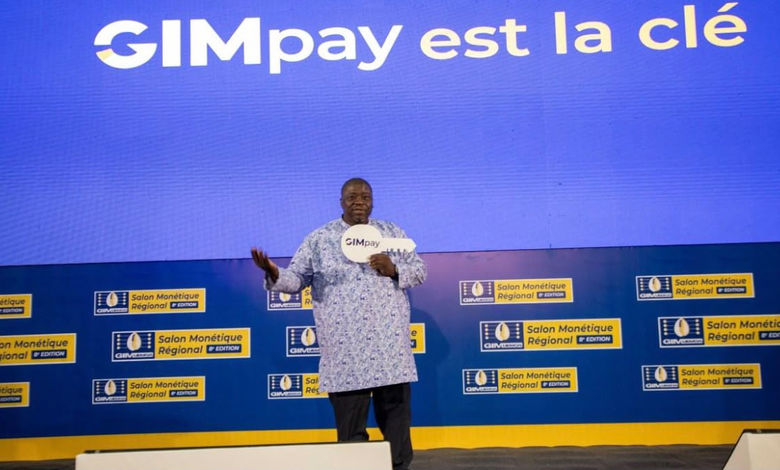
A regional payment platform launched with the promise of making financial transactions across West Africa simpler and more connected is facing a major challenge: getting the region’s banks, fintechs and mobile-money operators to actually work together on the same infrastructure.
GIMpay, developed by the Groupement Interbancaire Monétique de l’UEMOA (GIM-UEMOA), was unveiled in Dakar in November 2024 as a digital payment platform designed to bring different financial services into one interoperable ecosystem.
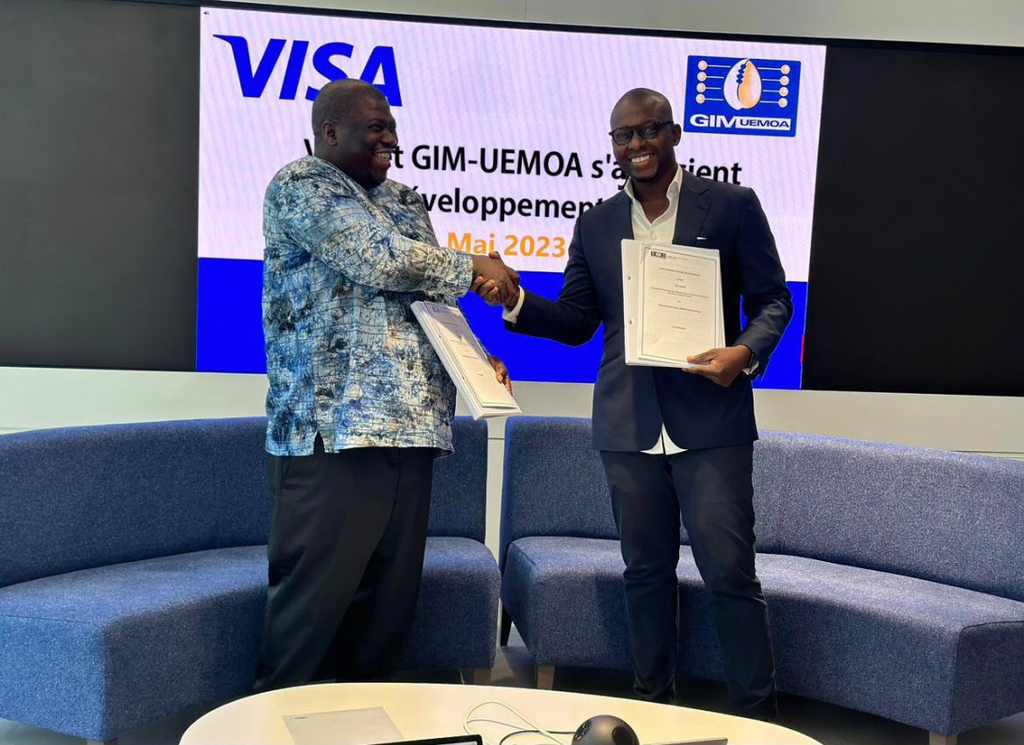
The idea was straightforward. Instead of customers having to move between different bank applications, mobile-money wallets and payment platforms, GIMpay was designed to allow them to use multiple financial instruments through a single platform.
A customer in Senegal, for example, could theoretically use an Orange Money wallet to pay a bill or make a payment in Côte d’Ivoire through another provider without first withdrawing cash or navigating several separate systems.
GIM-UEMOA presented the platform as a way to reduce the fragmentation of West Africa’s payment ecosystem and make digital financial services easier to use.
But the rollout has proved much harder than the launch suggested.

When GIMpay was unveiled at the eighth Regional Payment Salon in Dakar in November 2024, GIM-UEMOA promoted it as a platform capable of bringing together banks, fintechs and electronic-money providers.
At the time, the organisation said more than 75 contributors were already integrated into the system.
However, an interview with then-GIM-UEMOA Director General Minayegnan Coulibaly in January 2025 gave a different picture of the rollout.
About two months after the launch, only around a dozen institutions had signed agreements and were in the process of integration. Ecobank, Orange Money and CinetPay were among the institutions identified as early participants. (RJB World Tools)
The distinction is important: being a contributor or partner to the ecosystem was not necessarily the same as being fully connected and ready to process transactions.
By June 2026, the integration challenge was still unresolved.
In an interview published by CIO Mag on June 15, 2026, Coulibaly said GIMpay was continuing to integrate banks and other financial actors in order to reach a critical mass before the widespread deployment of transactions.
According to him, several banks had to rebuild or significantly modify their application programming interfaces (APIs), while mobile-money operators also had to make major technical adjustments to connect to the platform.
That means the biggest problem was not simply creating GIMpay itself. The difficult part was connecting the financial systems that GIMpay was supposed to bring together.
West Africa already has a large digital-payment ecosystem.
Banks have their own systems. Mobile-money operators have their own wallets and technology. Fintechs have built payment platforms around specific services, while national payment switches and other financial infrastructures operate alongside them.
For a platform such as GIMpay to work at regional scale, these systems have to communicate reliably and securely.
That requires compatible APIs, technical testing, security standards, transaction-routing arrangements and cooperation between institutions that may otherwise compete with one another.
The experience of GIMpay shows that launching a regional payment platform does not automatically create interoperability.
Every participating institution still has to connect its own infrastructure to the shared system.
And that process can require significant technical work and investment.
The challenge matters because West Africa’s financial systems remain heavily dependent on cash even as digital payments expand.
According to figures provided by GIM-UEMOA, the eight-country UEMOA region recorded 213 million bank-card transactions in 2024, with a total value of about CFA15.7 trillion.
But around 85% of the value of those card transactions came from cash withdrawals rather than direct payments.
Mobile money is considerably larger. The region recorded almost 12 billion mobile-money transactions worth about CFA158 trillion in 2024.
Yet a large proportion of mobile-money activity is still connected to cash including wallet funding, transfers between wallets and cash withdrawals.
For GIM-UEMOA, the objective is therefore not simply to get more people to own mobile-money accounts.
The bigger goal is to make digital money useful for everyday economic activity paying businesses, buying goods, paying bills, transferring money and accessing other financial services without repeatedly moving between cash and digital wallets.
What GIMpay was supposed to change
GIMpay was designed around the idea of a shared financial ecosystem.
Its proposed services include:
- Money transfers
- Electricity, water and telecommunications bill payments
- Online and physical purchases
- Connections between bank accounts and mobile-money wallets
- Additional financial services such as credit and insurance
- Loyalty and cashback programmes
- Payment services that can be offered by financial institutions through their own interfaces
GIM-UEMOA also designed GIMpay to support white-label and headless integration, meaning banks, fintechs and other financial institutions could integrate its infrastructure into their own products rather than forcing customers to abandon the services they already use.
The objective was to make the underlying payment infrastructure less fragmented while allowing different financial providers to continue serving their own customers.
The bigger problem: Africa has several payment systems
GIMpay’s difficulties come at a time when Africa is investing heavily in regional payment infrastructure.
One of the most important developments is the Pan-African Payment and Settlement System (PAPSS), which is designed to facilitate cross-border payments across African countries.
Within UEMOA itself, the BCEAO has also introduced another major infrastructure: the Platform for the Interoperable Instant Payment System, or PI-SPI.
PI-SPI was officially launched by BCEAO on September 30, 2025. It is designed to allow instant, interoperable payments between banks, electronic-money institutions, microfinance institutions and payment institutions across the eight UEMOA countries.
By June 24, 2026, BCEAO said 80 participants were connected to PI-SPI, while another 74 institutions were undergoing real-world testing. The central bank subsequently extended the deadline for banks and electronic-money/payment institutions to complete their connection to September 30, 2026.
That creates an important new dynamic for GIMpay.
The question is no longer simply whether West Africa needs interoperable payments. The region is already building multiple layers of interoperable payment infrastructure.
The question is how these systems will coexist, connect and avoid creating another layer of fragmentation.
Despite GIMpay’s difficulties, the wider digital-payment story in the region is very different.
BCEAO says electronic payments in the UEMOA area increased from about 260 million transactions in 2014 to more than 11 billion in 2024.
Financial inclusion has also increased significantly, with the central bank putting the rate at about 74%, compared with less than 15% two decades earlier.
PI-SPI is another indication that regional authorities are actively trying to solve the interoperability problem.
So the GIMpay story is not that West Africans are rejecting digital payments.
The system is designed to process payments around the clock, with transactions targeted to be completed in less than 10 seconds. BCEAO says the platform is intended to make interoperable digital payments accessible across the eight UEMOA countries.
It is that building a truly connected digital-payment ecosystem is considerably harder than building individual payment products.
Why this matters beyond banks
The outcome will affect ordinary consumers and businesses, not only financial institutions.
A truly interoperable system could make it easier for people to send money across borders, pay merchants, settle bills and use financial services without worrying about which bank or mobile-money network the recipient uses.
For small businesses, interoperability could reduce the number of payment systems they need to manage.
For fintechs, shared infrastructure could reduce the cost of building connections to individual banks and payment providers.
And for governments and regional institutions, more digital payments could make economic activity easier to track while reducing dependence on cash.
But achieving those benefits requires more than a promising application.
It requires technical compatibility, common standards, security, regulation, investment and cooperation between competing financial institutions.
GIMpay’s original promise was compelling: one platform that could make a fragmented payment environment feel like one connected system.
Nearly two years after its public launch, the central challenge remains getting enough financial institutions technically integrated for that vision to operate at scale.
Meanwhile, BCEAO’s PI-SPI is advancing a parallel regional interoperability infrastructure, making the broader UEMOA payment landscape even more important to watch.
The story therefore goes beyond one delayed fintech platform.
It raises a larger question for Africa’s digital economy: Can the continent move from having hundreds of successful digital-payment services to having payment systems that can actually talk to one another?
That is the difference between having digital finance and having a genuinely integrated digital economy.
TNAM