Nigeria Records West Africa’s First Tele-Robotic Surgery Across 500 Kilometres

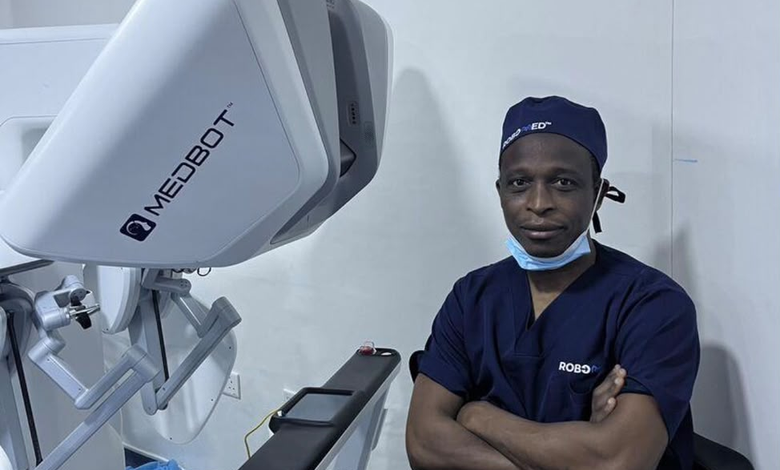
Nigeria has recorded a major development in medical technology after a surgeon in Ogun State remotely operated on a patient in Abuja, completing what the participating institutions describe as West Africa’s first tele-robotic surgery.
The procedure was performed on Saturday, September 19, 2026, through a collaboration between Redeemer’s Health Village (RHV) in Mowe, Ogun State, RoboMed Global and Nisa Premier Hospital in Abuja.
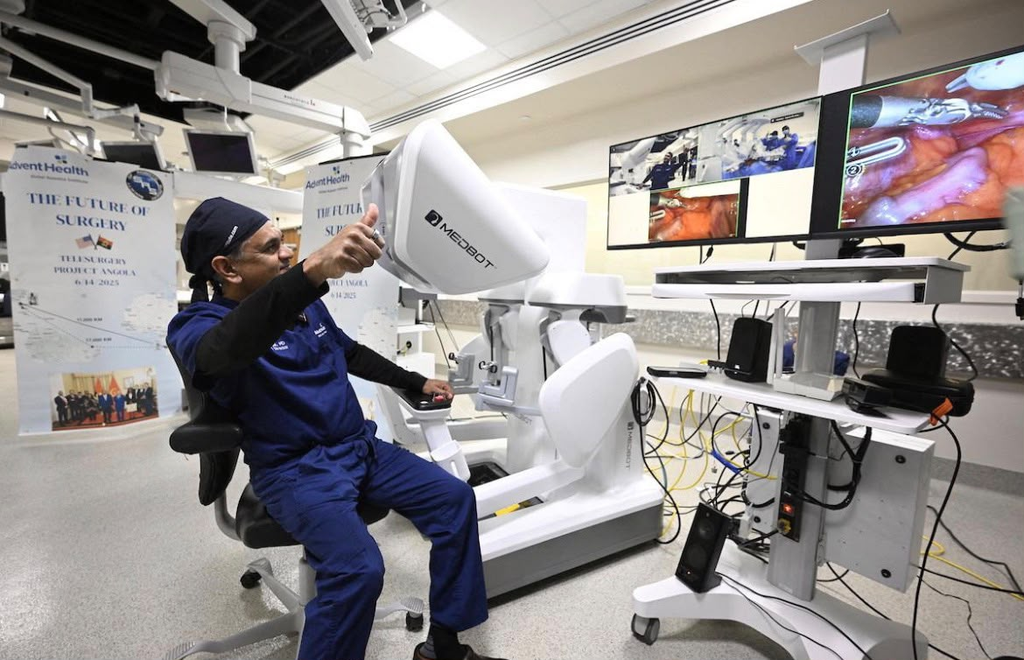
The operation involved a robot-assisted right radical nephrectomy, a procedure in which a kidney affected by cancer is surgically removed.
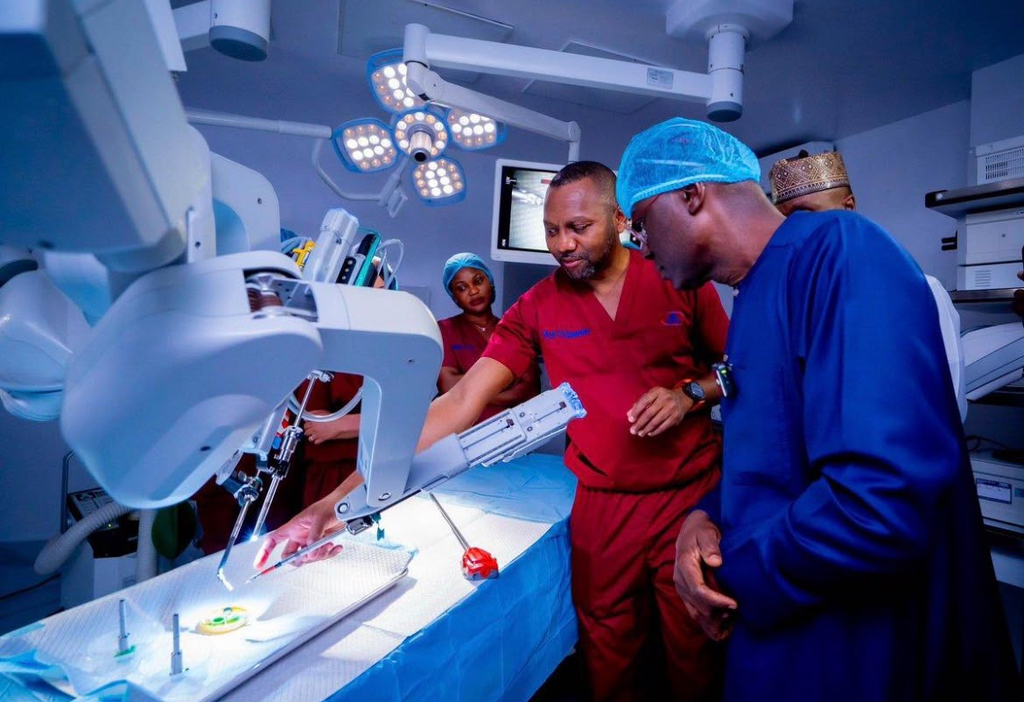
What made the operation particularly significant was the distance between the surgeon and the patient. While the patient remained at Nisa Premier Hospital in Abuja, Professor Obi Ekwenna-Davis, Professor of Urology and Transplantation and co-founder of RoboMed Global, controlled the robotic system remotely from a Toumai robotic surgical console at RHV in Mowe, approximately 500 kilometres away.
Surgery performed in real time
Unlike conventional robotic surgery, where the surgeon operates from a console within the same hospital, the procedure required commands from the surgeon’s console in Ogun State to be transmitted in real time to the robotic system at the Abuja hospital.
The operation lasted approximately three hours, with brief pauses during the procedure to verify the equipment and communication systems. Reports on the operation said Starlink satellite internet served as the primary connection, while MTN provided backup connectivity to help maintain communication between the surgeon and the robotic system.
The successful operation demonstrates how reliable telecommunications infrastructure can potentially extend specialist surgical expertise beyond the location of the surgeon.
Connecting specialists with patients
Speaking after the procedure, Ekwenna-Davis described the operation as a demonstration of what technology could make possible in Nigeria’s healthcare system.
He said the procedure was a pilot showing how innovation could help specialists provide care to patients located hundreds of kilometres away. The technology could also create opportunities for Nigerian medical professionals living abroad to contribute their expertise remotely without necessarily travelling back to Nigeria for every procedure.
For a country where access to highly specialised medical services is concentrated in major urban centres, tele-robotic surgery could eventually provide another way of connecting patients with specialist expertise.
However, the procedure was described by the participating institutions as a pilot, meaning the successful operation is an early demonstration rather than evidence that remote robotic surgery is already widely available across Nigeria.
Part of Nigeria’s growing robotic surgery programme
The tele-robotic procedure builds on the introduction of robotic surgery at RHV and the earlier deployment of the Toumai robotic surgical platform in Nigeria.
RoboMed Global and Nisa Premier Hospital previously introduced Nigeria’s first Toumai robotic surgery platform, with the programme focused on areas including urology, gynaecology, surgical oncology, bariatric and general surgery. RoboMed also established training initiatives aimed at developing Nigerian surgeons, biomedical engineers and other healthcare professionals in robotic surgery.
The Toumai system itself received regulatory approval from Nigeria’s National Agency for Food and Drug Administration and Control (NAFDAC) in December 2025, making Nigeria the first country in West Africa to approve a robotic surgical platform, according to RoboMed Global.
A potential new model for specialist healthcare
The latest procedure points to a possible future in which geography becomes less of a barrier to accessing highly specialised surgical expertise.
If the technology can be safely and reliably scaled, surgeons could potentially provide expertise to patients in locations where particular specialists are unavailable, while local medical teams continue to manage the patient and operating environment.
For Nigeria, the development also adds another dimension to the country’s efforts to expand advanced medical technology, build local surgical capacity and reduce the need for patients to travel abroad for complex procedures.
The successful operation does not, however, remove the need for trained medical teams at the patient’s location. Remote surgery depends on the availability of appropriate robotic equipment, skilled theatre staff, reliable connectivity, backup systems and strong clinical and regulatory safeguards.
The September 19 procedure therefore represents not simply a robotic operation, but an early demonstration of how medicine, robotics and telecommunications can work together to connect specialist expertise across hundreds of kilometres.
TNAM