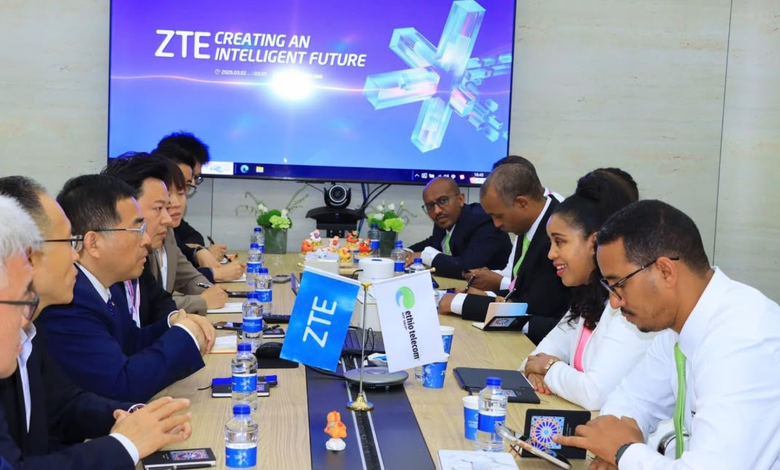
In partnership with Chinese technology company ZTE, Ethio telecom has introduced an artificial intelligence-powered network solution that has increased 4G capacity by 11% and improved peak-hour user throughput by 40% during deployment tests.
Ethiopia is taking another step towards modernising its telecommunications infrastructure with the deployment of its first pre-commercial artificial intelligence-powered Radio Access Network (AIR RAN), a technology designed to improve mobile network performance without relying entirely on additional infrastructure.
The deployment was announced on 4 November 2026 by Ethio telecom, Ethiopia’s leading telecommunications operator, and ZTE Corporation, a Chinese information and communications technology company.
According to the two companies, the new technology has delivered an 11 per cent increase in 4G network capacity and a 40 per cent improvement in user throughput during peak hours compared with the traditional network solution.
The development comes as demand for mobile data continues to increase across Ethiopia, putting additional pressure on existing telecommunications infrastructure. More people are using smartphones, digital financial services, online platforms and other data-intensive applications, making network capacity and reliability increasingly important.
Rather than depending solely on the construction of new network infrastructure, the AIR RAN solution uses artificial intelligence to make better use of the resources already available.
How the new AI-powered network works
At the centre of the development is Radio Access Network technology, commonly known as RAN. It is the part of a mobile telecommunications system responsible for connecting mobile devices, such as smartphones, to the wider network.
When someone makes a call, sends a message or accesses the internet through a mobile connection, the radio access network helps establish and maintain that connection.
The new AIR RAN solution introduces artificial intelligence into this process, allowing the network to respond more intelligently to changing traffic demands.
Developed using ZTE’s AIREngine intelligent computing engine, the system incorporates AI-driven beam scheduling. This technology helps direct and allocate radio signals more efficiently according to where network demand is coming from.
It builds on Frequency Division Duplex Massive Multiple-Input Multiple-Output technology, commonly known as FDD Massive MIMO, which allows telecommunications networks to transmit and receive multiple data streams using several antennas.
By combining this existing technology with artificial intelligence, the system can make smarter decisions about how radio resources are distributed among users.
For customers, the intended benefit is improved network performance, particularly during busy periods when many people are accessing mobile services simultaneously.
What the reported improvements mean
The performance figures released by Ethio telecom and ZTE provide an indication of what AI-powered network optimisation could achieve.
The reported 11 per cent increase in 4G capacity means the network can accommodate more data traffic using its available resources.
The 40 per cent improvement in peak-hour user throughput means users experienced a higher rate of data transfer during periods of heavy network activity compared with the traditional solution used for comparison.
These improvements could help address network congestion, support growing demand for mobile internet and improve the experience of customers who depend on digital services.
An important aspect of the deployment is that it focuses on improving existing infrastructure rather than depending entirely on the installation of additional network equipment. This could provide telecommunications operators with another way to manage rising data demand while making more efficient use of their investments.
The figures were reported by the two companies following the deployment; they should not be interpreted as a nationwide improvement across every part of Ethiopia’s mobile network.
A partnership built over two years
The latest development is part of a wider technology partnership between Ethio telecom and ZTE.
The companies said they had spent the past two years exploring ways to use artificial intelligence to improve the efficiency and performance of Ethiopia’s radio access network.
Their collaboration forms part of Ethio telecom’s broader Next Horizon: Digital & Beyond 2028 strategy, which seeks to transform the operator from a traditional telecommunications provider into a broader digital services company.
The strategy includes investments in modern network infrastructure, artificial intelligence, digital financial services, cloud solutions and other technologies.
The AIR RAN deployment also supports Ethiopia’s wider Digital Ethiopia 2030 ambitions, which place digital infrastructure and technology at the centre of the country’s development plans.
What this could mean for Ethiopia’s digital future
Reliable mobile connectivity has become increasingly important to the way modern economies operate. From digital banking and online education to e-commerce, healthcare services and business communication, more activities now depend on access to stable and efficient internet connections.
For Ethiopia, improving network capacity could help support the growing number of people and businesses relying on digital platforms.
Ethio telecom serves more than 90 million subscribers, making the performance of its infrastructure particularly important to the country’s digital development.
The introduction of AI-powered network optimisation also reflects a wider shift in the global telecommunications industry. Network operators are increasingly exploring artificial intelligence to manage traffic, improve efficiency, reduce operational pressure and prepare their infrastructure for future digital demands.
Although the current deployment is pre-commercial, the results reported by Ethio telecom and ZTE offer an indication of how artificial intelligence could become a more important part of Africa’s telecommunications infrastructure.
For Ethiopia, the development is another move towards building a more efficient digital network capable of supporting the country’s expanding digital economy.
TNAM