A medical technology developed in Niger to help healthcare workers monitor patients has won the 2026 Africa Prize for Engineering Innovation, bringing international recognition to an African solution designed around the realities of local hospitals.
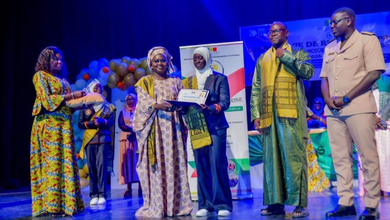
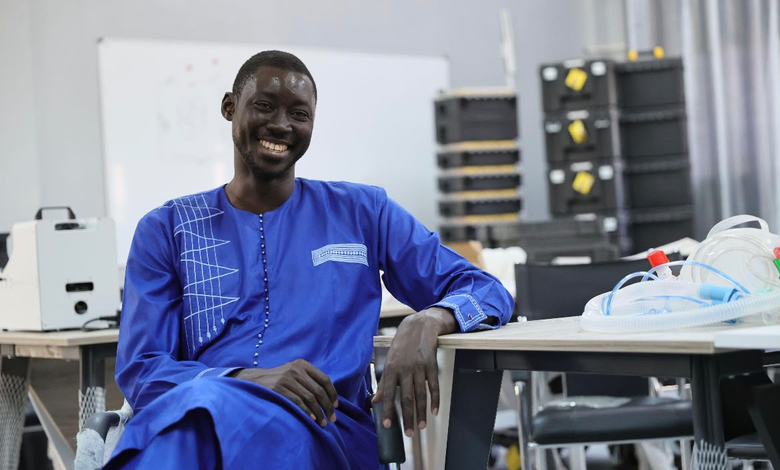
Mamane Kabirou Ousseini, an engineer and co-founder of health technology company Likita Care, received the £50,000 top prize at an awards ceremony held in Johannesburg, South Africa, on 28 October 2026. He is the first engineer from Niger to participate in and win the competition, which is organised by the Royal Academy of Engineering.
His winning innovation, Likita Care, is an integrated medical monitoring platform that combines locally manufactured equipment, clinical software and digital technology to help healthcare professionals access patient information and respond more effectively.
The idea came from a problem Ousseini repeatedly encountered while working on the maintenance and repair of medical equipment in hospitals across Niger. Imported monitoring devices would often stop working because replacement parts and specialist technical support were difficult to obtain. In facilities already dealing with limited resources, equipment breakdowns could leave medical teams without reliable tools for monitoring patients.
Rather than continue depending entirely on imported systems, Ousseini and his co-founder, Seydou Gnaly Ousmane, established Likita Care in 2019 to develop medical monitoring technology that could be manufactured, maintained and repaired locally.
How Likita Care works
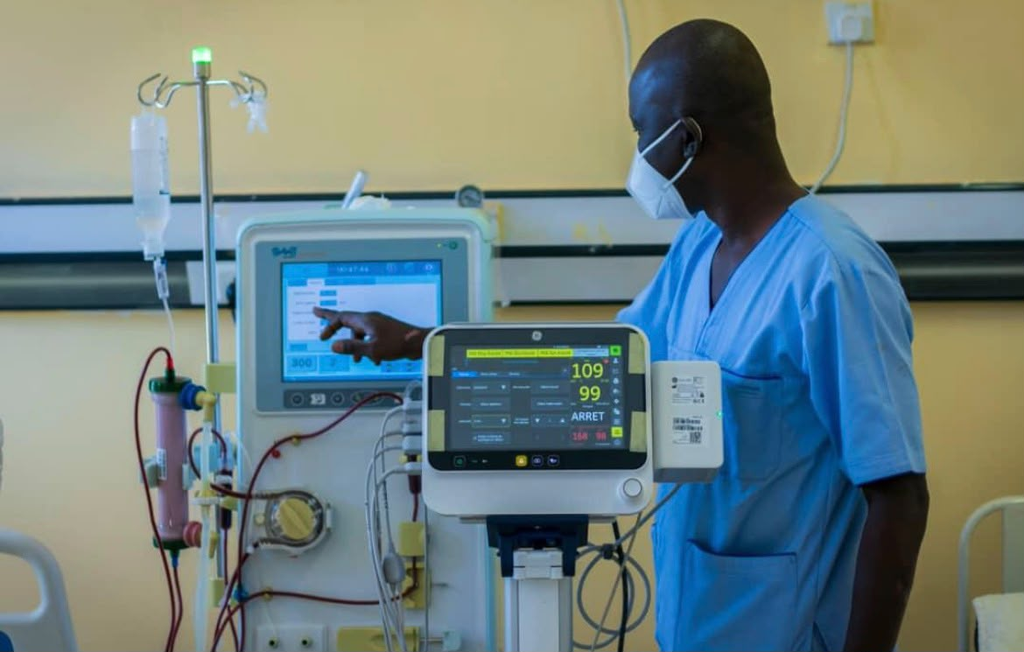
The platform is designed to support different aspects of patient care, including general patient monitoring, cardiac examinations and prenatal monitoring.
Its equipment collects vital health information, while a central software dashboard enables healthcare workers to monitor several patients at the same time. The system also incorporates an artificial intelligence module that helps interpret vital signs in real time.
Depending on the equipment being used, the platform can monitor adults, newborns and unborn babies. Its connected system also supports telemedicine and digital clinical protocols, helping healthcare teams access and manage patient information.
One of the project’s defining features is its local manufacturing approach. Its devices are produced in Niger using technologies such as 3D printing, computer numerical control (CNC) cutting and electronics assembly. This allows the company to reduce dependence on imported equipment and respond more quickly when repairs or technical adjustments are needed.
The technology has already moved beyond the development stage. More than 70 monitoring units have been produced and deployed in Niger, and five medical centres are currently using the system. It has also undergone testing involving more than 100 patients, with over 4,000 data points collected.
Recognition and plans for expansion
The £50,000 Africa Prize will support the company’s next stage of development, including plans to commercialise Likita Care in Niger, increase production and prepare for expansion into neighbouring West African markets.
The recognition also places Ousseini among a growing group of African engineers developing practical technologies to address challenges within their own communities.
The 2026 competition featured four finalists selected from a group of 16 entrepreneurs who participated in an eight-month training and mentoring programme. The finalists presented their innovations before a panel of judges and an audience in Johannesburg.
The competition also recognised three other engineering projects, each receiving £10,000.
South African engineer Dyllon Randall was recognised for Pee-Cycling, a system that converts collected urine into liquid fertiliser and treated water. The technology is designed to recover valuable nutrients while reducing water waste and dependence on imported fertiliser.
Kenyan innovator Alice Muhuhu received recognition for MoyoECG, a portable cardiac monitoring platform designed to help frontline healthcare workers identify possible heart conditions and refer patients for further medical attention. Early pilots have reduced ECG interpretation time from approximately 30 minutes to under five minutes.
Another Kenyan innovator, Naom Monari, developed Renal Roads, a mobile dialysis clinic designed to bring kidney treatment closer to people living in rural and hard-to-reach communities. The mobile facility can provide up to 400 dialysis sessions monthly.
Ghanaian innovator Johannes Amo-Aye received the £5,000 One-to-Watch Award, selected through an audience vote, for Fusion Wind Turbine, a hybrid wind and solar energy system designed to provide electricity to communities with limited access to reliable power.
Founded in 2014, the Africa Prize for Engineering Innovation supports African entrepreneurs developing engineering solutions to real-world challenges. Beyond financial awards, the programme provides training, mentorship, communications support and access to networks that can help innovators develop and commercialise their ideas.
For Niger, Likita Care’s achievement represents an important moment for its engineering and technology sector. More broadly, it highlights the growing contribution of African innovators who are not simply adapting imported technologies but developing and manufacturing solutions within the continent.
TNAM