
Namibia Invests N$1.05 Million to Expand Technical Skills Education in Secondary Schools
The Namibia Training Authority will provide funding to seven schools across the country, supporting technical and vocational education as part of the government's broader strategy to equip young people with practical, job ready skills.


Seven schools across rural Namibia will receive funding to improve vocational training, as the government intensifies efforts to equip young people with practical skills for employment and economic growth.
WINDHOEK, The Namibia Training Authority (NTA) has committed N$1.05 million to strengthen pre-vocational education in seven secondary schools across the country, reinforcing the government’s drive to prepare learners with practical and technical skills for the modern workforce.
Under the initiative, each of the selected schools will receive N$150,000 to enhance the teaching of technical and vocational subjects, particularly in communities where access to quality training opportunities remains limited.
The funding was officially presented by Deputy Minister of Education, Innovation, Youth, Sports, Arts and Culture, Dino Ballotti, who described the programme as an important investment in Namibia’s future workforce. He said the initiative aligns with the country’s Sixth National Development Plan (NDP6), which prioritises education, youth empowerment and job creation.
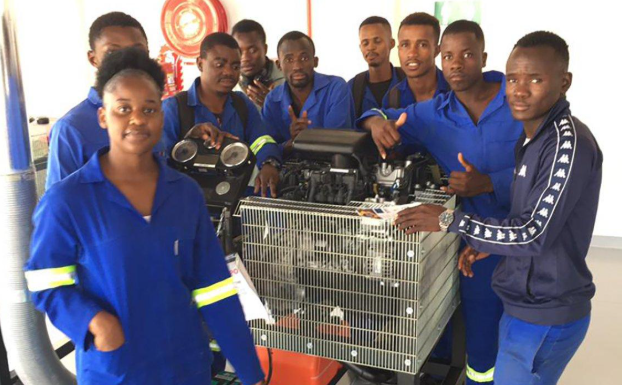
Ballotti noted that strengthening technical and vocational education is essential to producing graduates with practical skills that match the needs of industry and support national economic development.
He added that the government continues to invest significantly in Namibia’s Technical and Vocational Education and Training (TVET) system, allocating nearly N$600 million annually through the Ministry of Education, Innovation, Youth, Sports, Arts and Culture to improve training institutions and expand access to vocational education.
The deputy minister also highlighted complementary reforms introduced by the government, including subsidised tertiary education and the recently launched Work-Integrated Learning (WIL) Policy, which seeks to bridge the gap between classroom learning and workplace experience by ensuring students graduate with relevant practical skills.
According to Ballotti, meaningful education reform requires sustained investment in both infrastructure and skills development programmes that prepare young people for employment, entrepreneurship and lifelong learning.
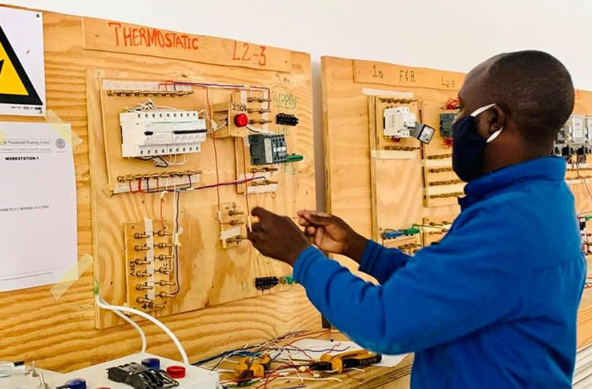
The initiative is being implemented by the Namibia Training Authority as part of its mandate to strengthen Technical and Vocational Education and Training across the country, with particular attention given to schools in rural and underserved regions.
The beneficiary institutions include //Garibams Secondary School in the //Kharas Region, Nsundano Secondary School in the Zambezi Region, Nossob Combined School in the Omaheke Region, Oluwaya Combined School in the Ohangwena Region, Haudano Secondary School in the Omusati Region, Putuavanga Junior Secondary School in the Kunene Region, and Namavambi Combined School in the Kavango West Region.
Education stakeholders say the investment is expected to improve access to hands-on technical training, modern learning resources and practical instruction, enabling more students to acquire skills that are directly relevant to Namibia’s labour market.
As the country continues to prioritise workforce development, the initiative reflects a broader commitment to building a stronger vocational education system capable of supporting economic growth, reducing youth unemployment and preparing the next generation for careers in key sectors of the economy.
TNAM
By Egwu Patience Nnennaya
Monday July 13, 2026.
