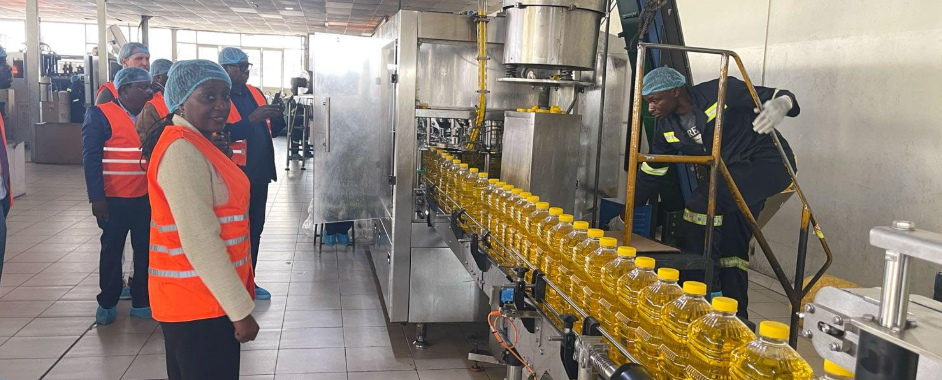
For decades, Africa has powered global industries with its vast reserves of oil, cobalt, lithium, cocoa, coffee, gold and countless other natural resources. Yet the continent has remained largely on the margins of global manufacturing, exporting raw materials while importing higher-value finished products made from its own resources. The result has been a persistent loss of jobs, industrial capacity and economic value that many experts now argue Africa can no longer afford.
Across the continent, however, there is growing evidence that this narrative is beginning to change. Governments are investing more aggressively in industrial parks, regional manufacturing hubs and value-addition industries, while businesses are increasingly looking beyond extraction towards production. The shift reflects a broader recognition that Africa’s long-term prosperity will depend not simply on what it produces, but on what it manufactures, innovates and exports.
This momentum is reflected in the African Development Bank’s Africa Industrialisation Index 2025, which shows that Africa’s manufacturing value added grew from US$285 billion in 2020 to US$351 billion in 2025. Although manufacturing still contributes less than two per cent of global output and only about 1.4 per cent of global manufacturing exports, the report argues that industrialisation remains the continent’s strongest pathway towards structural transformation, productive employment and sustainable economic growth. These figures underscore both the progress already being made and the enormous room that still exists for expansion.
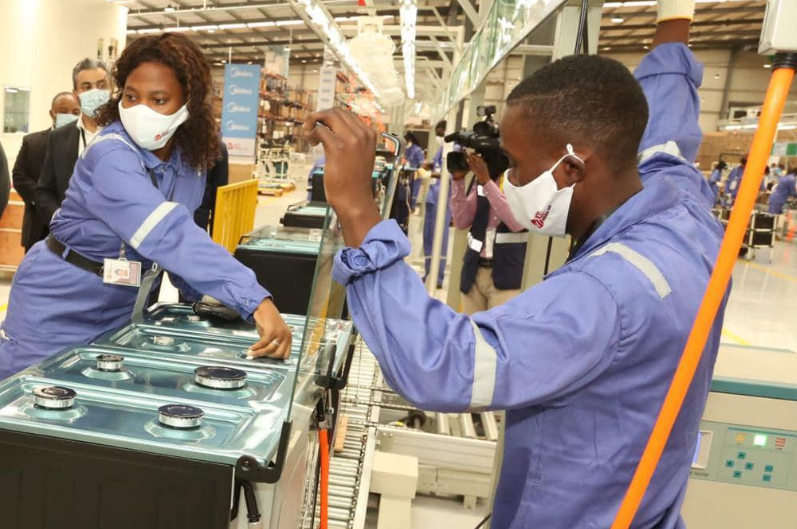
The conversation has become even more urgent as African economies seek new engines of growth beyond commodity exports. In its latest Africa Economic Update, the World Bank notes that stronger productivity, private investment and competitive industries will be essential if African countries are to create enough quality jobs for their rapidly expanding populations. Rather than relying solely on exporting raw commodities, the report encourages governments to strengthen domestic manufacturing ecosystems, deepen regional value chains and support innovation-led enterprises capable of competing in global markets.
The opportunities emerging across the continent are no longer confined to traditional manufacturing. Africa is increasingly positioning itself to play a larger role in electric vehicle battery production, pharmaceutical manufacturing, renewable energy technologies, agro-processing and digital industries powered by artificial intelligence. The African Development Bank has also intensified support for Special Agro-Industrial Processing Zones and industrial infrastructure projects designed to help African countries process more of their own agricultural and mineral resources before they reach international markets. These initiatives are helping shift the continent’s development model from exporting raw materials to creating higher-value products capable of generating skilled employment and attracting long-term investment.
These ambitions closely reflect the aspirations of the African Union’s Agenda 2063, which identifies industrialisation, regional integration and innovation as central pillars of Africa’s transformation. They also align with Sustainable Development Goal 9, which calls for resilient infrastructure, sustainable industrialisation and innovation as foundations for inclusive economic growth. Together, these frameworks recognise that no nation has achieved lasting prosperity without building productive industries capable of creating jobs, encouraging innovation and strengthening domestic economies.
With Africa expected to account for the world’s fastest-growing working-age population over the coming decades, the stakes could not be higher. Millions of young people will enter the labour market each year, bringing with them new ideas, entrepreneurial ambition and technological skills. Converting that demographic advantage into lasting prosperity will require more than economic growth alone. It will require deliberate investment in industries that can absorb talent, encourage innovation and produce globally competitive goods and services.
It is against this backdrop that conversations around industrial transformation have become increasingly important. The New Africa Youth Economic Summit & Honours 2026, themed “Building Africa’s Future Through Innovation, AI, Youth Enterprise & Strategic Partnerships,” seeks to bring together policymakers, business executives, investors, development partners, innovators and young entrepreneurs to examine practical pathways for accelerating Africa’s industrial future. As governments and institutions continue to search for sustainable models of economic transformation, partnerships that connect ideas with investment and innovation with opportunity will play an increasingly decisive role. The New Africa Group therefore extends an invitation to corporate organisations, financial institutions, development agencies, government bodies and strategic investors to partner in this continental dialogue. Supporting the summit is not simply an investment in an event; it is an investment in Africa’s next generation of innovators, manufacturers and business leaders whose ideas will help define the continent’s economic future.
Register for the New Africa Youth Economic Summit & Honours 2026: https://bit.ly/NAYS2026
TNAM
By Egwu Patience Nnennaya
Monday July 27th, 2026.