When Diana Orembe was growing up in Northern Tanzania, she watched her uncle struggle to make a living from fish farming. He invested time and money into his farm, but one expense continued to make the business difficult: feeding the fish.
Quality fish feed was expensive, and trying to cut costs often meant compromising the quality of what the fish ate. For a farmer trying to make a profit, it was a frustrating situation. And for Orembe, it was a problem she would carry with her long after leaving her uncle’s farm.
Years later, while studying microbiology at the University of Dar es Salaam, she found herself returning to that same problem. She began looking more closely at the challenges facing fish farmers and discovered that her uncle’s experience was far from unusual. Many farmers were dealing with expensive feed, limited local alternatives and the difficulty of making their businesses profitable.
But Orembe began looking at the problem from a different angle. Instead of asking how farmers could afford the feed already available, she wanted to know whether there was another way to produce it.
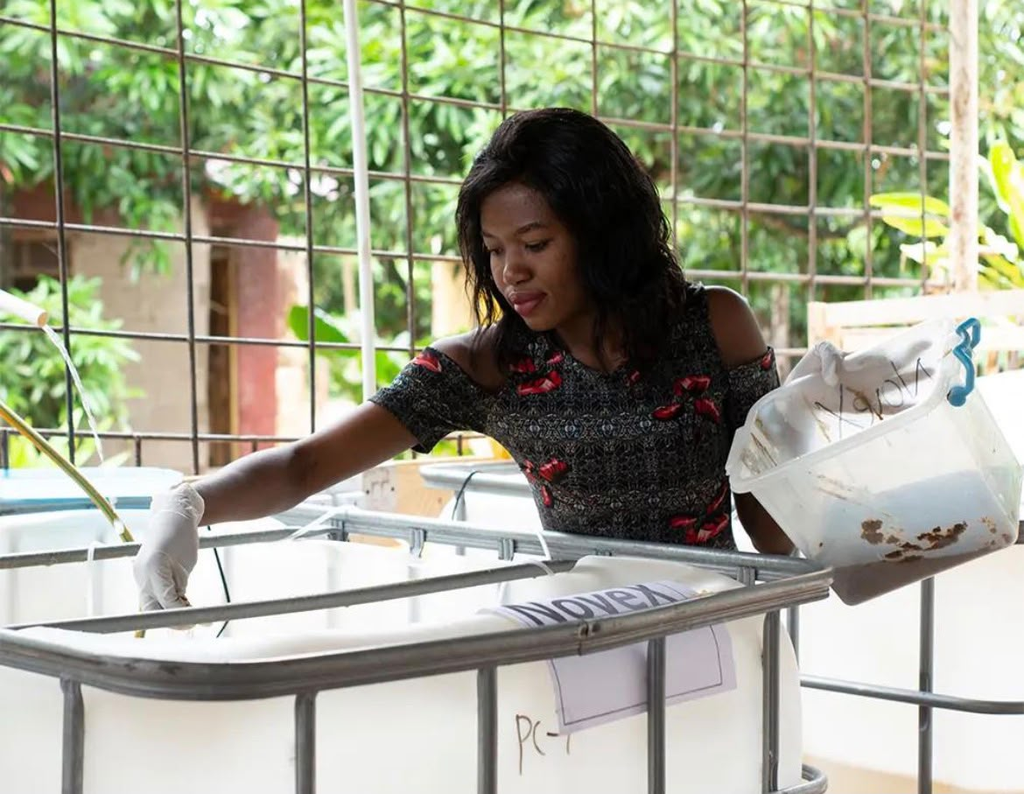
That question eventually led to NovFeed, the Tanzanian biotechnology company she co-founded with Otaigo Elisha in 2020.
The idea behind NovFeed is unusual, but its purpose is quite practical. The company collects discarded organic materials, particularly fruits and vegetables from markets and other sources, and uses bacteria to turn them into a protein ingredient for animal feed.
The science behind it is called microbial fermentation. In simple terms, selected bacteria are introduced to processed organic waste, where they feed on the available nutrients and multiply. The resulting bacterial biomass becomes a source of protein that can be processed and used in fish feed.
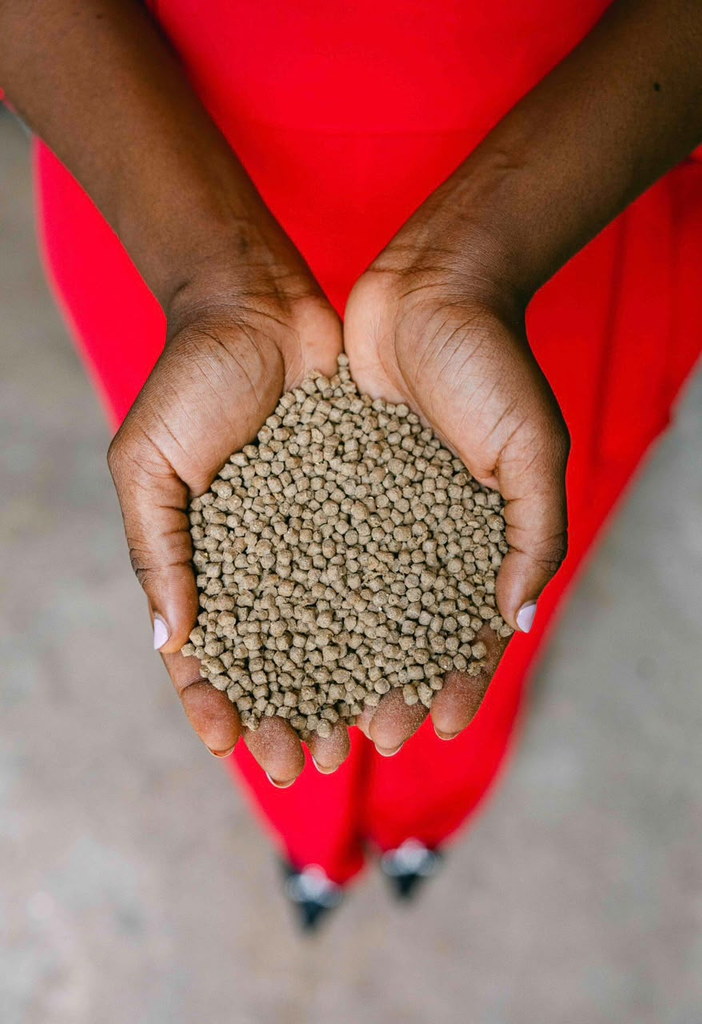
So, what would ordinarily be thrown away becomes part of the process of producing food.
It is an interesting way to approach two problems that are rarely discussed together. While farmers are struggling with the cost of feeding their fish, markets and other food businesses generate organic waste that still has useful nutrients. NovFeed brings these two sides together.
And the work is not limited to fish feed. The production process also generates material that can be used to make organic fertiliser, creating another product from the same waste stream.
For Orembe, the purpose has always been connected to the people who first inspired the idea: farmers. If a farmer spends most of the money earned from selling fish on buying feed, there is very little left to make the business worthwhile. Developing a more affordable alternative could make a meaningful difference.
In a 2023 interview with SeafoodSource, she explained that NovFeed’s product was around 25 per cent cheaper than conventional alternatives at the time. The company has also described its bacteria-based protein as containing approximately 70 per cent protein, making it a promising ingredient for aquaculture feed.
Building the business, however, has involved more than getting the science right. Orembe has spoken about the challenge of convincing customers to try a product made using bacteria. The science might make sense in a laboratory, but farmers still need to trust what they are buying and see results in their farms.
That meant taking the innovation beyond research and making it work as a commercial product.
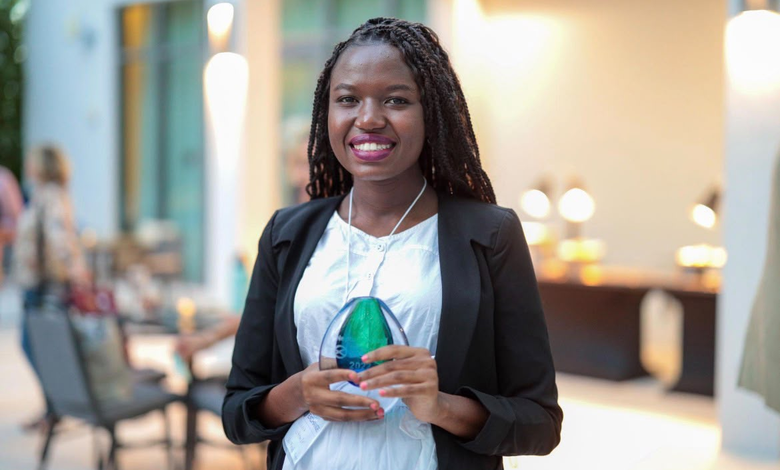
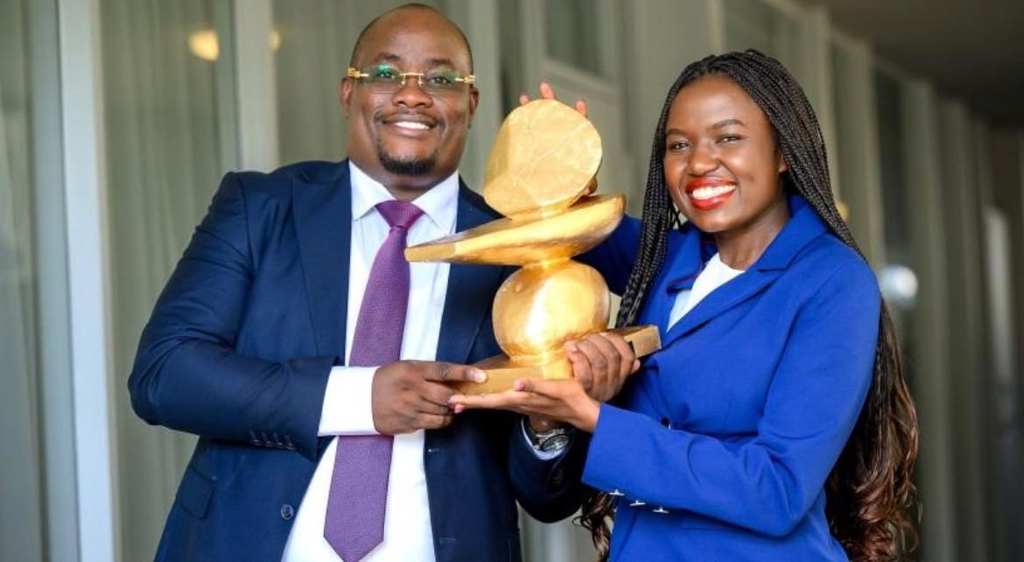
The journey has brought considerable recognition. In 2023, NovFeed won the US$1 million Grand Prize of the Milken-Motsepe Prize in AgriTech, an award that recognised its approach to sustainable agricultural production. Orembe was also selected for UNICEF’s Innovation30 initiative, which recognises young innovators working on solutions to global challenges.
In December 2025, she reached another major milestone when she won the US$300,000 grand prize at the seventh Africa’s Business Heroes competition in Kigali, Rwanda.
The recognition has come alongside the company’s growth. By April 2026, NovFeed was producing more than 20 tonnes of fish feed daily, according to reporting by African Farming. What began with an attempt to address a problem familiar to one fish farmer has grown into a business with ambitions to reach more farmers across the region.
There is something particularly interesting about Orembe’s journey. She did not begin with the idea of building a company around waste. She began by paying attention to a problem affecting someone close to her. Her scientific background gave her a way to investigate it, and entrepreneurship gave her an opportunity to take the solution beyond the laboratory.
Today, her work is part of a growing conversation about how Africa can make better use of its resources, strengthen local food production and develop solutions that respond to the realities of its farmers.
Perhaps the most striking part of the story is that the answer she pursued was sitting in places many people passed every day: discarded fruits and vegetables in markets.
Diana Orembe looked at those materials differently. And through NovFeed, she is showing that what is often considered waste can have another life this time, helping to feed fish and support the people who raise them.
TNAM