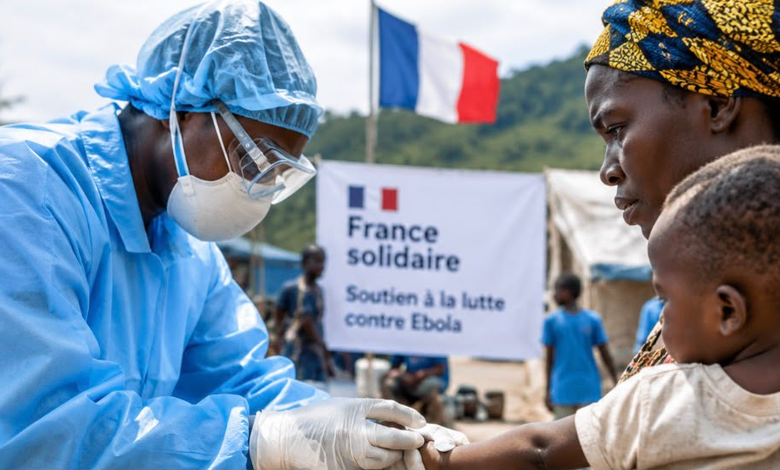
France is set to increase its support for efforts to contain and eradicate Ebola in the Democratic Republic of Congo, as health authorities and international partners continue working to prevent the outbreak from spreading further.
French Foreign Minister Jean-Noël Barrot announced the additional support during a visit to Bunia in Ituri Province, the epicentre of the outbreak, where he met officials and frontline responders involved in the ongoing effort.
France has already provided €13.4 million ($15.1 million) towards the Ebola response between January and July 2026. Barrot said France would propose additional humanitarian funding during upcoming budget discussions, although he did not announce a specific amount.
The French support covers several areas, including humanitarian assistance, medical research and support for organisations working directly on the ground. It also includes the PRISM programme, an initiative launched during French President Emmanuel Macron’s 2023 visit to the Democratic Republic of Congo.
France’s additional commitment comes as the Ebola outbreak remains a major challenge for the country’s health system. The outbreak, caused by the Bundibugyo species of Ebola, began in Ituri Province in May and has spread to several provinces.
According to Congolese government figures reported on October 2, more than 8,300 confirmed cases and 4,018 deaths had been recorded across seven provinces. More than 2,000 people have recovered. The outbreak has become the largest and deadliest Ebola epidemic in the history of the Democratic Republic of Congo.
Health authorities and international organisations say the response is being complicated by insecurity, population movements and difficulties reaching some communities. WHO has been supporting surveillance, contact tracing, clinical care, infection prevention, diagnostics, logistics and community engagement.
Despite the scale of the outbreak, authorities and international partners have reported progress in some areas. Transmission has slowed in parts of Ituri, although infections continue to spread in eastern areas, including North Kivu, making continued surveillance and rapid intervention essential.
Barrot said the progress made so far demonstrates the importance of maintaining international support. He warned that Ebola could return rapidly if vigilance and response efforts were reduced.
His visit to Bunia also made him the first European foreign minister to visit the Democratic Republic of Congo since the current Ebola outbreak began, according to France’s foreign ministry. The visit was intended to reinforce France’s political, humanitarian and health cooperation with Congolese authorities and organisations responding to the outbreak.
France is also preparing to host its national humanitarian conference in Paris on October 6, where the Ebola response in the Democratic Republic of Congo is expected to be among the issues discussed.
The increased French support adds to the wider international effort to strengthen the Congolese response, support health workers and researchers, and prevent the outbreak from spreading to major population centres and neighbouring countries.
For the Democratic Republic of Congo, the focus remains on sustaining surveillance, supporting frontline workers and reaching affected communities quickly enough to break chains of transmission.
TNAM