President of the International Center for Diplomacy
Every country has ambitions for development. Across Africa, governments have increasingly adopted long-term national strategies and economic blueprints to guide structural transformation. Rwanda’s Vision 2050, Botswana’s Vision 2036, Ghana’s Beyond Aid unveiledin2017, and Morocco’s New Development Model, unveiled in 2021 with a horizon to 2035, all reflect a growing recognition that sustainable development requires a clear strategic direction extending well beyond short-term policy horizons. Yet the difference between aspiration and transformation often lies not in the quality of a vision itself but in the ability to sustain it over time. Long-term development depends not only on setting strategic objectives but also on preserving sufficient institutional continuity to pursue them consistently across changing economic conditions, political priorities and external shocks.
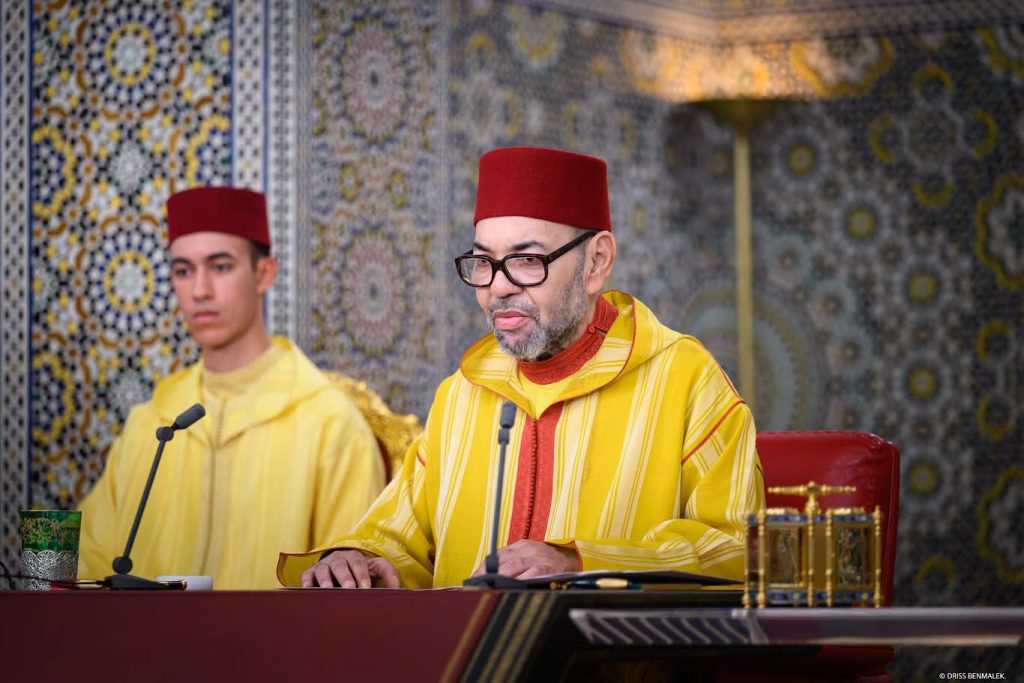
King Mohammed VI’s 2026 Throne Speech offers an opportunity to reflect on this often-overlooked dimension of governance. Rather than introducing a new development agenda, the speech looked back on nearly twenty-seven years of reforms, investments and institutional change, presenting Morocco’s trajectory as the cumulative result of sustained public action. In doing so, it invited a broader discussion that extends beyond Morocco itself: how can states translate long-term ambitions into lasting transformation?
The answer suggested by Morocco’s experience is not that development follows a fixed blueprint or that policies remain unchanged. On the contrary, strategies have evolved, institutions have adapted and priorities have shifted in response to domestic needs and international developments. What has remained remarkably consistent, however, is the strategic direction guiding these changes. Successive reforms have tended to reinforce rather than replace previous initiatives, allowing investments in infrastructure, industry, social protection and diplomacy to accumulate over time instead of being repeatedly reset.
This principle of strategic continuity deserves greater attention in discussions of development. Public debates often focus on new policies, flagship projects or political transitions. Yet the deeper challenge for many countries is maintaining coherence over decades rather than electoral cycles. Large-scale infrastructure, industrial ecosystems, human capital and institutional capacity are rarely built within a single political mandate. They require persistence, adaptation and sustained implementation.
Strategic continuity as a development principle
Strategic continuity should not be confused with policy rigidity. Development strategies must evolve as economic conditions, technological change and geopolitical realities shift. Governments inevitably adjust priorities, introduce new initiatives and respond to emerging challenges. The real test of continuity is whether these changes reinforce a long-term national trajectory or repeatedly interrupt it.
This distinction is particularly important in the Global South, where ambitious national plans often confront institutional discontinuities. Changes in political leadership, administrative restructuring or shifting policy priorities can result in the abandonment of projects before they mature or the replacement of existing strategies with entirely new ones. While policy innovation is essential, development also requires institutional memory and the capacity to build on previous investments rather than constantly starting anew.
Morocco’s trajectory over the past twenty-seven years offers an example of how strategic continuity can function in practice. The country’s development has not followed a static blueprint. Economic priorities have evolved from infrastructure expansion to industrial competitiveness, renewable energy, social protection, digital transformation and regional integration. Yet these shifts have generally reflected an expansion of an existing development trajectory rather than a succession of disconnected agendas.
The 2026 Throne Speech illustrates this cumulative approach. Rather than presenting isolated achievements, it situates major reforms within a broader national project that has unfolded over nearly three decades. Infrastructure investments created the logistical foundations for industrial development. Industrial diversification strengthened export competitiveness and employment. Social reforms increasingly complemented economic transformation by expanding access to social protection and public services. Diplomatic initiatives supported economic objectives by opening new partnerships and strengthening Morocco’s role as a bridge between Africa, Europe and the Atlantic space. Each phase has sought to build upon earlier foundations instead of replacing them.
Viewed in this way, Morocco’s experience suggests that development is less a sequence of independent projects than a process of institutional accumulation. Roads, ports, industrial zones, energy infrastructure, education reforms and diplomatic partnerships derive much of their value from the way they reinforce one another over time. Their combined impact is often greater than the sum of their individual contributions.
From infrastructure to transformation
Perhaps nowhere is this cumulative logic more visible than in infrastructure. Over the past two decades, Morocco has invested heavily in ports, highways, railways, airports and renewable energy projects. Considered individually, each project represents an important public investment. Considered collectively, however, they reveal a broader strategy aimed at improving national connectivity, strengthening industrial competitiveness and positioning Morocco within regional and global value chains.
The expansion of Tanger Med illustrates this logic. The port is not simply a transport hub but part of a wider ecosystem linking logistics, manufacturing, export industries and international trade. Likewise, the development of the automotive and aerospace sectors did not emerge independently; it relied on sustained investments in infrastructure, vocational training, industrial policy and international partnerships over many years. The same cumulative approach can be observed in renewable energy, where projects such as the Noor solar complex formed part of a longer-term strategy to enhance energy security, diversify the energy mix and support industrial development.
The significance of these examples lies not merely in their scale but in their continuity. They demonstrate how successive investments, maintained across changing circumstances, can gradually reshape the productive structure of an economy. Development, in this sense, is not measured by the announcement of individual flagship projects but by the extent to which those projects become interconnected elements of a coherent national transformation.
From economic growth to institutional transformation
Morocco’s development trajectory over the past twenty-seven years also demonstrates that strategic continuity extends beyond physical infrastructure. As the country’s economic foundations strengthened, policy increasingly shifted towards improving institutional resilience, expanding social protection and addressing regional disparities. Rather than representing a departure from earlier priorities, these reforms reflected an effort to ensure that economic transformation translated into broader social development.
The 2026 Throne Speech highlights this evolution. Alongside economic achievements, it places considerable emphasis on the extension of compulsory health insurance, the rollout of direct social assistance, the strengthening of social protection systems and continued investment in human development. These initiatives illustrate how development strategies evolve as societies progress. Once the conditions for economic expansion are established, attention naturally turns to improving inclusion, strengthening public services and enhancing citizens’ quality of life.
This progression is consistent with a broader understanding of development as a cumulative process. Infrastructure facilitates investment; investment supports industrialisation; industrialisation generates employment and fiscal resources; these, in turn, create greater capacity to finance social programmes and public services. The sequencing matters. Social policy becomes more sustainable when supported by a productive economy, while economic growth becomes more resilient when accompanied by investments in human capital and social cohesion.
Equally significant is the speech’s recognition that development remains uneven across territories. Acknowledging persistent disparities between regions signals that continuity should not be confused with complacency. Long-term strategies require periodic reassessment, identifying areas where progress has been slower and adapting policies accordingly. Strategic continuity therefore combines consistency of direction with a willingness to refine implementation in response to changing realities.
This capacity for adaptation may be one of the defining characteristics of Morocco’s development approach. Over nearly three decades, priorities have expanded from building infrastructure to strengthening industrial competitiveness, accelerating the energy transition, extending social protection, promoting digitalisation and deepening regional integration. While the policy instruments have evolved, the underlying objective—enhancing Morocco’s long-term development and resilience—has remained remarkably consistent.
Diplomacy as an extension of development strategy
Another notable feature of Morocco’s trajectory is the increasing integration of foreign policy and economic development. Rather than treating diplomacy as a separate domain, successive initiatives have sought to align international engagement with domestic development priorities.
This approach is particularly evident in Morocco’s growing economic engagement with Africa. Investments in banking, telecommunications, agriculture and renewable energy, together with major connectivity initiatives such as the Atlantic African States Initiative and the African Atlantic Gas Pipeline, reflect an understanding that regional partnerships can reinforce national development objectives while contributing to wider continental integration.
The same logic applies to Morocco’s broader international positioning. Trade agreements, industrial partnerships and infrastructure connectivity have not been pursued solely as diplomatic achievements but as instruments for attracting investment, expanding exports and strengthening the country’s role within global value chains. Diplomacy, in this sense, has become an extension of development strategy rather than an independent policy sphere.
Continuity as a Strategic Asset
Development debates often focus on identifying the “right” policies, institutions or economic models. Yet Morocco’s experience over the past twenty-seven years suggests that another variable deserves equal attention: the ability of states to sustain strategic direction over time. While no development path is without setbacks or unfinished challenges, long-term transformation depends not only on the quality of policy design but also on the consistency with which national priorities are pursued across changing domestic and international circumstances.
The 2026 Throne Speech is significant precisely because it invites this longer perspective. Rather than announcing a new national vision, it reflects on how successive reforms, investments and institutional changes have gradually reshaped Morocco’s economic and social landscape. Its message is less about celebrating individual achievements than about demonstrating how sustained implementation can generate cumulative outcomes that would be difficult to achieve through isolated initiatives alone.
This experience also highlights an important distinction between continuity and permanence. Strategic continuity does not imply maintaining identical policies indefinitely or resisting change. On the contrary, Morocco’s development trajectory has evolved in response to new economic realities, technological change and geopolitical shifts. What has remained consistent is the long-term direction of national development, with new policies generally reinforcing rather than replacing earlier foundations.
For African policymakers, this distinction may be the most relevant insights. Across the continent, governments have adopted ambitious national development plans, industrialisation strategies and long-term visions. The challenge is often not the absence of strategic thinking but the difficulty of maintaining institutional coherence over the decades required for structural transformation. Development is inherently cumulative: infrastructure networks, industrial ecosystems, education systems, social protection programmes and regional partnerships mature over years rather than electoral terms.
Morocco’s experience reflects that enduring transformation is rarely the product of isolated projects or successive policy resets. More often, it emerges from the patient accumulation of reforms, investments and institutional capacity, guided by a consistent long-term direction.
Nearly twenty-seven years into King Mohammed VI’s reign, the 2026 Throne Speech offers more than a retrospective on Morocco’s achievements. It invites a broader reflection on one of the central questions facing development policy today: how can states translate long-term ambitions into lasting transformation? Morocco’s experience suggests that the answer lies not simply in formulating ambitious visions, but in sustaining the strategic continuity necessary to turn those visions into reality.
TNAM