El Mansouri and the Authority of the Ballot
Morocco reaches a historic political outcome through constitutional procedure

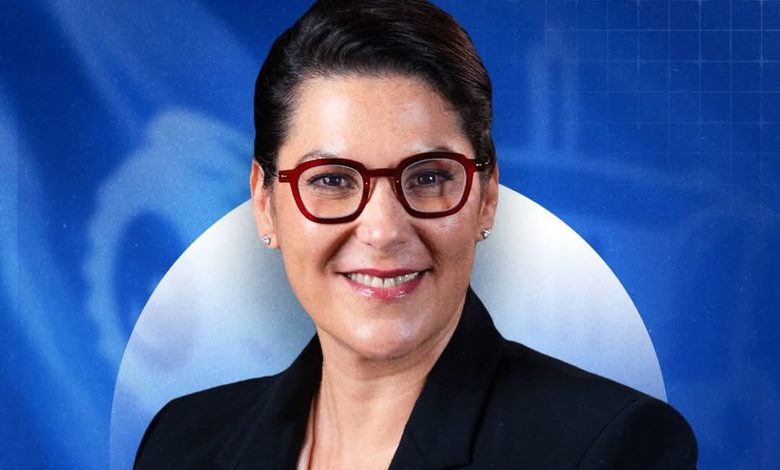
Morocco has produced one of its most consequential political appointments in years by following the constitutional procedure already in place.
On 29 September 2026, HM King Mohammed VI appointed Fatima Ezzahra El Mansouri as head of government and entrusted her with forming a new cabinet. The appointment followed the victory of the Authenticity and Modernity Party, or PAM, which won 97 of the 395 seats in the House of Representatives.
El Mansouri’s gender explains the historic attention surrounding the appointment, while her authority rests on PAM’s electoral lead, her place in the party’s collective leadership, her own constituency victory and the constitutional decision exercised by HM King Mohammed VI under Article 47.
Morocco has therefore reached an unprecedented outcome through the established constitutional route. The appointment carries symbolic force because that symbolism is anchored in electoral and institutional legitimacy.
The constitutional chain of authority
Article 47 requires the head of government to be appointed from the political party that finishes first in elections to the House of Representatives. It identifies the party of origin but does not require the appointee to hold a particular internal title.
El Mansouri entered the appointment process with more than one source of political standing. She coordinates PAM’s collective leadership and won the Marrakech Medina Sidi Youssef Ben Ali constituency. Her local victory gives her a personal mandate, while PAM’s national result supplies the constitutional basis for the appointment.
The sequence also extends a practice established after the 2011 Constitution. Abdelilah Benkirane was appointed following the PJD’s victories in 2011 and 2016. When the 2016 coalition talks reached an impasse, HM King Mohammed VI appointed Saadeddine El Othmani from the same election-winning party. The premiership remained with the PJD, while the choice of the individual remained a royal constitutional decision. Aziz Akhannouch was appointed after the RNI won in 2021.
El Mansouri’s appointment maintains that relationship between the result at the ballot box and the formation of the executive. Its historic character lies in who can now exercise the office, not in a departure from the rule governing how the office is filled.
A majority must still be built
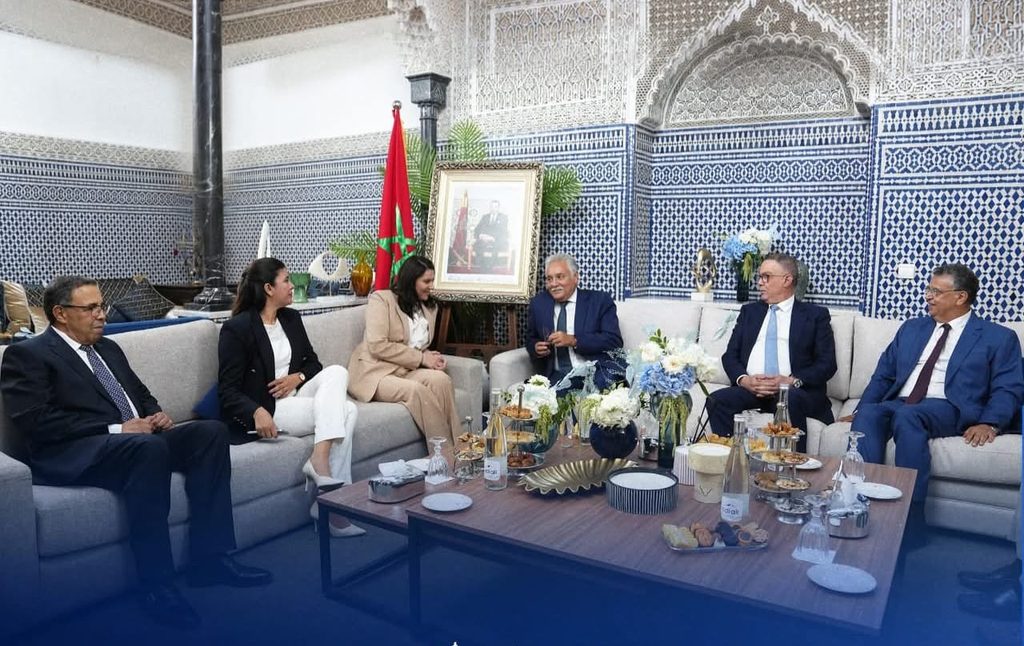
El Mansouri must now turn the appointment into an invested government. Under Article 88, the government programme must secure the confidence of an absolute majority in the House of Representatives. That threshold is 198 seats. PAM holds 97 and therefore needs at least 101 more.
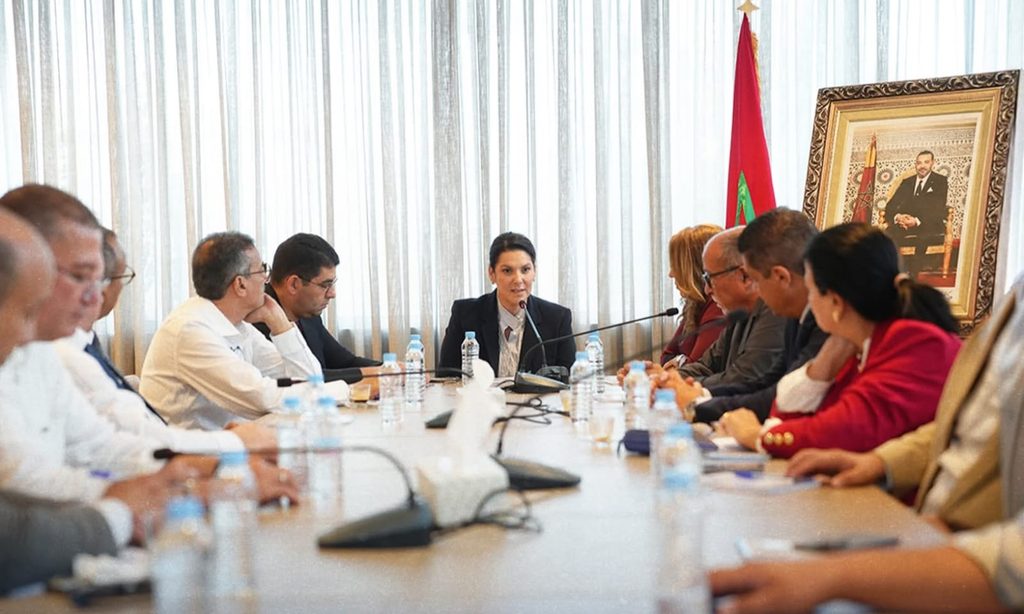
El Mansouri opened formal consultations on 30 September with the RNI, which has 66 seats, and Istiqlal, which has 65, before receiving delegations from the Popular Movement, the USFP and the PPS. On 1 October, she received the Constitutional Union and the Democratic and Social Movement, or MDS. The sequence amounted to a broad first round of political listening, not a declaration that every party consulted would join the government.
The RNI has moved furthest towards participation. Its Political Bureau formally expressed readiness to join the next government, while referring the final decision to the party’s National Council, due to meet on 3 October. Renewing the outgoing PAM-RNI-Istiqlal alliance would produce 228 seats and remains the simplest route arithmetically, but Istiqlal has also reserved its decision for its National Council.
The campaign left political costs that arithmetic cannot erase. PAM and the RNI had traded criticism over the outgoing government’s performance, including food prices and social delivery. Any renewed partnership would need a credible programme and agreed rules for collective responsibility, not merely a distribution of portfolios.
The other consultations produced different degrees of openness rather than a settled coalition. The USFP authorized Driss Lachgar and Mustapha Ajab to continue negotiations. MDS secretary-general Abdessamad Archane offered support for the new governmental experience and said further meetings would follow. The Popular Movement, PPS and Constitutional Union had not announced final participation decisions by 1 October. PPS leader Nabil Benabdallah said his party’s choice would also depend on the composition of the alliance.
The opposition picture is clearer. According to media reports, Abdelilah Benkirane accepted the principle of a meeting after a telephone call from El Mansouri, but the PJD maintained its decision to sit in opposition. The Left Alliance also reaffirmed its opposition role. It agreed in principle to meet El Mansouri but requested a venue independent of party headquarters, arguing that the exchange should have an institutional character. When no agreement was reached on the venue, the meeting planned for 2 October did not take place.
The composition of the delegations placed responsibility squarely on the parties. On the first day, the RNI, Istiqlal, Popular Movement and USFP sent all-male teams. The PPS was the only visiting party to include women: political bureau members Fatima Zahra Barsat and Thuraya Sqalli joined Nabil Benabdallah, Rachid Hammouni and Said Akdad. Coalition consultations influence the programme, portfolios and distribution of executive authority. When parties praise the historic appointment of a woman but leave women outside that room, they preserve the internal bottleneck that still limits access to political power.
The second day added an important qualification. The MDS delegation included Fatiha Lahjouji, a member of its Political Bureau and president of its women’s organisation, alongside Abdessamad Archane and party founder Mahmoud Archane. PPS was therefore the only visiting party to include women on 30 September, but not the only party to do so across the consultation process. That distinction matters because the purpose of gender scrutiny is to measure participation accurately, not to force the evidence into a fixed narrative.
A coalition may reach 198 and still remain politically fragile. Its durability will depend on whether the partners can defend a common programme after the negotiations end.
The election moved beyond the quota
Women will hold 107 seats in the new House, compared with 96 in the previous legislature. They account for 27.1 per cent of the chamber, calculated as 107 divided by 395. The increase is real, although it remains well below parity.
The regional constituencies remain the foundation of that representation. Ninety women were elected through regional lists reserved for female candidates. The more revealing result came from the local constituencies, where 17 women won seats in direct competition, compared with six in 2021. Local victories therefore increased by 11 and nearly tripled.
Official candidacy data help locate the remaining barrier. Women headed 121 of the 1,615 local lists, or 7.49 per cent. Seventeen successful local candidates out of those 121 female list leaders represent a success rate of about 14.0 per cent. These figures do not prove that every constituency offered equal prospects, but they weaken the claim that women are inherently less electable.
A party breakdown makes the point more concrete. PAM elected seven women from local lists and the RNI elected four. Together, the two parties accounted for 11 of the 17 local victories, or 64.7 per cent. Where parties placed women in competitive races and supplied organisation and resources, women won.
Several winners already possessed considerable political capital through parliamentary mandates, local office, government experience or senior party responsibilities. The result marks progress, but it does not yet show that the route has opened widely to newcomers. The main filter continues to operate before polling day, when parties decide who receives a winnable constituency.
What election observation revealed
The observation effort brought together 3,006 accredited observers. The official total comprised 783 observers from the National Human Rights Council, 2,023 from Moroccan civil-society organisations and roughly 200 international observers. Their findings illuminate aspects of participation that candidate totals alone cannot capture.
The Democratic Association of Moroccan Women used its 2026 barometer to examine party responsibility across five areas: political commitment, governance of candidacies, material and technical support, visibility in political communication and safeguards against political violence. Its useful contribution is methodological. It asks whether parties created competitive conditions for women, rather than treating the number of candidacies as sufficient evidence of equality.
Preliminary monitoring by the Zahra Forum for Moroccan Women drew attention to the limited visibility of women, especially younger candidates, and to reputational attacks, symbolic violence and intrusions into private life on digital platforms. These findings describe observed pressures; they should not be read as national prevalence rates.
Within its sample, the Associative Network for Election Observation found that women were absent from the platforms at 20 per cent of observed campaign gatherings. At another 26 per cent, women were present on the platform but did not speak. Men chaired 93 per cent of the polling offices observed by the network, compared with 7 per cent chaired by women.
The International Center for Diplomacy identified a related imbalance in election media programming. Daily news coverage included women candidates and discussed women’s participation, but special studio debates on party programmes, electoral strategy and coalition scenarios remained overwhelmingly male. Women heading electoral lists were largely missing from those discussions.
These observations place parliamentary representation within a wider political chain. Access begins with nomination, resources and media authority, and continues through campaign platforms and the administration of polling. The quota secures entry to Parliament without automatically redistributing influence across every stage of political competition.
The cabinet will provide the first evidence
The composition of the new government will show whether the appointment changes the distribution of authority below the office of head of government. The number of women ministers will matter, but the portfolios they receive will say more.
A cabinet may increase female representation while leaving finance, investment, agriculture, infrastructure, industry and the central administrative machinery largely in male hands. A deeper change would place women in the departments that control budgets, write regulations and shape long-term investment.
El Mansouri will not determine the cabinet alone. Coalition partners will negociate over portfolios and propose candidates. Under Article 47, ministers are appointed by HM King Mohammed VI on the proposal of the head of government. The final team will therefore reflect her negotiating authority as well as the choices made by her partners.
Diplomatic value begins with domestic legitimacy
Morocco is the second Arab country, after Tunisia, to place a woman at the head of government. El Mansouri is the third Arab woman to hold the office. Tunisia appointed Najla Bouden in 2021 and Sarra Zaafrani Zenzri in March 2025.
The international significance lies partly in the appointment’s constitutional origin. El Mansouri reached the office after an election, from the party that finished first and through the ordinary application of Article 47. That allows Morocco to present institutional stability and political change as compatible rather than competing objectives.
The appointment also belongs to a longer policy and institutional trajectory supported by HM King Mohammed VI. The 2004 Family Code expanded women’s legal rights, and the Sovereign later initiated its current revision. Royal appointments have placed Zineb El Adaoui at the head of the Court of Accounts, Amina Bouayach at the National Human Rights Council, Latifa Akharbach at the audiovisual regulator and Rahma Bourqia at the Higher Council for Education, Training and Scientific Research.
Royal speeches have given this direction a consistent political vocabulary for more than two decades. In 1999, HM King Mohammed VI linked Morocco’s progress to women’s dignity, rights and freedom from violence and marginalisation. In 2003, he placed women’s weak representation in local government within a larger argument: institutional support was necessary, but so was a change in social attitudes and wider access to public responsibility. The 2011 constitutional reform then embedded equality across civil, political, economic, social, cultural and environmental rights, together with the objective of parity. In the 2022 Throne Speech, the Sovereign again made women’s full participation integral to national development, called for the activation of institutions concerned with family and women’s rights, and stressed that reform is a matter of enforceable rights rather than special favours. El Mansouri’s appointment can therefore be read as the latest institutional expression of a sustained reform trajectory, not an isolated gesture.
Diplomatically, that record gives Morocco evidence of institutional change beyond the image generated by a single appointment. It challenges the external habit of portraying women in the region mainly as recipients of reform. Morocco can point to women acting as electoral competitors, institutional leaders and authors of public policy. The argument will remain persuasive only if the new government converts representation into authority and measurable results.
The governing test begins now
The incoming government inherits a difficult political and social agenda. Official results put turnout at 38.08 per cent, down from 50.86 per cent in 2021. Restoring confidence in representative politics is therefore part of governing, not an issue that can be left to electoral communication.
The labour market presents an equally sharp test. In the second quarter of 2026, the labour-force participation rate was 18.1 per cent for women and 66.5 per cent for men. Strict unemployment stood at 14.8 per cent among women and 8.1 per cent among men. The High Commission for Planning cautions that its new EMO2026 series is not directly comparable with the previous National Employment Survey.
A woman at the head of government does not automatically produce policies that benefit all women. It does create political room to treat childcare, safe and affordable transport, access to finance, entrepreneurship and equality at work as economic questions rather than peripheral social concerns.
The government must also carry the Royal initiative to revise the Family Code into coherent legislation and effective implementation. The real work will include judicial practice, professional training, access to justice and alignment with related laws.
Other choices will test the coalition’s priorities. Investment linked to the 2030 World Cup must produce durable transport, employment and public facilities while the demand for better schools, health care and local services remains acute. Water scarcity will require similar discipline. Morocco aims to meet 60 per cent of its drinking-water needs through desalination by 2030, but infrastructure cannot substitute for groundwater regulation, efficient irrigation and decisions about water-intensive production.
El Mansouri’s appointment has already altered the record of who may lead Morocco’s government. Its lasting political meaning will depend on the majority she assembles, the authority shared across her cabinet and the public problems that government proves able to solve.
By Karima Rhanem Political and Diplomatic Analyst
THE NEW AFRICA MAGAZINE
Author biography
Karima Rhanem is a Moroccan multi-award-winning public policy and media expert and President of the International Center for Diplomacy, with over 20 years’ experience in international development, governance and human rights.