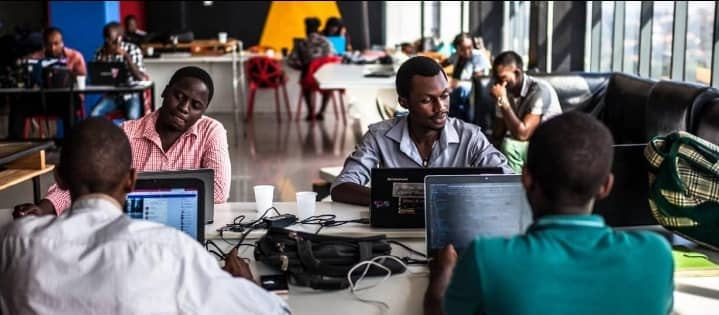
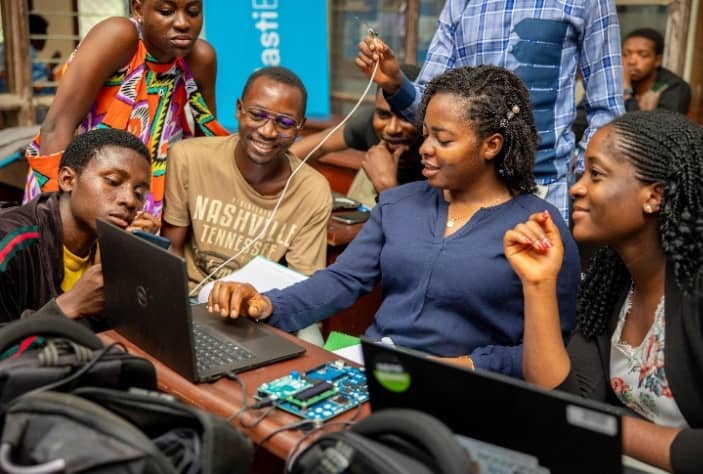
Africa’s labour market is entering a period of profound change. Artificial intelligence, automation, digital technology and the transition to greener economies are already changing the skills employers need, while millions of young Africans continue to enter the workforce every year.
The challenge is not simply about creating more jobs. It is about ensuring that the continent’s young people have the skills, opportunities and productive environments required to participate in an economy that is changing rapidly.
The scale of the challenge is significant. The World Bank says Africa currently creates roughly 3 million formal jobs each year, while between 10 million and 12 million young people enter the labour force annually. By 2050, the continent’s working-age population is expected to more than double, creating enormous potential for economic growth but also placing greater pressure on governments and businesses to expand employment opportunities.
This is why the future of work has become closely connected to Africa’s broader development and industrialisation agenda.
Technology is changing the nature of work, but it is not necessarily eliminating opportunity. Artificial intelligence can improve productivity, create new services and open markets for businesses that previously could not compete beyond their local communities. At the same time, workers whose roles are affected by automation may need to acquire new skills or transition into emerging occupations.
The International Labour Organization’s 2026 research on lifelong learning and skills in Africa found that the green and digital transitions are reshaping demand for skills across African labour markets. Its analysis of online vacancies in Egypt and South Africa also found that employers increasingly want combinations of technical abilities, cognitive skills and socio-emotional capabilities rather than one narrow qualification.
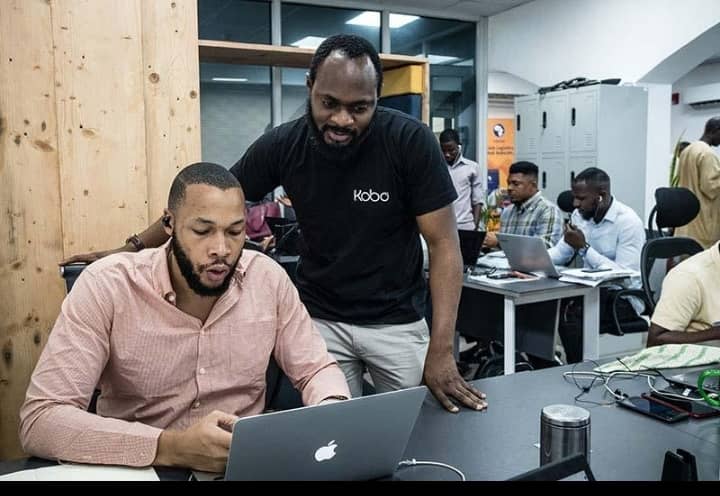
For young Africans, that means education can no longer end with a certificate.
Continuous learning, practical experience and the ability to adapt are becoming increasingly important. Employers need people who can understand technology, solve problems, communicate effectively, work in teams and continue learning as industries evolve.
Governments and development institutions are beginning to respond to this challenge.
In February 2026, the World Bank approved a regional programme designed to provide 18 million young people across Eastern and Southern Africa with better education and industry-relevant skills by 2034. The programme will connect training more closely with employers and sectors including energy, agriculture, healthcare, infrastructure, water and digital services.
A similar approach is emerging in West and Central Africa. In June 2026, the World Bank approved a $642 million Skills for Innovation, Resilience, and Aspirations programme, expected to reach 5.4 million young people across Cabo Verde, Côte d’Ivoire and Guinea with market-relevant education, skills and employment opportunities.
Africa’s skills challenge is also being addressed through stronger links between training institutions and employers.
In May 2026, the International Labour Organization launched a continental network of master trainers to strengthen work-based learning and apprenticeship systems across Africa. The initiative was developed to help vocational education respond more effectively to labour-market needs while improving employer involvement in skills development. Twenty trainers from across Africa participated in the launch workshop in Abuja, Nigeria.
This connection between education and the private sector is particularly important. Businesses are often the first to see which skills are becoming valuable, while universities and vocational institutions are responsible for preparing people to use those skills productively.
Africa’s technology sector also presents an opportunity to create new forms of employment. Digital services allow young people to work across borders, build technology companies, provide professional services and participate in global markets without necessarily leaving their home countries.
But access remains uneven. Young people without reliable internet, digital devices, quality education or opportunities for practical training risk being left behind as the economy becomes increasingly digital.
Artificial intelligence adds another layer to the transformation. The World Bank has warned that AI could increase productivity and create opportunities, but it could also deepen inequalities between countries and workers if access to computing power, data and skills remains concentrated.
For Africa, therefore, the question is not whether the future of work will change. It already is.
The more important question is whether African countries can prepare enough people to participate in that future.
That preparation will require investment in education, technical and vocational training, digital infrastructure, entrepreneurship and lifelong learning. It will also require companies to play a more active role in developing talent and governments to create environments where businesses can grow and generate productive employment.
Africa’s young population remains one of its greatest economic opportunities. But a demographic advantage becomes meaningful only when people have the skills, capital and opportunities to turn their ideas and labour into productive economic activity.
The future of work should therefore not be viewed simply as a technology story. It is a story about people, businesses, education, innovation and economic transformation.
As Africa prepares for a new generation of industries, the continent’s ability to equip its young people for changing labour markets could determine whether its demographic growth becomes a powerful economic dividend or a missed opportunity.
This is precisely why conversations around youth enterprise, innovation, AI, skills and strategic partnerships are becoming increasingly important to Africa’s economic future.
The New Africa Youth Economic Summit & Honours 2026, themed “Building Africa’s Future Through Innovation, AI, Youth Enterprise & Strategic Partnerships,” provides a platform for policymakers, businesses, investors, innovators and young entrepreneurs to engage around the opportunities and challenges shaping the continent’s next economic chapter.
Register for the New Africa Youth Economic Summit & Honours 2026: https://forms.gle/9AzcoyauvZnaJpmZ6
TNAM
By Egwu Patience Nnennaya
Wednesday August 12th, 2026.