South Africa Takes the Helm of 16-Nation SADC as Regional Trade Shapes Its Influence
President Cyril Ramaphosa has taken over as chair of the Southern African Development Community, placing South Africa at the centre of efforts to deepen regional trade, industrialisation and economic integration.

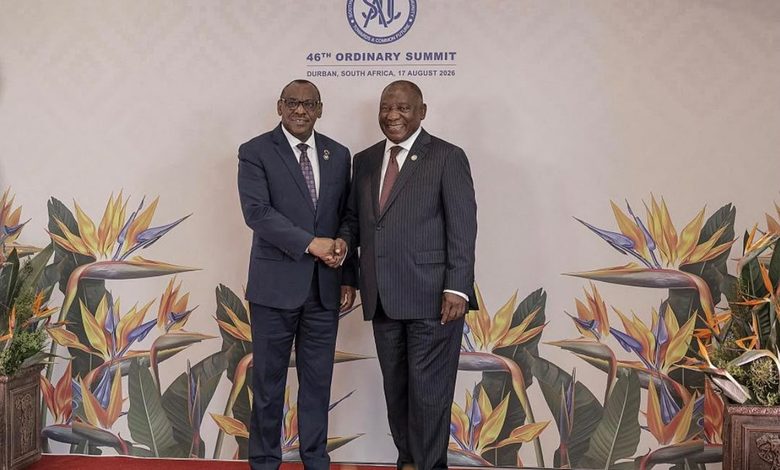
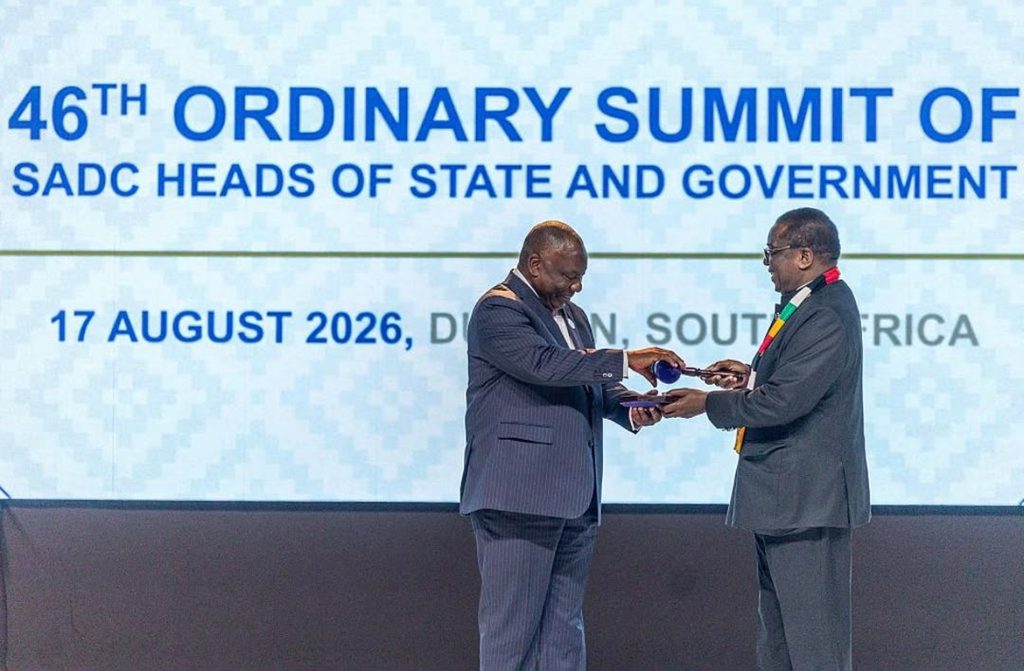
South Africa has formally taken charge of the Southern African Development Community (SADC) at a moment when the region is under pressure to turn its large combined market and natural-resource wealth into stronger economic integration.
President Cyril Ramaphosa was elected Chairperson of SADC at the bloc’s 46th Ordinary Summit in Durban on August 17, 2026, beginning South Africa’s leadership of the 16-member regional community for the next year. Zambia will serve as the incoming chair.
The chairmanship gives Africa’s most industrialised economy an opportunity to shape the regional agenda at a time when SADC is looking to increase intra-regional trade, strengthen infrastructure and develop industries around its mineral and agricultural resources.
A market of almost 400 million people
SADC brings together 16 countries with a combined population of nearly 400 million people, creating one of Africa’s largest regional economic markets. The bloc includes major mineral producers, agricultural economies, energy exporters, manufacturing centres and strategically important transport corridors.
South Africa is by far the region’s largest industrial economy and a major supplier of manufactured goods, machinery, vehicles, food products and other commodities to neighbouring countries. That economic weight gives Pretoria considerable influence but also places greater responsibility on the country as it takes over the SADC chairmanship.
Trade with neighbours is central to South Africa’s regional influence
South Africa’s economic relationship with its neighbours is already extensive. Its companies supply supermarkets, mines, manufacturers, construction projects and consumers across the region, while neighbouring countries provide South Africa with agricultural products, minerals, energy and other goods.
The precise $35.1 billion figure cited in the headline comes from the report being referenced, but it should not be presented as the total value of all current South Africa SADC trade without qualification. Available official sources instead emphasise the broader scale and strategic importance of regional commerce.
What is clear is that South Africa remains the dominant trading economy within SADC, making its domestic economic decisions highly consequential for neighbouring countries.
Ramaphosa wants a more integrated regional economy
In his message on taking over the chairmanship, Ramaphosa argued that SADC needs to become a more integrated and productive regional market. He pointed to a major weakness in the current system: trade between SADC countries accounts for only around 20% of their combined total trade. Much of the region’s commerce continues to be conducted with markets outside Africa.
For Ramaphosa, this represents a missed opportunity. The region has minerals, agricultural land, energy resources, industrial capabilities, financial institutions and a large consumer market. Yet many SADC countries continue to import finished goods from outside the continent.
One example he highlighted is critical minerals. Southern Africa has resources needed for the global energy transition, but countries often export the raw materials and import finished products such as batteries. South Africa wants that pattern to change.
Industrialisation is at the centre of the new agenda
The theme of the 46th SADC Summit was:
“Resilient, sustainable and inclusive industrialisation through Infrastructure Development, Agricultural and Critical Minerals Transformation in Pursuit of a Just World.”
Rather than simply increasing exports of raw materials, SADC wants countries to develop regional value chains that allow more processing and manufacturing to happen within Southern Africa.
The bloc has specifically called for stronger production, value addition, intra-SADC trade and industrial competitiveness.
That could create opportunities in sectors ranging from mining and manufacturing to agriculture, renewable energy and automotive production.
Southern Africa is home to substantial deposits of minerals considered important to the global energy transition and modern manufacturing. The challenge is that exporting raw minerals generates less economic value than processing them into higher-value products. Under South Africa’s chairmanship, beneficiation of critical minerals is expected to receive greater attention.
The objective is to develop regional supply chains in which African countries can participate at several stages from extraction and processing to manufacturing and export. That approach could create more jobs, strengthen local industries and reduce the region’s dependence on importing finished products.
Agriculture and food trade are also priorities
Agriculture is another area where greater regional integration could have an immediate impact. At the Durban summit, SADC leaders called on member states to increase regional trade in agricultural products by removing non-tariff barriers, harmonising standards and improving cross-border logistics.
The goal is to make it easier for food to move from areas with surpluses to countries experiencing shortages. This matters particularly in a region repeatedly affected by drought, floods and other climate shocks.
SADC leaders have also called for stronger early-warning systems, climate-smart agriculture, irrigation and drought-resistant crops as the region prepares for possible El Niño-related climate pressures.
Trade integration cannot work without infrastructure. Roads, railways, ports, electricity networks and border crossings must be able to support the movement of goods between countries.
Ramaphosa has argued that no individual SADC country can independently build all the infrastructure required to connect the region’s economies. Cross-border electricity systems, transport corridors and shared water infrastructure therefore require regional cooperation. This makes infrastructure development one of the most important parts of South Africa’s new SADC agenda.
South Africa’s leadership also comes with challenges
Pretoria’s economic dominance can be both an advantage and a source of tension. South African companies are deeply embedded in neighbouring markets, and stronger regional integration could create new opportunities for them.
But smaller SADC economies also want regional integration to support their own industries, rather than simply expanding South Africa’s already powerful commercial footprint. The challenge for Pretoria will therefore be to lead without appearing to dominate.
A successful South African chairmanship will require policies that make regional trade beneficial to businesses and consumers across the entire bloc.
Security remains part of the economic equation
Economic integration also depends on regional stability. SADC leaders have reaffirmed the importance of peace, security, democratic governance and collective action in dealing with political and security challenges.
Instability can disrupt trade routes, discourage investment and increase the cost of doing business. For that reason, South Africa’s SADC leadership will involve more than economic policy. Regional security and political stability will remain important parts of the agenda.
South Africa takes over SADC with a powerful economic position and a clear challenge ahead. The region already possesses many of the ingredients needed for a stronger economic bloc: natural resources, a large consumer market, industrial capacity, agricultural potential and a young population.
If South Africa can use its year as chair to push practical progress on cross-border infrastructure, regional value chains, critical-mineral processing, agricultural trade and simplified border procedures, the benefits could extend well beyond Pretoria. The ultimate measure of the chairmanship will not be the number of meetings held.
TNAM
By Egwu Patienec Nnennaya