Tema Port Steps Up Competition With Abidjan and Lomé as Ghana Targets West Africa’s Trade
Rising container volumes, expanded terminal capacity and new investments in technology are strengthening Tema’s position as Ghana seeks a larger share of regional trade and transit cargo.

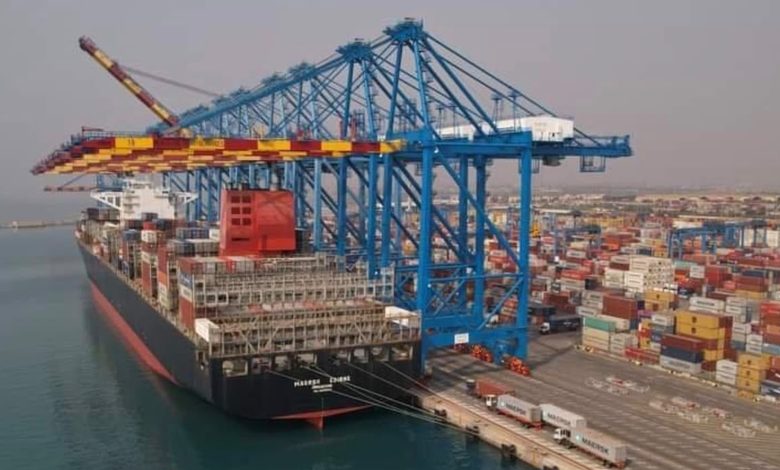
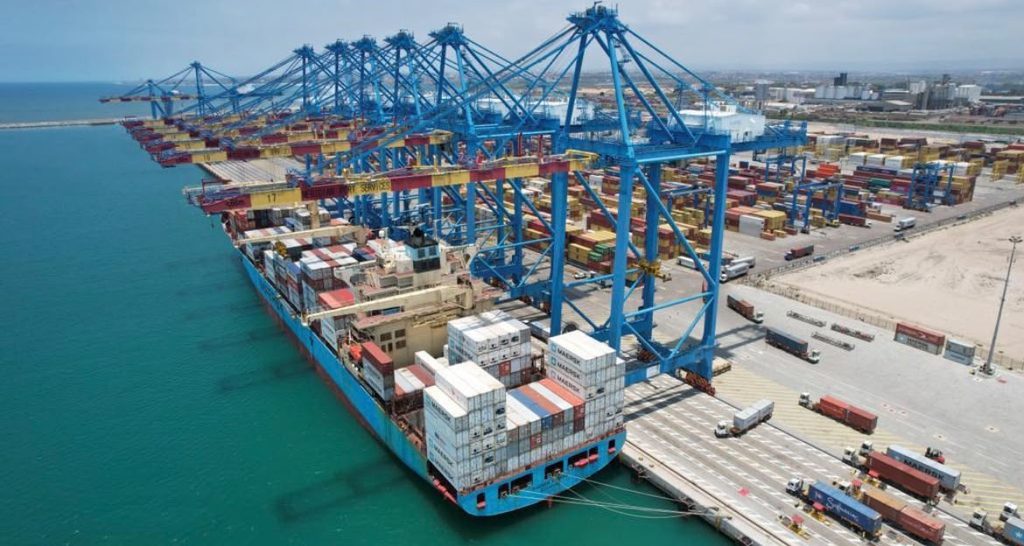
Ghana’s Tema Port is strengthening its position in the increasingly competitive West African shipping market, as rising container traffic and major infrastructure investments give the port greater capacity to compete with established regional gateways in Abidjan, Côte d’Ivoire, and Lomé, Togo.
The competition is becoming particularly important as ports across the Gulf of Guinea compete for cargo serving not only their domestic economies but also landlocked markets across the Sahel.
For Tema, the strategy is clear: handle more cargo, move it faster and make Ghana a more attractive gateway for regional trade.
Tema recorded a substantial increase in container traffic during 2025. Between January and August 2025, the port handled 1,299,873 twenty-foot equivalent units (TEUs), compared with 1,053,037 TEUs during the same period in 2024.
That represents an increase of 246,836 TEUs, or 23.44%. Ghana Ports and Harbours Authority officials described the growth as a significant improvement in the port’s performance.
Ghana’s total seaborne cargo throughput reached 31.08 million tonnes in 2025, with Tema accounting for 19.91 million tonnes, or about 64% of the country’s total seaborne trade. Tema handled approximately 14.91 million tonnes of imports and 3.74 million tonnes of exports during the year, alongside more than 1.2 million tonnes of transit and transshipment imports.
One of the biggest factors behind Tema’s growing competitiveness is its expansion. Ghana commissioned the first two phases of the $1.5 billion Tema Port expansion in November 2025. The project was developed through a public-private partnership involving the Ghana Ports and Harbours Authority and Meridian Port Services, alongside international partners.
The expansion transformed the port’s container-handling capability. The modernised terminal increased annual container capacity from approximately 800,000 TEUs to 3.7 million TEUs, while adding four deep-water berths and about 1,400 metres of quay wall. The facility is designed to accommodate some of the world’s largest container vessels.
That additional capacity is important because shipping lines increasingly favour ports that can accommodate larger vessels while offering quick turnaround times.
Infrastructure alone does not guarantee competitiveness. Ghana is also trying to make Tema faster and more efficient.
In 2025, the Ghana Ports and Harbours Authority introduced 15 new heavy-duty trucks to improve cargo movement inside the port and reduce delays.
In April 2026, Meridian Port Services also received 16 electric rubber-tyred gantry cranes (RTGs) for Terminal 3, with plans for three additional ship-to-shore cranes and 41 electric terminal trucks.
The investments are aimed at increasing handling capacity while reducing dependence on conventional diesel-powered equipment. Ghana is also working to reduce vessel waiting and turnaround times through a Just-In-Time sailing initiative being implemented with the International Maritime Organization. The programme is designed to improve efficiency while cutting maritime emissions.
Ghana’s government has also designated the Tema Port as a strategic hub for its 24-hour economy programme. The idea is to make port operations more continuous, allowing cargo handling and related logistics activities to operate around the clock.
Customs officials have said additional staffing was being prepared to support the 24-hour service, arguing that continuous operations could help Ghana compete more effectively with other regional ports. For importers and exporters, the potential benefit is straightforward: less waiting time means lower logistics costs and faster movement of goods.
Tema’s gains are happening in a market where competitors are also expanding. The Port of Abidjan recorded 46.9 million tonnes of net traffic in 2025, up 17% from 40.1 million tonnes in 2024. Container traffic reached approximately 1.7 million TEUs, compared with 1.6 million TEUs the previous year. The port has also set its sights on reaching 2 million TEUs by 2027.
Abidjan also benefits from its established role as a gateway to Côte d’Ivoire’s economy and as a major corridor for landlocked countries. Transit traffic through Abidjan to countries such as Mali and Burkina Faso rebounded strongly in 2025, reaching about 3.92 million tonnes, an increase of 34.1%. This makes the competition with Tema about more than Ghanaian and Ivorian cargo.
It is also a competition for Sahelian trade routes. Togo’s Port of Lomé has also established itself as an important regional container and transshipment hub. Its strategic location along the Gulf of Guinea, modern container facilities and proximity to the landlocked economies of the Sahel make it a natural competitor to Tema.
For shipping companies, freight forwarders and importers, factors such as port charges, vessel turnaround time, road connections, customs procedures and access to regional markets can determine which gateway they choose. That means Tema’s growing capacity must be matched by efficiency outside the port itself.
One of Tema’s major advantages is its ability to serve landlocked countries. The Ghana Ports and Harbours Authority operates a dedicated transit terminal for cargo destined for Burkina Faso, Mali and Niger. This gives Ghana an opportunity to capture part of the growing trade between coastal West Africa and the Sahel. But road infrastructure, border procedures and political conditions along these corridors remain important factors.
A highly efficient port can still lose customers if cargo spends too much time waiting on roads or at borders.
The importance of Tema goes beyond containers. A stronger port supports an entire ecosystem of businesses including warehousing, trucking, freight forwarding, manufacturing, customs services, logistics, insurance and financial services.
Tema’s location within Ghana’s industrial belt also gives it an additional advantage. The port is connected to factories, warehouses, inland clearance depots and transport companies, allowing cargo to move from ships into Ghana’s wider economy.
For Ghana, the ultimate objective is therefore not simply to become a busier port. It is to use Tema as a platform for industrialisation and regional trade.
The competition between Tema, Abidjan and Lomé reflects a much bigger transformation taking place across West Africa.
As the African Continental Free Trade Area develops and African economies seek stronger regional supply chains, ports are becoming strategic economic assets. The ports that can combine large capacity, modern equipment, efficient customs systems, reliable road and rail connections, competitive costs and fast turnaround times will be best positioned to capture the next wave of African trade. Tema has made significant progress.
Its container traffic is rising, its capacity has expanded dramatically and Ghana is investing in technology and round-the-clock operations.
TNAM
By Egwu Patience Nnennaya