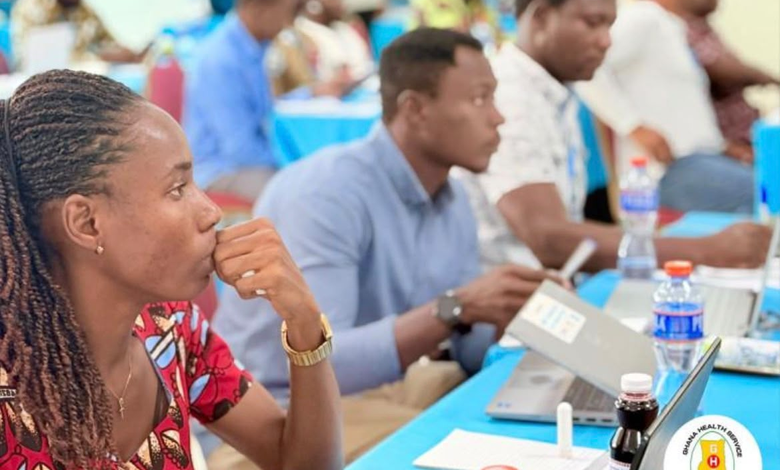
ACCRA, Ghana is strengthening its ability to prepare for and respond to public health emergencies through expanded technical support from the Africa Centres for Disease Control and Prevention (Africa CDC), with a focus on improving emergency operations, coordination and the skills of frontline responders.
The latest phase of the collaboration brought together 50 national and subnational technical experts in Accra from September 21 to 25 for intensive training on the management of Public Health Emergency Operations Centres (PHEOCs) and the use of the Incident Management System (IMS).
The participants came from a wide range of institutions, including the Ghana Health Service, Ministry of Health, veterinary and environmental services, immigration and port health authorities, local government, emergency services, the military and police. Representatives of the World Health Organization (WHO), African Field Epidemiology Network (AFENET), the US Centers for Disease Control and Prevention and civil society organisations also participated.
Building a system that can respond quickly
Public Health Emergency Operations Centres serve as coordination hubs during major health events. They bring together information, technical expertise and resources so that authorities can assess threats and make timely decisions.
The latest programme focused on strengthening the systems that support these centres, rather than simply providing equipment or infrastructure.
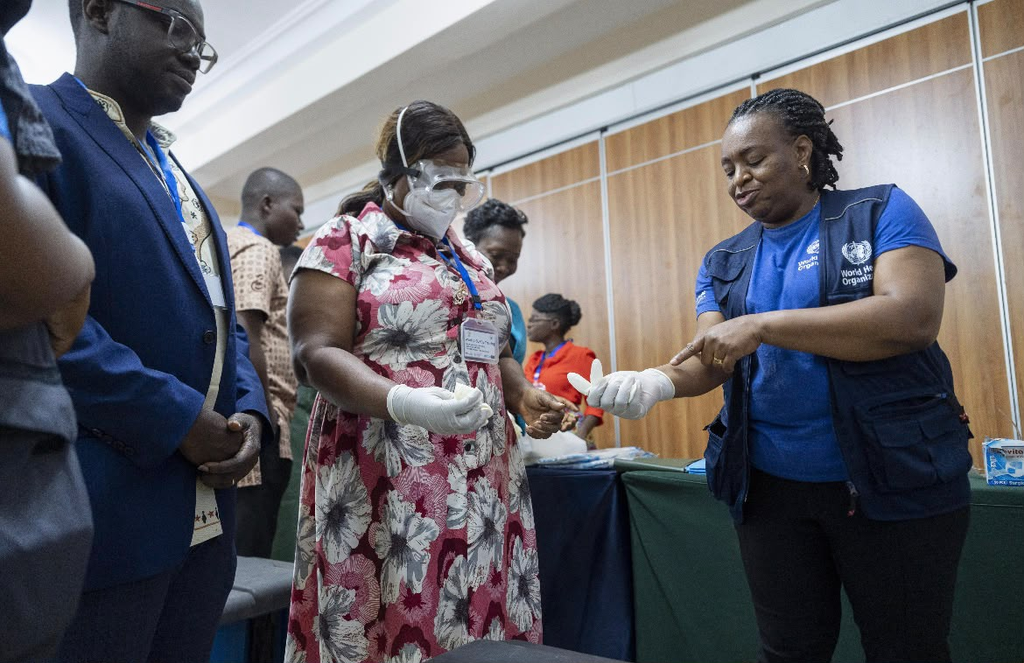
Training covered five key areas of emergency operations: command, operations, planning, logistics, and finance and administration. Participants also worked on emergency planning, information and resource management, situation reporting, standard operating procedures and simulation exercises.
A tabletop simulation exercise allowed participants to test their decision-making and coordination skills against a developing emergency scenario. The exercise was designed to help translate technical knowledge into practical readiness.
Dr Franklin Asiedu-Bekoe, Director of Public Health at the Ghana Health Service, stressed that effective emergency operations require more than physical facilities and equipment. Strong governance, trained personnel, clear procedures, adequate resources and regular testing are also essential.
Support extending beyond equipment
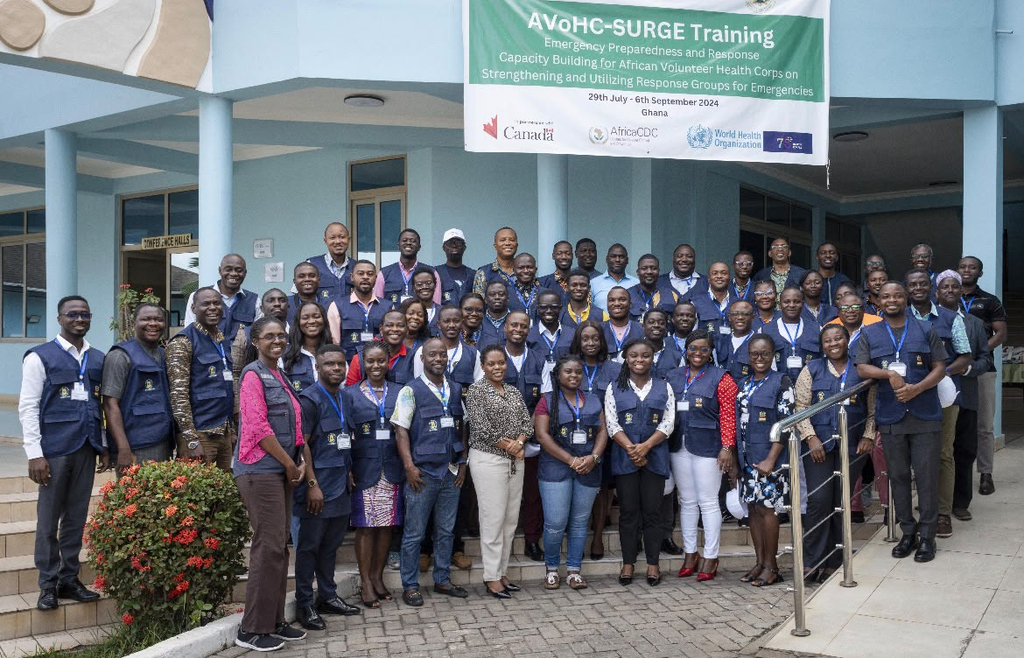
Africa CDC has supported Ghana’s emergency preparedness efforts over the past two years through equipment, communications and data infrastructure, operational systems and workforce development.
The latest training forms part of that wider effort to strengthen Ghana’s PHEOC network and ensure that national and subnational structures can work together during emergencies.
The partnership builds on earlier investments in Ghana’s emergency response infrastructure. In November 2025, Africa CDC handed over a refurbished Emergency Operations Centre at Pantang to Ghana’s health authorities. The facility was designed to serve as a national coordination hub, bringing together data and expertise to guide emergency decisions and response activities.
Ghana’s existing public health infrastructure has also benefited from support from other international partners. The US CDC reports that it has supported the operationalisation of Ghana’s national PHEOC and four regional PHEOCs, while also supporting disease surveillance and training programmes in the country.
From national coordination to local response
One of the key priorities emerging from the latest Africa CDC-supported programme is ensuring that knowledge does not remain concentrated at the national level.
Africa CDC encouraged participants to share the skills acquired during the training with district teams, subnational coordinators and frontline responders who were not part of the programme.
Dr Mathew Tut Moses, Principal Programme Officer for Preparedness and Response at Africa CDC, described participants as “multipliers”, emphasising the importance of transferring knowledge throughout Ghana’s emergency response system.
The next phase will include support for updating Ghana’s emergency plans, strengthening staffing and surge capacity at PHEOCs, and conducting additional simulation exercises.
Africa CDC’s West Africa Regional Coordinating Centre has also committed to supporting the development of a costed national plan for regular emergency preparedness training and exercises.
A broader health-security strategy
The initiative comes as Ghana continues to strengthen its wider national health-security framework.
In April 2026, the country announced the development of its second-generation National Action Plan for Health Security (NAPHS), covering the period from 2026 to 2031. The plan provides a roadmap for strengthening Ghana’s ability to prevent, detect and respond to health threats, including measures covering laboratories, disease surveillance, border health and points of entry.
The country’s experience in recent years has reinforced the importance of such preparedness. Ghana responded to several public health emergencies between 2022 and 2025, including meningitis, dengue, cholera, Marburg virus disease, Lassa fever and mpox. The cholera outbreak that extended into 2025 recorded more than 7,000 cases and 51 deaths, according to the WHO.
Rather than waiting for the next emergency to expose weaknesses, Ghana is using these experiences to strengthen the systems that will be needed when a new threat emerges.
That means investing not only in emergency facilities but also in people, information systems, coordination mechanisms and regular exercises that allow authorities to identify weaknesses before they become critical.
Strengthening Africa’s own emergency capacity
Ghana’s partnership with Africa CDC also reflects a broader effort to strengthen public health preparedness through African institutions.
Africa CDC, the public health agency of the African Union, has been working with member states to improve disease surveillance, emergency preparedness and response capacity across the continent.
For Ghana, stronger PHEOCs mean that information can move more efficiently between communities, districts, regions and national authorities, allowing potential threats to be assessed and acted upon more quickly.
The country’s latest efforts therefore represent more than a single training programme. They are part of a longer-term investment in building a health-security system that can function before, during and after an emergency.
As African countries continue to face changing public health risks, Ghana’s approach highlights an increasingly important lesson: preparedness is not simply about responding when a crisis arrives. It is about building the people, systems and institutions capable of acting before a crisis becomes harder to control.
TNAM