Addis Ababa, Ethiopia’s Grand Ethiopian Renaissance Dam (GERD) is moving the country into a new phase of its energy ambitions, with the massive Blue Nile project positioned to transform electricity generation at home while strengthening Ethiopia’s role in Africa’s emerging regional power market.
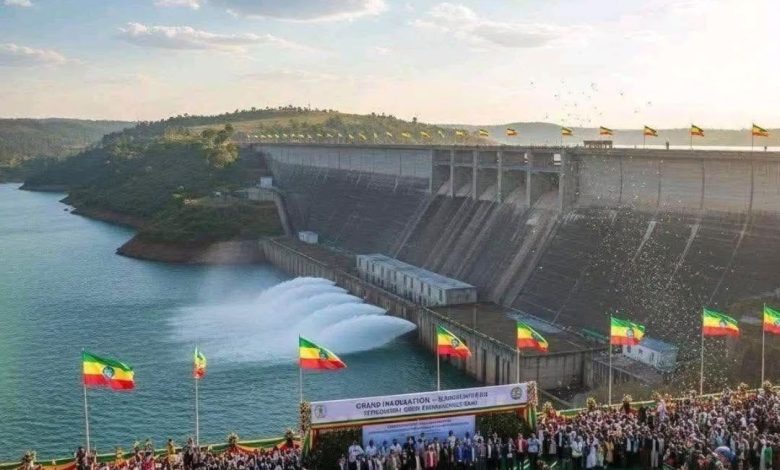
Officially inaugurated on September 9, 2025, after more than a decade of construction, GERD is Africa’s largest hydroelectric project. Built on the Blue Nile in Ethiopia’s Benishangul-Gumuz region, about 30 kilometres from the Sudanese border, the project represents one of the continent’s largest investments in renewable energy and infrastructure.
The project was built at an estimated cost of about $5 billion. Ethiopia’s Ministry of Water and Energy lists the project at 6,450 megawatts, while Reuters reports generating capacity of approximately 5,150 megawatts based on the installed generating units. Its reservoir can hold about 74 billion cubic metres of water and covers roughly 1,874 square kilometres at full supply.
A project built to change Ethiopia’s electricity supply
The central purpose of GERD is electricity generation.
Ethiopia has one of Africa’s largest populations but has historically struggled with limited electricity access, particularly outside major urban centres. The dam was therefore conceived not simply as an infrastructure project, but as a foundation for expanding electricity access and supporting economic development.
The GERD project estimates average annual electricity generation of about 15,759 gigawatt-hours, with the potential to significantly increase electricity available to the national grid. Its official project information says the additional generation is expected to support the expansion of electricity access from about 44% to as much as 90% under the country’s electrification targets.
The effect is already being seen.
At the time of the dam’s inauguration, Ethiopian Electric Power said partial operation had helped increase domestic electricity access from 44% to 54%. Full utilisation is expected to extend electricity access further, particularly to communities that have historically remained outside the national grid.
For Ethiopia, that means more than household lighting.
Reliable electricity can support schools, hospitals, telecommunications, digital businesses, manufacturing, agriculture, water systems and other productive activities that depend on stable power.
From electricity shortage to regional power exporter
GERD is also changing Ethiopia’s position in the regional energy market.
Ethiopia already exports electricity to neighbouring countries including Djibouti, Sudan and Kenya, while agreements and plans have been developed to expand cross-border electricity trade. The country’s state-owned Ethiopian Electric Power has identified regional electricity exports as part of its wider strategy to position Ethiopia as a renewable-energy hub for East Africa. (Trade.gov)
GERD gives that ambition a much larger foundation.
When domestic demand is adequately served, surplus hydropower can be sold across borders, creating an additional source of revenue while helping neighbouring countries reduce dependence on more expensive thermal power.
Research published in Nature Water has found that increased electricity trade between Ethiopia and downstream countries could reduce the use of thermal power generation, producing economic and environmental benefits across the region.
That makes GERD potentially significant beyond Ethiopia’s borders.
Instead of electricity generation being viewed only as a national issue, the dam could become part of a wider East African electricity network in which countries share renewable power through interconnected grids.
The economic opportunity
The economic implications of a larger and more reliable electricity supply are substantial.
For Ethiopia’s manufacturing sector, electricity shortages and unreliable supply have historically been obstacles to productivity. More dependable power could support factories, industrial parks and businesses while reducing reliance on costly backup generation.
The same applies to agriculture.
Electricity can support irrigation, food processing, cold storage, pumping systems and other activities needed to move agricultural production further up the value chain.
The digital economy also stands to benefit.
As Ethiopia expands telecommunications, data services and technology-driven businesses, reliable electricity becomes increasingly important. GERD therefore has the potential to support sectors far beyond traditional hydropower.
The project has also created infrastructure and employment opportunities. Its construction involved more than 25,000 people, according to Webuild, the main contractor involved in the project.
A symbol of national financing and Ethiopian ambition
GERD has a unique place in Ethiopia’s national story because the project was financed largely through domestic contributions.
Millions of Ethiopians contributed financially to the project, turning the dam into a symbol of national participation and self-reliance.
Reuters reported that approximately 91% of the project was funded domestically, underscoring the scale of public support behind the infrastructure programme.
That domestic financing model has also given GERD a significance beyond its engineering purpose.
For many Ethiopians, the dam represents the country’s right to use its natural resources for development and its determination to build infrastructure capable of supporting a growing population and economy.
But the story of GERD cannot be separated from the politics of the Nile.
The dam sits on the Blue Nile, one of the principal tributaries feeding the Nile River system that flows downstream through Sudan and Egypt.
Egypt depends on the Nile for the overwhelming majority of its freshwater needs and has expressed serious concerns about how Ethiopia fills and operates the GERD reservoir, particularly during periods of drought.
Sudan has also raised concerns, although its position has been more complex because the dam could potentially provide benefits through improved flow regulation and electricity cooperation.
The dispute is therefore not simply about a dam. It is about water security, national development, historical agreements and competing interpretations of how Nile waters should be managed among the countries that share the basin.
Ethiopia maintains that GERD is primarily an electricity-generation project and argues that it has the right to develop its water resources. At the dam’s inauguration, Ethiopian officials presented the project as an opportunity for regional development rather than an instrument intended to harm downstream neighbours.
Egypt, however, continues to seek binding arrangements governing the operation of the dam, particularly in relation to droughts and future water releases.
Could GERD actually benefit downstream countries?
Despite the dispute, the dam could also create opportunities for cooperation.
A more regulated flow of the Blue Nile could potentially help reduce extreme fluctuations in water availability downstream. Ethiopia has also argued that the project can support regional electricity cooperation.
Sudan and Egypt could potentially benefit from purchasing Ethiopian hydropower, while regional electricity trade could reduce dependence on fossil-fuel generation.
Recent regional analysis has highlighted potential benefits including improved water regulation, expanded electricity cooperation and reduced reliance on more expensive thermal generation.
The challenge is ensuring that these potential benefits are supported by transparent rules and cooperation among the three countries.
Renewable energy at the centre of Ethiopia’s future
GERD also forms part of a much wider Ethiopian renewable-energy strategy.
The country has significant hydropower potential, but it is also developing wind, solar and geothermal resources.
Ethiopian Electric Power describes its broader ambition as positioning the country as a renewable-energy hub for East Africa, with electricity generation, transmission and exports forming part of Ethiopia’s long-term economic transformation.
This diversification matters because relying too heavily on a single source of power can expose a country to climate and hydrological risks.
Hydropower production is influenced by rainfall and river flows. Expanding wind, solar and geothermal generation could therefore complement GERD and make Ethiopia’s electricity system more resilient.
The infrastructure challenge is not over
GERD’s completion does not automatically solve Ethiopia’s electricity problems.
Generating electricity is only one part of the energy system.
The country also needs transmission lines, distribution networks, substations and connections capable of taking electricity from the dam to homes and businesses.
This is particularly important for rural communities.
A country can have enormous generating capacity while millions of people remain without reliable electricity if the transmission and distribution infrastructure does not expand at the same pace.
Ethiopia will therefore need continued investment across the entire electricity chain if GERD is to deliver its full potential.
GERD’s significance extends beyond Ethiopia.
Africa has some of the world’s greatest renewable-energy resources but continues to face a huge electricity-access gap. Hydropower, solar, wind and geothermal energy could play an important role in closing that gap, provided countries invest in generation as well as transmission and regional interconnections.
GERD demonstrates what is possible when a country commits to infrastructure on a continental scale. It also highlights the challenges that accompany major shared-resource projects.
The next phase of Ethiopia’s energy story will not be measured simply by how much electricity GERD generates. It will be measured by how effectively that electricity reaches households and businesses, how much economic activity it supports, how much power Ethiopia can export and whether the country can build a cooperative relationship with its Nile neighbours.
What GERD could mean for Ethiopia
If effectively integrated into the national and regional electricity systems, the dam could:
- Expand electricity access to millions of people.
- Strengthen Ethiopia’s industrialisation drive.
- Support manufacturing, agriculture and digital businesses.
- Increase renewable-energy generation.
- Create opportunities for electricity exports and foreign-exchange earnings.
- Reduce dependence on fossil-fuel generation across parts of East Africa.
- Strengthen Ethiopia’s position in the regional power market.
- Provide a platform for deeper electricity cooperation among Nile Basin countries.
The Grand Ethiopian Renaissance Dam is therefore much more than Africa’s largest hydroelectric project.
It is an attempt to convert one of Ethiopia’s greatest natural resources the waters of the Blue Nile into electricity, industrial capacity and regional economic influence.
The project’s success will ultimately depend on what happens beyond the dam itself: whether Ethiopia can connect more citizens to reliable electricity, attract productive investment, strengthen its transmission infrastructure and turn surplus renewable power into a sustainable export industry.
At the same time, its long-term regional impact will depend on whether Ethiopia, Egypt and Sudan can move beyond years of tension and develop workable arrangements around the Nile.
For Ethiopia, GERD has already become a defining piece of its development story.
For Africa, it offers a larger question: can the continent turn its enormous renewable-energy potential into reliable electricity, industrial growth and cross-border economic cooperation. The answer may increasingly be found in projects such as GERD where energy, development, water security and regional integration meet.
TNAM
By Egwu Patience Nnennaya