Africa is turning increasing attention to its oceans, rivers and lakes as governments seek new sources of jobs, investment, food and economic growth.
The push gained fresh momentum in July 2026, when African Union member states adopted the Luanda Declaration on the African Blue Economy, calling for stronger investment and faster implementation of Africa’s blue-economy ambitions.
The African Union estimates that the continent’s blue economy could reach about $405 billion and support 40 million jobs by 2030 if its potential is properly developed.
A vast economic resource
Africa has about 47,000 kilometres of coastline, while 38 of its 55 countries are coastal. The continent also possesses extensive lakes, rivers and transboundary water systems, meaning landlocked countries can participate in the blue economy through inland fisheries, aquaculture, transport and tourism.
The opportunity stretches across several industries, including fisheries and aquaculture, shipping, ports, maritime trade, tourism, renewable energy, marine technology and biotechnology.
For African economies struggling to create enough jobs for their rapidly growing populations, these sectors could provide new avenues for employment and entrepreneurship.
Fisheries remain a major opportunity
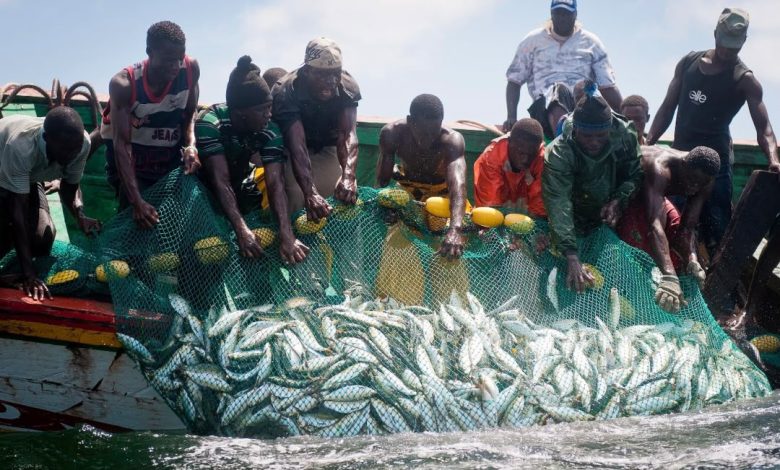
Despite Africa’s extensive marine and freshwater resources, the continent accounts for less than 3% of global fish production, according to the African Union.
Expanding aquaculture, improving fishing infrastructure and developing local processing facilities could help African countries increase food production while creating jobs across the value chain.
Instead of exporting raw products and importing processed goods, countries can develop industries around processing, packaging, cold storage, transportation and distribution.
Maritime transport is equally important to Africa’s economy. More than 90% of Africa’s imports and exports are transported by sea, according to the African Union.
This makes efficient ports and shipping infrastructure critical to the continent’s industrialisation and the implementation of the African Continental Free Trade Area (AfCFTA).
Modern ports can also support thousands of jobs in logistics, warehousing, trucking, ship repair, insurance and other related industries.
Africa’s coastlines also offer significant opportunities for tourism, from beaches and marine wildlife to diving, water sports and coastal cultural experiences.
At the same time, African governments are looking increasingly towards offshore renewable energy as part of the continent’s broader energy transition. The African Union has identified sustainable energy and innovative marine industries as important components of its blue-economy strategy.
Technology could further transform the sector. Satellite monitoring, artificial intelligence, digital vessel tracking and smart-port systems can help governments monitor fishing activities, combat illegal fishing and improve the efficiency of maritime trade.
These developments could also create opportunities for African technology companies and young entrepreneurs working in marine data, logistics, environmental monitoring and fisheries management.
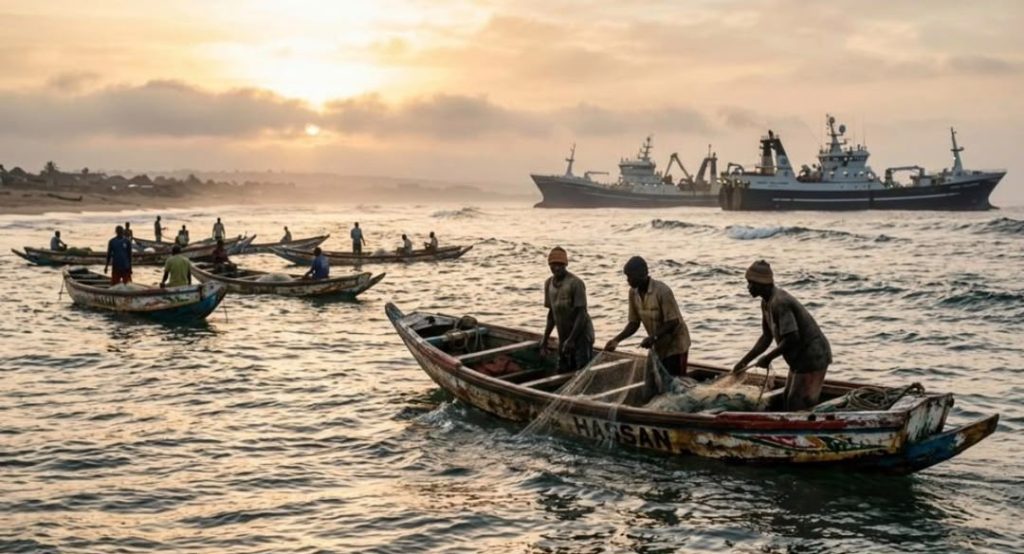
Unlocking the opportunity will not be straightforward. Illegal, unreported and unregulated fishing, marine pollution, climate change, biodiversity loss and maritime insecurity continue to threaten Africa’s aquatic resources.
The African Union is therefore pushing for stronger action against illegal fishing, ecosystem restoration, better waste management and sustainable development of fisheries, aquaculture, shipping and coastal industries.
The Luanda Declaration also calls for new financing mechanisms, including blue funds, blue bonds, blue insurance and blended-finance models, while the AU plans a 2026–2030 Continental Blue Economy Implementation Roadmap.
Africa’s blue economy represents an opportunity to turn natural resources into lasting economic value.
The objective is not simply to extract more from the continent’s waters, but to build African-owned industries around them from fishing and food processing to shipping, tourism, renewable energy and technology.
If governments can combine investment with effective regulation, modern infrastructure and sustainable resource management, Africa’s oceans could become an important source of jobs, food security, trade and industrial growth.
For a continent searching for new engines of development, the next major economic opportunity may not be beneath the ground it may be in the waters surrounding and flowing through Africa.
TNAM
By Egwu Patience Nnennaya