African Leaders Put Development, Reform and Regional Cooperation at the Heart of UNGA 81 Debate

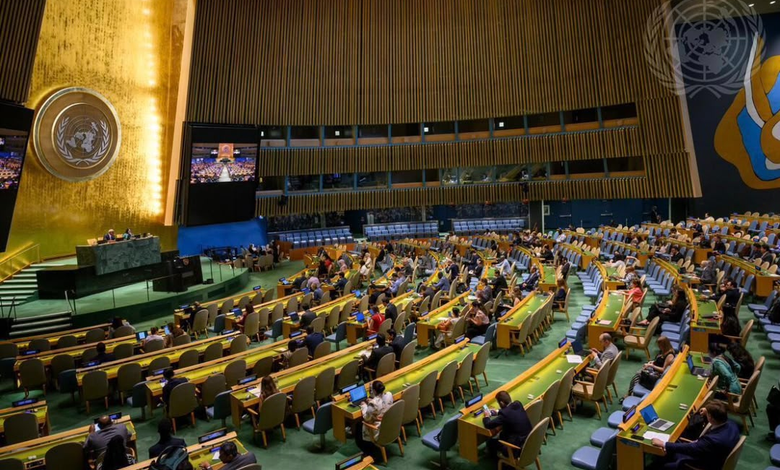
African leaders and senior government representatives used the fifth day of the 81st United Nations General Assembly debate to press for stronger African representation in global institutions, fairer access to development finance, deeper regional integration and greater investment in the continent’s people, infrastructure and natural resources. Seven African countries; Cabo Verde, Tunisia, Djibouti, Gabon, São Tomé and Príncipe, Zambia and Cameroon addressed the General Assembly on Saturday, September 26, presenting national priorities while repeatedly linking them to wider African and global challenges.
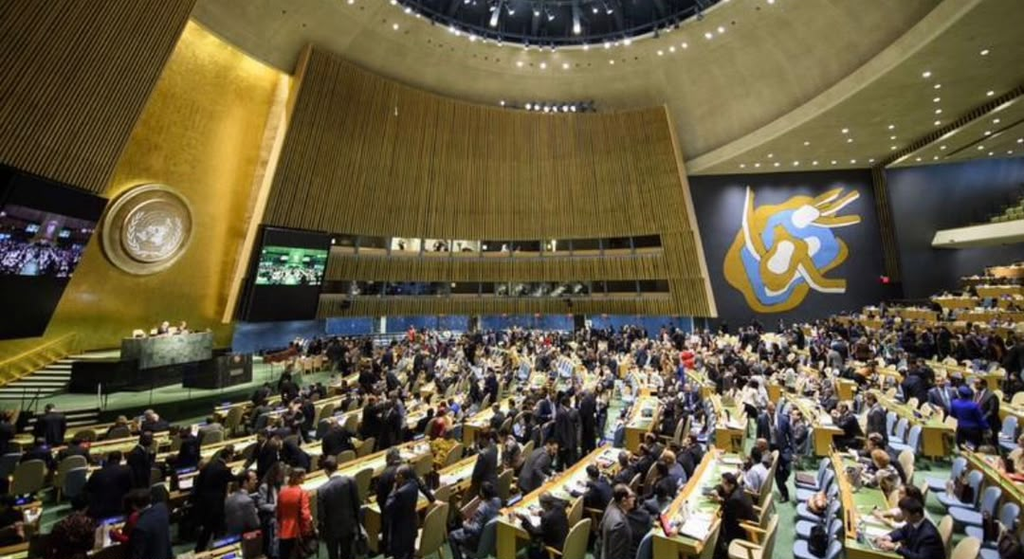
The interventions came under the theme of the 81st session, “Restoring Trust, Managing Transformation: A United Nations That Delivers for All.” The General Debate is the main annual forum where heads of state, government and senior representatives present their countries’ positions on international affairs.
Across the African statements, a common message emerged: development cannot be separated from access to finance, trade, technology, climate resilience, peace and a stronger voice in international decision-making.
Cabo Verde calls for a stronger African voice
Cabo Verde opened the African contributions on the day through Prime Minister Francisco Avelino Vieira de Carvalho, who argued that the size of a country should not determine the strength of its ambitions. He described Cabo Verde as a country of 10 islands that has learned to turn geographical limitations into opportunities, stressing that the country’s greatest resource is its people.
He placed education, knowledge, innovation and opportunities for young people at the centre of development, saying Cabo Verde wants to convert knowledge into innovation, decent employment and stronger education and health systems.
The Prime Minister also highlighted digital transformation, gender equality, energy transition, water security and the blue economy as areas where the country wants to expand opportunities.
A major part of his intervention focused on reform of the international system.
Cabo Verde supported reform of the UN Security Council and called for more equitable African representation, pointing to the continent’s large share of UN membership and global population.
The country also backed a more effective and representative United Nations and said the UN80 reform process provides an opportunity to modernise the organisation.
Climate change was another major concern.
Cabo Verde said rising sea levels, drought, desertification, water scarcity and ocean acidification are already affecting small island states. It called for stronger climate adaptation and financing and announced that it will assume the presidency of the Alliance of Small Island States (AOSIS) in January 2027.
The country is also scheduled to host the fifth International Conference on Small Island Developing States in 2034.
Tunisia demands reform and stronger African economic integration
Tunisia’s Foreign Minister Mohamed Ali Nafti used his 27-minute address to make a broad case for reform of the international system.
He argued that restoring confidence in multilateral institutions requires two things: countries respecting international law and the UN Charter, and a comprehensive reform of the United Nations itself.
Tunisia called for changes to UN decision-making mechanisms to provide more balanced geographical representation, together with stronger transparency and accountability.
It also supported the UN80 reform initiative, while insisting that reforms should remain inclusive and preserve the intergovernmental character of the organisation.
On Africa, Nafti said the continent’s natural resources and human capacity make it an essential partner in global development.
He reaffirmed Tunisia’s support for “African solutions to African problems”, stronger African institutions and closer cooperation between the African Union and the United Nations on peacekeeping, conflict prevention, mediation and sustainable development.
Tunisia also called for stronger economic integration through COMESA and the African Continental Free Trade Area (AfCFTA).
Migration featured prominently in the address. Tunisia called for a comprehensive approach that considers the economic and social causes of migration rather than treating it only as a security issue. It called for cooperation between countries of origin, transit and destination and stronger action against trafficking and migrant smuggling.
The country also linked climate justice to reform of the international financial system, arguing that developing countries need fairer access to financing, technology and innovation.
On artificial intelligence, Tunisia called for global governance that supports responsible use while preventing the digital divide between developed and developing countries from widening.
Djibouti links climate finance, infrastructure and regional stability
Djibouti’s Foreign Minister Abdoulkader Houssein Omar connected security, climate change, economic development and regional infrastructure in his address.
He called for stronger international support for countries dealing with the effects of regional conflicts and highlighted the arrival of thousands of people fleeing violence in Yemen.
Djibouti appealed for international assistance to support affected communities and reception facilities, while calling for de-escalation and a lasting political solution to the Yemen conflict.
The country also addressed developments in Somalia and Sudan, supporting continued international assistance for Somalia’s stability and calling for an inclusive political solution to the Sudan conflict.
As current chair of IGAD, Djibouti welcomed Sudan’s return to full participation in the regional organisation and called for dialogue and an end to external interference that could prolong the conflict.
On the Palestinian issue, Djibouti reaffirmed support for an independent Palestinian state and a two-state solution based on the 1967 borders, while calling for humanitarian access and protection of civilians.
But the speech also carried a strong economic message.
Djibouti stressed the importance of the Red Sea and Bab el-Mandeb Strait to global trade and energy security and said it intends to strengthen its position as a regional logistics and economic hub.
The country pointed to new petroleum-storage and transport infrastructure, including oil and gas pipelines linking Djibouti and Ethiopia, as examples of its push for energy security, regional integration and economic transformation.
Climate finance was another priority.
Djibouti called for greater investment in resilient coastal infrastructure, early-warning systems, renewable energy and marine ecosystems. It also said it is working to establish a national framework for carbon markets under Article 6 of the Paris Agreement to attract investment, mobilise resources and support technology transfer.
The country further argued that Africa should not be viewed only as vulnerable to climate change but as a continent capable of developing and exporting solutions.
Digital technology and artificial intelligence, it said, can accelerate development if countries receive the infrastructure, technology transfer and skills required to participate.
Gabon pushes for stronger Gulf of Guinea security and local processing
Gabon’s Foreign Minister Marie-Édith Tassyla-Ye-Doumbeneny called for stronger international cooperation around the Gulf of Guinea and greater recognition of Africa’s role in global peace and security.
She said the region’s growing importance to international trade makes maritime security essential to shared prosperity and called for a substantial strengthening of security in the Gulf of Guinea.
Gabon also called for implementation of UN Security Council Resolution 2719, which concerns financing support for African Union-led peace support operations.
The country argued that implementing the resolution would help strengthen peacekeeping in Africa and improve cooperation between the UN Security Council and the AU Peace and Security Council.
Economic transformation was another major part of the speech.
Gabon called for partnerships that support local processing of natural resources, economic diversification, technology transfer and stronger national capacity.
The country also raised the issue of climate finance, arguing that its forests and carbon-storage capacity provide important environmental services to the world and should attract fair, predictable and sustainable financing.
Gabon also addressed digital transformation, warning that artificial intelligence and emerging technologies create opportunities but also risks involving privacy, cybercrime, disinformation and irresponsible use.
The government said its digital regulations were designed as temporary and proportionate measures to protect citizens while developing a secure digital ecosystem.
São Tomé and Príncipe demands climate finance that reflects vulnerability
São Tomé and Príncipe used its intervention to highlight what it described as a major financing gap facing vulnerable island economies.
Foreign Affairs Minister Ilza Maria dos Santos Amado Vaz said climate change is already affecting the country’s coastlines, infrastructure, marine resources and livelihoods despite its small contribution to global emissions.
The country called for the Multidimensional Vulnerability Index to be translated into concrete eligibility criteria for concessional financing.
It also called for full operation of the loss-and-damage financing mechanism and easier access to the Green Climate Fund.
The minister argued that a country’s income level alone should not determine whether it receives development support because small island states can remain highly vulnerable even after graduating to middle-income status. Energy transition was another priority.
São Tomé and Príncipe wants to reduce its dependence on imported fuel and develop a cleaner, more affordable and reliable energy system. The country said achieving that goal would require investment and international partnerships.
Agriculture and food security also featured strongly. The government wants to increase domestic production, improve market access for farmers and retain more value from products such as cocoa and coffee within the country.
The country’s marine resources were presented as another development opportunity, with plans to expand fisheries, the blue economy, research and nature-based tourism.
São Tomé and Príncipe also emphasised youth development, saying young people should have opportunities to study, work, establish businesses and innovate without having to leave the country. The diaspora was identified as an important source of investment, entrepreneurship, knowledge and skills.
Zambia opens its economy to investment and value addition
Zambia’s Foreign Affairs Minister Mulambo Hamakuni Haimbe presented his country as a stable economy seeking deeper international partnerships.
He said Zambia’s approach to restoring trust should be based on keeping international commitments, financing development and ensuring developing countries have a meaningful voice in global decision-making. The country’s democratic process was also highlighted, with Zambia presenting its recent elections as evidence of its commitment to constitutional governance and peaceful political competition. The economic message was particularly direct.
Zambia invited international development institutions, investors and private-sector partners to participate in its development agenda. The country identified opportunities in mining, critical minerals, agriculture, agro-processing, manufacturing, energy infrastructure, tourism and digital services. But Zambia said it wants to move beyond exporting raw materials.
Its stated objective is to increase value addition, industrialisation, job creation and technology transfer, allowing more of the economic value generated from its resources to remain within the country. Climate change and environmental resilience were also addressed, with Zambia pointing to the impact of droughts, floods and changing weather patterns on agriculture, food security, water supplies, energy generation and livelihoods.
Cameroon calls for trade, industrialisation and AfCFTA expansion
Cameroon’s Foreign Affairs Minister Lejeune Mbella Mbella, speaking on behalf of President Paul Biya, placed development financing, trade and regional integration at the centre of the country’s intervention. Cameroon said restoring trust requires stronger cooperation between states, reconciliation between people and international institutions, and ensuring technological progress benefits humanity more broadly. The country argued that development finance should be treated as an investment in stability and shared prosperity rather than charity. Cameroon therefore called for implementation of commitments made at the 2025 Sevilla Conference on Financing for Development, including reforms to the international financial architecture that would improve access to finance for countries in the Global South. The speech then turned to trade and industrialisation. Cameroon called for greater international trade, stronger industrialisation and local processing of raw materials, while supporting deeper regional integration.
The country also reaffirmed its commitment to expanding the African Continental Free Trade Area, describing the agreement as an important mechanism for strengthening trade and development cooperation between African countries.
Cameroon further backed the African Union’s common position for stronger African representation on the UN Security Council. It also reaffirmed its participation in UN peacekeeping operations and cooperation with regional mechanisms around the Lake Chad Basin.
What Africa put on the table
Although the seven countries came from different parts of the continent and have different economic structures and priorities, their interventions repeatedly returned to several issues.
Africa’s representation: Several speakers backed reform of the UN system and stronger African representation in global decision-making, particularly the Security Council.
Development financing: African representatives called for reforms that would make international finance more accessible, affordable and responsive to the needs of developing economies.
Climate finance: Small island states and other African countries argued that countries contributing relatively little to global emissions are facing serious climate impacts and need more predictable financing for adaptation and resilience.
Trade and industrialisation: Speakers pushed for local processing of Africa’s raw materials, value addition, technology transfer and stronger regional trade.
AfCFTA and integration: African economic integration remained a central theme, with calls for stronger implementation of continental and regional trade frameworks.
Young people and jobs: Education, skills, entrepreneurship and employment were repeatedly presented as necessary to turn Africa’s young population into an economic advantage.
Technology and AI: African representatives recognised the potential of digital technology and artificial intelligence while calling for technology transfer, infrastructure, capacity-building and rules that prevent the digital divide from widening.
Peace and security: Regional stability, African-led peace efforts, maritime security and stronger cooperation between the AU and UN were also prominent.
From speeches to action
The statements did not produce a single continental agreement on September 26. Instead, the African delegations used the UNGA platform to put specific priorities before the international community and to outline areas where cooperation and implementation are needed. Those priorities include stronger African representation in global institutions, reform of international financing, investment in climate resilience, expansion of intra-African trade, local processing of resources, improved infrastructure, technology transfer and greater opportunities for young Africans.
The discussions also reinforced the role of the African Union’s Agenda 2063 alongside the UN Sustainable Development Goals as a framework for the continent’s long-term development. The broader African message at UNGA 81 was therefore not limited to calls for assistance. The speeches also presented Africa as a continent seeking to invest, trade, industrialise, innovate, process its own resources and play a greater role in shaping the global system.
As the General Debate continues, the question now is how these positions will translate into financing arrangements, trade measures, infrastructure projects, climate commitments, technology partnerships and reforms within international institutions.
For the continent, Saturday’s interventions put those priorities clearly on the global table.
TNAM