Nigeria: A roadmap to harnessing Niger Delta’s wealth to benefit its struggling communities.
With fisheries, aquaculture, waterways, maritime transport and the proposed Agge Deep Seaport gaining renewed attention, the Niger Delta is being positioned for an economy that can create value beyond crude oil.

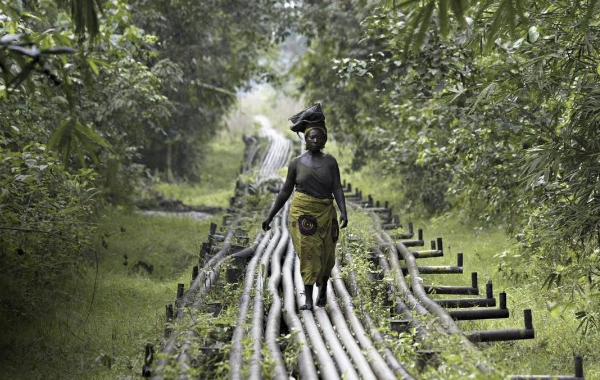
For more than six decades, the Niger Delta has been central to Nigeria’s oil economy. Yet the enormous petroleum wealth extracted from the region has not translated into comparable prosperity for many of the communities that host the country’s oil and gas activities.
The contradiction is particularly visible in Bayelsa State, where commercial oil production began at Oloibiri in 1956. The state’s 2022 Multidimensional Poverty Index recorded a poverty rate of 88.5%, compared with about 63% nationally, placing Bayelsa among Nigeria’s poorest states by that measure.
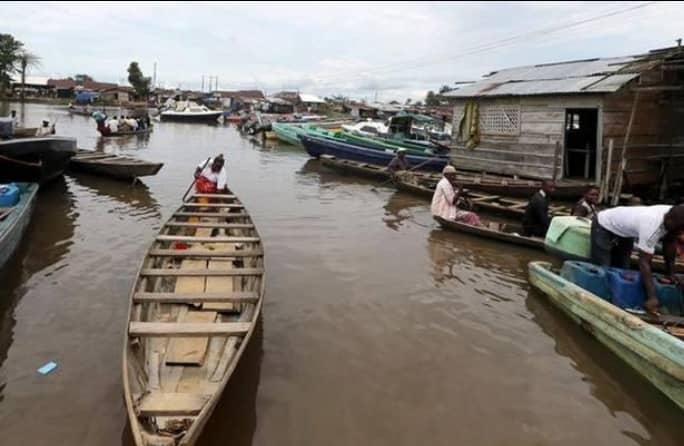
The development gap has remained a major concern across the oil-producing region. Communities in Bayelsa, Rivers, Delta and other Niger Delta states have long depended on fishing, farming and waterways for their livelihoods, but pollution, environmental degradation, poor transport infrastructure and limited investment have weakened many of those traditional economic activities.
Now, however, there is growing attention on an opportunity that has always existed around the region: its water.
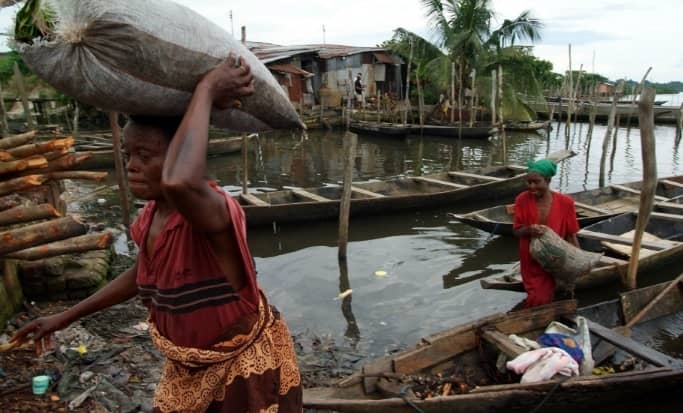
The Niger Delta’s extensive network of rivers, creeks, wetlands and coastline gives it significant potential for fisheries, aquaculture, maritime transportation, logistics, tourism and other components of the blue economy.
Bayelsa alone has more than 1,200 kilometres of riverine and coastline networks, according to the Nigerian Investment Promotion Commission. The state’s investment profile identifies fisheries and aquaculture as areas with significant investment potential.
For communities that have traditionally depended on fishing, developing this sector commercially could create opportunities far beyond the sale of raw fish.
A stronger fisheries value chain could connect fishermen to hatcheries, cold-storage facilities, fish-processing plants, packaging companies, transportation providers and larger domestic and export markets. Instead of wealth leaving communities at the point of production, more of the economic value could remain locally through processing and related businesses.
Bayelsa has already begun moving in this direction.
The state government established a Ministry of Marine and Blue Economy in June 2024, while officials say the Bayelsa Aquaculture Village in Yenagoa has an operational hatchery producing catfish fingerlings and juveniles. The state has also expanded its marine transport fleet and is pursuing the development of the proposed Agge Deep Seaport.
The Agge project is particularly important to the region’s diversification ambitions.
In June 2026, the Federal Government reaffirmed its commitment to the proposed Agge Deep Seaport in Bayelsa, describing it as strategic infrastructure capable of attracting investment, supporting trade and creating thousands of jobs in the Niger Delta. The Federal Ministry of Marine and Blue Economy said the project is part of efforts to expand Nigeria’s maritime infrastructure and deepen the country’s blue economy.
A functional deep-sea port could potentially change the economic geography of the region by improving access to international trade and creating demand for logistics, warehousing, marine services, transportation, manufacturing and other businesses around the port.
The Federal Government is also putting money behind broader agricultural and marine opportunities in the Niger Delta.
In July 2026, Nigeria announced a $500 million agricultural investment fund targeted at the region. The initiative is designed to improve food production and attract private investment, with aquaculture, palm oil and marine resources among the areas identified for investment.
That development is significant because diversification in the Niger Delta does not necessarily mean abandoning agriculture or other traditional livelihoods. Instead, the opportunity lies in modernising them and connecting them to industries capable of generating higher-value products.
But unlocking the blue economy will require more than announcing projects.
The region’s waterways remain difficult and, in many communities, expensive to navigate. Poor transport infrastructure has historically limited the movement of people and goods. Bayelsa’s riverine geography means that water transport is essential to many communities, yet existing services face problems including limited capacity, safety concerns and inadequate infrastructure.
Environmental protection is another critical part of the equation.
The Niger Delta’s waterways are economic assets precisely because communities depend on them. Oil pollution and environmental degradation can therefore undermine the same fisheries, agriculture and tourism industries that diversification efforts are intended to strengthen.
This is why the next phase of development must be different from the extraction model that dominated the region for decades.
The objective should not simply be to extract another resource and export it elsewhere. It should be to build local industries around the region’s natural assets.
Fish should be processed locally. Aquaculture should develop into a commercial industry. Boats should be built and maintained within the region. Young people should be trained in maritime engineering, logistics and marine sciences. Ports should generate businesses around them. Tourism opportunities should be developed around the Delta’s waterways, mangroves, beaches and cultural heritage.
The economic potential is substantial.
The Niger Delta’s natural environment already supports fishing, seafood production, transportation and other water-based activities. What has been missing is the scale of investment and infrastructure required to transform these activities into competitive industries.
There is also a broader lesson for Nigeria.
The country’s dependence on crude oil has repeatedly exposed public finances and foreign exchange earnings to fluctuations in global energy prices. Developing alternative sources of economic activity in an oil-producing region could therefore benefit not only local communities but the wider Nigerian economy.
For the people of the Niger Delta, however, the issue is more immediate.
They need jobs. They need reliable transportation. They need functioning schools and healthcare facilities. They need clean waterways and productive farms. And they need opportunities that allow young people to build careers without leaving their communities.
The region’s enormous oil reserves once appeared to guarantee prosperity. Today, the more promising opportunity may be to use its rivers, coastline, ports, fisheries and human capital to build a more diversified economy.
The Niger Delta does not lack resources. The challenge is ensuring that those resources are converted into businesses, jobs, infrastructure and lasting prosperity for the communities that have lived alongside them for generations.
As Nigeria pushes its blue-economy agenda forward, the success of projects such as the Agge Deep Seaport, the expansion of aquaculture and the new investment in marine resources could determine whether the Niger Delta finally moves from being primarily a source of raw wealth to becoming a centre of production, trade and sustainable economic opportunity.
TNAM
By Egwu Patience Nnennaya
Friday August 14th, 2026.