Nigeria is set to receive an initial $25 million investment from MTN Group Foundation and the Gates Foundation for a four-year programme that will use artificial intelligence, mobile technology and improved connectivity to strengthen maternal healthcare across the country.
The Nigeria Maternal Health Multiplier, announced on September 22, 2026, aims to help 500,000 women access higher-quality maternal healthcare by 2030, while giving thousands of frontline health workers digital tools to identify pregnancy and childbirth complications earlier.
The programme will also support 500 health facilities and equip 5,000 frontline health workers with tools designed to improve the quality and consistency of maternal care.
How the AI programme will work
The initiative is not based on AI alone. It combines artificial intelligence with mobile phones, affordable data and improved connectivity at primary healthcare facilities.
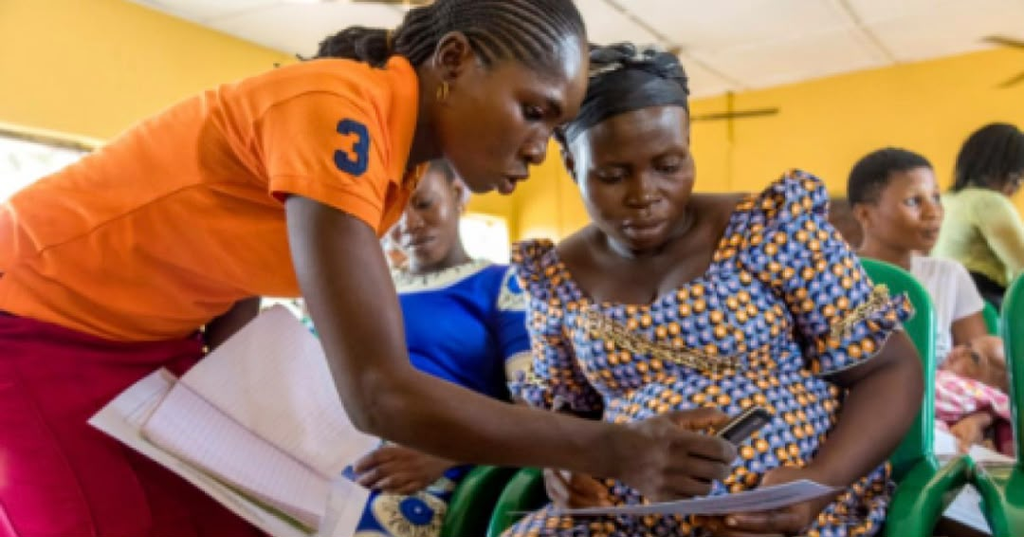
One of its main components will be AI-enabled, phone-based decision-support tools for pregnant women and healthcare workers. These tools are intended to provide trusted health guidance and help frontline workers recognise warning signs associated with pregnancy and childbirth.
The programme will also provide affordable smartphones and mobile data to pregnant women, particularly those who may otherwise struggle to access digital health services because of the cost of devices or internet access.
At the healthcare-facility level, improved connectivity will help primary healthcare workers access digital tools and information when caring for patients.
The idea is to connect the three parts of the healthcare chain the mother, the health worker and the health facility rather than introducing an isolated technology platform.
The programme comes against the backdrop of Nigeria’s continuing maternal-health challenges.
MTN and the Gates Foundation said Nigeria accounts for nearly 30% of maternal deaths worldwide, despite progress in reducing maternal deaths over the past decade.
The organisations also cited antenatal-care gaps, noting that only 59% of women complete four or more antenatal care visits. This can leave pregnancy-related warning signs undetected until complications become more serious. (MTN Group)
The wider regional picture is also severe. The Gates Foundation and MTN said the risk of maternal death in sub-Saharan Africa is roughly 250 times higher than in Western Europe.
Globally, maternal deaths have fallen by about 40% since 2000, but progress has slowed, making improvements in access to quality care an ongoing priority.
What the $25 million will cover
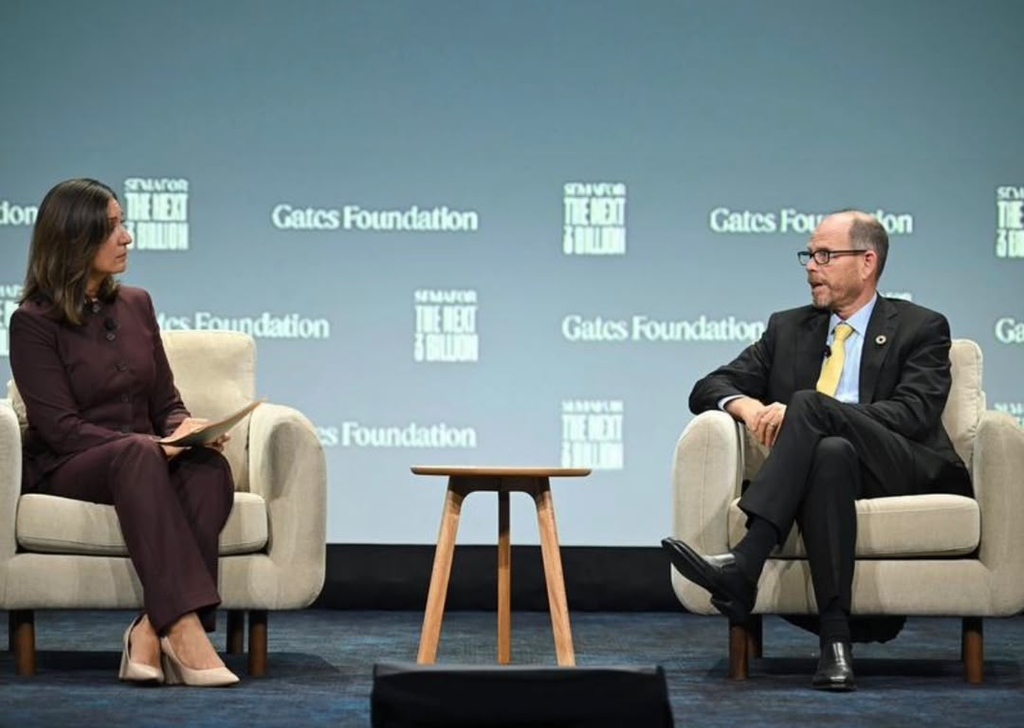
The initial investment is approximately US$25 million between 2026 and 2030 and includes both direct financial contributions and in-kind contributions from MTN and the Gates Foundation.
The organisations describe the funding as an anchor investment intended to attract additional financing and potentially support expansion of the model into other countries.
MTN will contribute its telecommunications infrastructure, digital-inclusion capabilities, device distribution network and mobile financial-services expertise.
The Gates Foundation will bring its experience in maternal, newborn and child health, digital-health innovation, responsible AI and scaling health interventions.
The programme is designed to work alongside Nigeria’s existing maternal and child health initiatives rather than operate as a separate healthcare system.
It will build on the Federal Ministry of Health’s Maternal and Neonatal Mortality Reduction Innovation Initiative (MAMII), which is being implemented under the country’s Sector-Wide Approach to health.
Nigeria’s Minister of Health and Social Welfare, Muhammad Ali Pate, said strengthening primary healthcare and empowering frontline health workers are central to the country’s health reforms.
Minister of Communications, Innovation and Digital Economy Bosun Tijani also welcomed the partnership, describing it as an example of using Nigeria’s digital transformation to address practical challenges affecting citizens.
AI will not replace doctors or midwives
The programme is designed as a decision-support system, rather than a replacement for healthcare professionals.
Its AI tools are intended to help women access health information and help frontline workers recognise potential complications earlier. Actual diagnosis and treatment will still depend on healthcare professionals and existing health facilities.
That distinction is important because the programme’s success will depend not only on whether the technology works, but also on whether women and healthcare workers can actually access and use it.
For many women, particularly in underserved communities, maternal healthcare challenges can involve more than the availability of a doctor.
Cost, distance, limited information, shortages of health workers, access to smartphones and unreliable connectivity can all affect whether a woman receives timely care.
The Maternal Health Multiplier is therefore attempting to address several of these barriers simultaneously.
A pregnant woman could receive digital health guidance through her phone, while a frontline worker could use an AI-enabled tool to support the identification of warning signs, and a connected health facility could provide a stronger link to the wider healthcare system.
What success would look like by 2030
The programme has set three clear targets:
500,000 women to gain access to trusted maternal-health guidance.
5,000 frontline health workers to receive digital tools designed to help identify pregnancy and childbirth complications earlier.
500 health facilities to gain support for delivering more consistent, higher-quality maternal healthcare.
The four-year programme began with its announcement in September 2026 and is expected to run through 2030.
Nigeria as a test case for AI in African healthcare
The initiative is also significant beyond maternal healthcare.
MTN said Nigeria is the first market for the Maternal Health Multiplier, with the ambition of demonstrating whether a technology-enabled model can be scaled to other African countries.
That makes Nigeria a testing ground for a broader question: Can AI and digital infrastructure help solve some of the access problems that continue to affect healthcare delivery across Africa?
The answer will depend on what happens after the announcement whether the technology reaches the women and health workers it is designed for, whether healthcare facilities have reliable connectivity, and whether the tools actually improve the detection and management of pregnancy-related complications.
For now, the $25 million programme puts Nigeria at the centre of an experiment combining AI, telecommunications and maternal healthcare, with the stated goal of reaching half a million women within four years.
TNAM